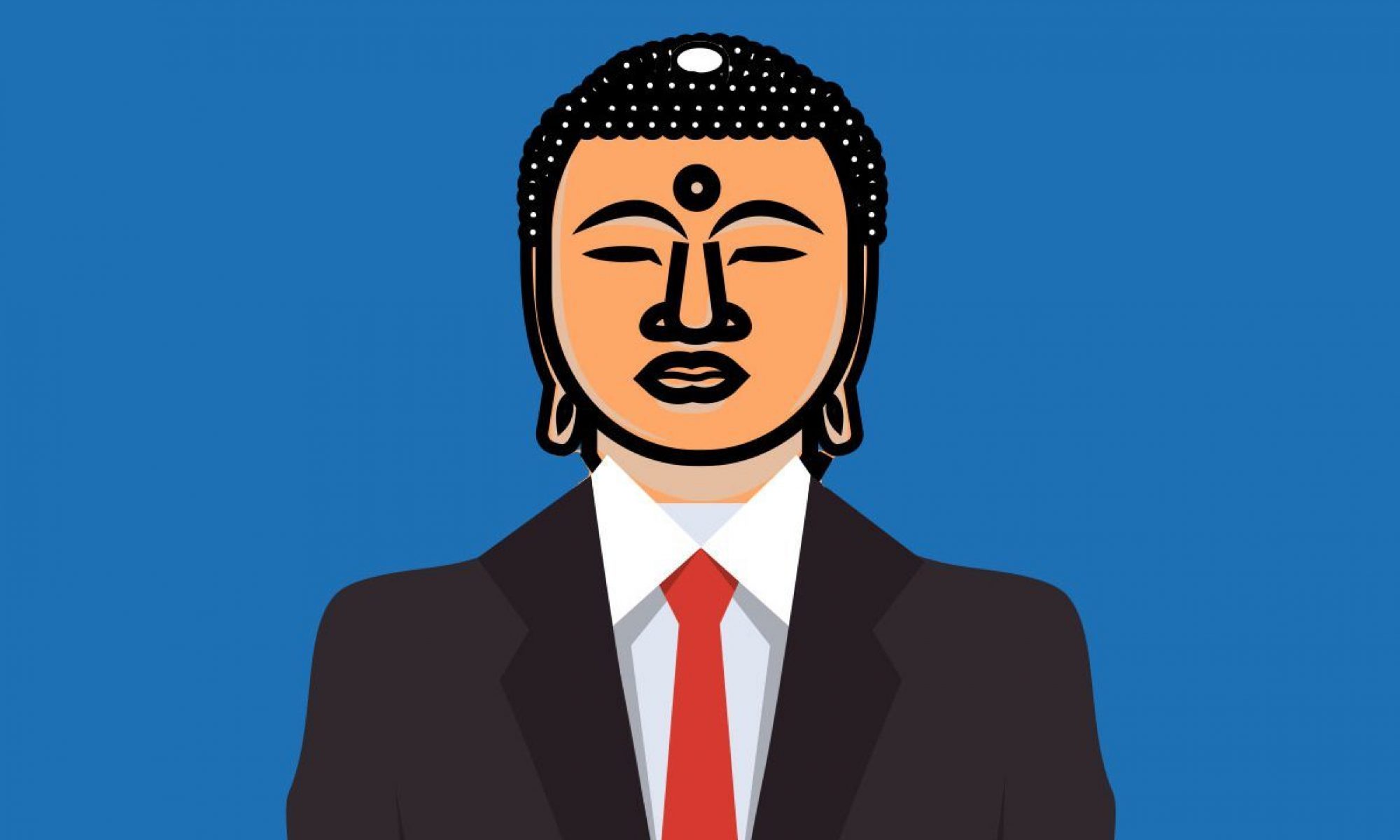

Last September, Joe Biden briefly donned a MAGA hat. This summer, sauntering around the boardwalk in Wildwood, NJ, I did the same. As the dust settles from the 2024 election and we begin to get our bearings in the Trump 2.0 landscape, it is worth reflecting on what I learned.
—
On September 10th, during the only presidential debate of the 2024 election, Kamala Harris invited viewers to attend a Trump rally. Her intention was to rattle Trump by painting a picture of shrinking crowd sizes, bored attendees, and a movement—and mind—in terminal decline. She succeeded with aplomb: Trump took the bait, never regained his composure and, by any reasonable measure, lost the debate. His performance was so poor that veteran GOP pollster Frank Luntz, who became the swing-state oracle on news programs throughout the campaign, became convinced Trump wouldn’t win.
But Harris’ debate victory was Pyrrhic. Her debate gambit was a missed opportunity and reflected a chronic blind spot in the liberal imagination over the last decade: an inability or unwillingness to see the world through the eyes of Trump supporters. She was half right: we—the NPR listeners, the coastal elites, the professional managerial class—should attend a Trump rally. But she was also half wrong: we should do so not to understand what is missing, but to see what drew so many of our fellow citizens there in the first place. After the joygasm that was brat summer, Harris went negative, and the blindspot ballooned. By the end of the campaign, as she fulminated that Trump was a fascist in full, she failed to grasp what she implied, and what his supporters heard: that half the country embraces fascism.
That same week, Harris’ boss took a baby step into Trump world. Stumping for Harris at a fire department near Shanksville, PA, not far from where Flight 93 crashed on September 11th, President Biden was signing a blue hat for a man wearing a Trump hat. For whatever reason, Biden told the man, “I need that hat.” After some egging on by the crowd, Biden crowned himself with the Trump hat, capping red atop blue, as its owner smiled, cheered, and shook the president’s outstretched hand. Through it all, Biden joked—about his age, about forgetting his name, and about his erstwhile opponent’s concerns about animal rights in Springfield, OH.
It is tempting to chalk the hat stunt up to senility—many did—or just the Biden brand of bipartisan bonhomie, but we might also see it as an indicator of a key difference between the new and old Left. Whatever her efforts to distance herself from from the progressive positions she took in the 2020 campaign, tack to the center, and transmit the infinite joy of the universe, Harris’ debate comment summons the specter of the supercilious, scolding, and self-serious (“one must be serious,” she intoned in interviews) attitude of the new Left. It is the attitude behind Hillary’s “deploreables” comment. It is the attitude that even Obama succumbed to, reflected in his remarks chastising Black men for not supporting Harris. It is the attitude that is pushing an increasing number of normie liberals to the Right.
Biden’s levity and comfort with the Trump voter in his midst, on the other hand, recalls an older and, arguably, more inclusive ethos in which working people—and, for lack of a better word, guys—felt like they had a place in the Democratic Party; and an older time in which we all shared a world beyond politics, a world where, sometimes, a hat is just a hat. The contrast should lead us to ask a fundamental question: why did Biden win in 2020? As we float in the liminal space between the election and the inauguration, it is worth wondering whether grasping the forces that led Biden to victory four years ago might help us to understand Harris’ decisive defeat.
——-
When you heard that Trump was holding a rally in Wildwood, NJ, last summer, you might have furrowed your brow: why waste precious time in such a blue state? You might have asked the same thing in the closing weeks of the campaign, as Trump held events in Coachella and Madison Square Garden. Rumor had it that Trump was obsessed with winning the popular vote.
But if you’re from New Jersey, especially if you’ve ever spent time at the Wildwood boardwalk and—for that matter, if you’ve ever seen the Jersey Shore, that reality TV cousin of The Apprentice—you would grasp the logic of Trump holding a rally there perfectly. Wildwood is not far from Atlantic City, the poor man’s Las Vegas where Trump cut his teeth tilting at casinos and professional wrestling. Both places are suffused with a signature seediness, rough Philly accents, and the coarse, trashy aesthetic Jersey Shore made iconic. The boardwalk in Wildwood has it all: cotton candy and funnel cake and slimy pizza; ski ball and whack a mole and rickety rollercoasters; the plink of quarters in sweaty arcades; the carnival barkers and novelty t-shirt shops with pushy salesmen hawking low culture crudities; the people who somehow still smoke. They are places, in Stephen King’s phrase, where the world has moved on. They are his territory.
I had worked at a coffee shop on the boardwalk for a couple of summers during college, so when I visited in August, I was curious to see how it had changed over the intervening twenty years. Everything was the same, apart from a new ride or smoothie stand here or there. The only major difference was the t-shirts.
Let me explain. Staggered across the Wildwood boardwalk are a series of gaudy gift shops, typically staffed by immigrants from Eastern Europe, Africa, or the Middle East, selling trinkets and t-shirts stamped with trendy pop culture memes, the stuff of barstool banter and locker room talk: “Dunkin’ Deez Nuts.” “I love hot moms.” “Hawk Tuah ’24.” But what stood out and stunned me the most was how nakedly political most of the shirts were: they were all pro-Trump, and pro-Trump in the Trumpiest way.

When I was making lattes with incalculable doses of flavored syrup there in the summer of 2004, the country was in the throes of the war on Terror and knee-deep in the quagmire of Iraq. It was the era of WMDs, casual Islamophobia, Abu Ghraib, yellow ribbon bumper stickers on SUVs, and “freedom fries.” Sure, there were conspiracy theories—the “Truthers,” who claimed 9/11 was an inside job—but they were, well, conspiracy theories, not campaign slogans. The “America, Fuck Yeah” vibe was strong on the boardwalk—one of the shooting games near my coffee shop had been renamed “Whack the Iraq,” with cartoony latex masks of bin Laden and Saddam swapped in—but it was barely partisan. The aggression of the country was chiefly channeled outward onto shadowy terrorists. When I stopped sweeping the floor one evening, gazed up at the TV and watched, slackjawed, as “a skinny kid with a funny name” gave his famous speech at the Democratic National Convention—when I realized, instantly, that he would almost certainly be president one day—the t-shirts being sold down the boardwalk were apolitical. Standing on the same boardwalk in 2024, it was hard not to be struck by the symbolism: not only was my old coffee shop gone. I couldn’t even tell exactly where it had been.
Of course, t-shirts were not the only Trump paraphernalia on offer. There were also the hats. The idea of buying a Trump hat as a joke had crossed my mind before. I was intrigued by an essay by McKay Coppins from earlier this year, bluntly titled “You Should Attend a Trump Rally”:
“I propose a 2024 resolution for politically engaged Americans: Go to a Trump rally. Not as a supporter or as a protester, necessarily, but as an observer. Take in the scene. Talk to his fans. Listen to every word of the Republican front-runner’s speech. This might sound unpleasant to some; consider it an act of civic hygiene.
…
Regardless of your personal orientation toward Trump, attending one of his rallies will be a clarifying experience. You’ll get a tactile sense of the man who’s dominated American politics for nearly a decade, and of the movement he commands. People who comment on politics for a living—journalists, academics—might find certain premises challenged, or at least complicated. Opponents and activists might come away with new urgency (and maybe a dash of empathy for the people Trump has under his sway).”
I was game, but the trouble was geography: no Trump rallies were in my area. The next best thing would be buying a hat, but I wouldn’t have had any place to wear it. In my hometown of Brookline, MA, possibly one of the bluest zip codes in one of the bluest states, I would probably be arrested for wearing one or at least harangued by a concerned citizen (as I was for not wearing a mask in public early in the pandemic). But gazing up and down the boardwalk, I realized wearing a Trump hat here would be like drag racing in the desert: miles and miles of safe space stretched before me. The bright, cartoonish red of the hat beckoned, like a candy apple begging to be picked from some forbidden tree. I bought, and bit.
First, there was the sheer frisson of transgression. Wearing a Trump hat in public is like streaking in slow motion, except you won’t get arrested. I remembered my revulsion seeing a man wearing one in the slave market museum in Charleston, SC, in 2017. You’re not breaking any law, and yet you are violating some unsaid norm, and no one can really stop you.
Second, a delicious sense of freedom and expansiveness washed over me. If you’ve been to a nude beach, you know the feeling: a few seconds of shame after taking your clothes off, a couple minutes of weirdness, and then an extra-ordinary blend of newfound freedom and utter normalcy.
Third, it sounds silly, but I felt powerful. In his era-defining 1992 book The End of History and the Last Man, Francis Fukuyama worried about what would fill the moral and mythic void in American life, and especially the life of American men, created by the collapse of Soviet Communism. With democratic capitalism victorious in the contest of ideologies, the game of history—as an arena for heroic striving and sacrifice in pursuit of shared ideals—was effectively over. Late modernity does not offer direct outlets for what the Greeks called thymos, the part of the psyche that desires victory and recognition through competition and combat. The materialistic and egalitarian spirits of modernity erode the institutions that formerly would have channelled thymos and turned boys into men. Fukuyama feared that America’s economic and military supremacy would lead to a lame culture of lotus-eaters that withdraws from community, shirks sacrifice, and secedes from reality, a self-absorbed way of life that Friedrich Nietzsche called the “last man.” Masculine malaise and mayhem are bound together. The life of the last man would become so unbearable, Nietzsche thought, that he would concoct myths and invent opportunities for heroism just to feel alive, to, as we put it today, “feel seen.” As Fukuyama put it, “the absence of regular and constructive outlets for megalothymia [greatness of soul] may simply lead to its later resurgence in an extreme and pathological form.” Surveying the culture for examples of the kind of anti-hero the lost boys of post-historical America would elevate, Fukuyama pointed to none other than…Donald Trump.
If you want to understand why young men today flock to Joe Rogan, Andrew Tate, and Donald Trump, why they are reading “weird” writers like Bronze Age Pervert, and why they feel inspired by mindless chants of “Fight, fight, fight!” just remember: “It’s the thymos, stupid!” Thymos doesn’t show up on the world of the laptop class, and it’s an anomaly that doesn’t fit the modern paradigm of human nature. Fukuyama explains: “For Nietzsche, democratic man was composed entirely of desire and reason, clever at finding new ways to satisfy a host of petty wants through the calculation of long-term self-interest.” The liberal democratic program produces what C.S. Lewis called “men without chests,” subjects more materially comfortable but spiritually hollow, devoid of any ruling passion and abiding commitment, exiled from the charmed circle of myth.
We gnash our teeth watching the white working class continue to “vote against their own self-interest,” never questioning whether we have defined the latter too narrowly. That is why we think something is the matter with Kansas, and why Trump deranges us. But liberals mistakenly read everyone by their own measure. Men would rather will nothingness than not will. Not without reason has Trump has been called a weak person’s idea of a strong person. But make no mistake about it: what Trump sells, and what an increasing slice of the male electorate craves, is the power of myth. Wearing that Trump hat, I felt it, and shuddered with dread and, I confess, delight.
And I grazed that good that most eludes life in late-stage liberalism: belonging. Not five minutes passed before my first supporter arrived: a man waved over at me and called out, “Go Trump!” Minutes later, another: “Make America great again, brother!” And so it went for the next hour, a steady drip of fist bumps and thumbs up. The boardwalk was suddenly peopled not with strangers, but with potential fellow supporters with whom I felt bound together by some invisible fascia (I know, sounds like…). I walked to the end of the boardwalk, took off my hat, and had two realizations.
The first: “Oh, that’s what it’s all about!”
There is no word more closely associated with the Trump voter than Hillary Clinton’s famous and politically fatal moniker: “deploreable.” To us, the primal screams of this lumpen precariate are just noise rising from the ruins of neoliberalism. We ask ourselves, “What’s the matter with Kansas?” And we answer, “Opiates have become the religion of the American masses.” But we dismiss them at our peril. Writing about the opioid crisis some years back, Andrew Sullivan asked us to imagine the world from the addicts’ perspective:
“When we see the addicted stumbling around like drunk ghosts, or collapsed on sidewalks or in restrooms, their faces pale, their skin riddled with infection, their eyes dead to the world, we often see only misery. What we do not see is what they see: In those moments, they feel beyond gravity, entranced away from pain and sadness. In the addict’s eyes, it is those who are sober who are asleep.”
The analogy is potent. Yes, the Trump voter is seeking through politics something that politics cannot deliver. For a long time, conservatives reveled in chiding the Left for pursuing the “politics of meaning,” asking politics for something it cannot give. But now the shoe is on the other foot. The Trump rally is fundamentally a spiritual phenomenon, a temporary respite from the wasteland that, for many, modern life has come to resemble. It is a populist prayer circle where reality is suspended, a portal to the impossible. It is more like a rock concert or a revivalist meeting than a political event.
More recently, David French has pointed out that what many of us outside MAGA spaces fail to see is how much fun it is.
“one thing that I think that liberals tend to miss about the MAGA movement is they miss its underlying sense of community and its joy…. If you’re on the outside, you see MAGA as almost entirely an angry movement. And so this idea that it’s also a lot of fun and fellowship, that is something you don’t see at all. But if you’re on the inside of it, is one of its most dominant characteristics.”
The irony of Trumpism is that it doesn’t really have that much to do with politics. From the point of view of the Trump voter, the t-shirt shops on the Wildwood boardwalk have not been “politicized.” It was the better part of American life that has been thoroughly politicized over the last decades at the hands of an oligarchic uniparty that has not only hollowed out our economy but commandeered our culture, imposing a progressive ideology on our speech, our manners, and our children. These days, buying a t-shirt is just how we thumb our nose at the man. It is an act of cultural defiance, not political activism. We can’t do anything about the spirit-crushing conditions of late-stage capitalism, so we might as well have fun mocking it.
The second realization I had during my board-walkabout last summer was that the Democrats are screwed. Granted, at this point Biden was still the nominee, his visible senescence spelled almost certain defeat, and Harris’s ascension later in the summer increased the Democrats’ odds of victory. But Biden’s decline and our distance from the pandemic have made us forget the reasons he won in the first place. First, without the pandemic, Trump would have walked to re-election; the pandemic masked his enduring appeal, and led many to overstate how over Trump the country really was. Second, Biden’s rapport with blue-collar voters was sufficient to win where it mattered and reflected the last glimmer of the old school New Deal narrative. A recent New Yorker essay by Eyal Press should have set off alarms within the Harris campaign.
“On social media, Biden’s decision to step aside was greeted with relief and exuberance. [Union organizer Aaron] Joseph told me that the painters, glaziers, and drywall finishers in his shop reacted differently. “We’ve been hitting a three-to-four-year boom because of the Administration’s policies,” he said. “When Biden stepped down, it was like losing a friend.” The union has plenty of Trump supporters, Joseph told me, but Biden’s vocal backing of organized labor, and the fact that he was from Scranton and seemed at ease among blue-collar workers, had bolstered his appeal. Harris lacked these advantages. “She’s from California—that generally does not play well in western Pennsylvania,” Joseph said. “For our membership, there’s a sense of unfamiliarity.”
In the final stretch of the campaign, rather than spelling out her positive vision for the country, Harris doubled down on attacking Trump, playing a clip of him at one of her rallies in which Trump warns against “the enemy within.” But she failed to realize she was doing the same thing he was: arguing that the enemy is within. What was Harris saying, if not that the chief threat to the country is Donald Trump and, by extension, his legions of supporters? And she did it less effectively. Poll-tested, focus-grouped phrases like “opportunity economy” do not a myth make. Because she lacked the “vision thing” and could not cast the spell of myth, the undecided voter was left to wonder and worry whether she was a closet progressive or a bloodless neoliberal.
Why did Biden win? Yes, the pandemic. Yes, he wrapped his policies in a compelling narrative (“Build Back Better”) that flowed from a tried-and-true mythic template in the American imagination, the New Deal. And yes, because he was still coated in a thick layer of Obama pixie-dust. But also, I think, because he is the kind of person who could put on a Trump hat and laugh about it.