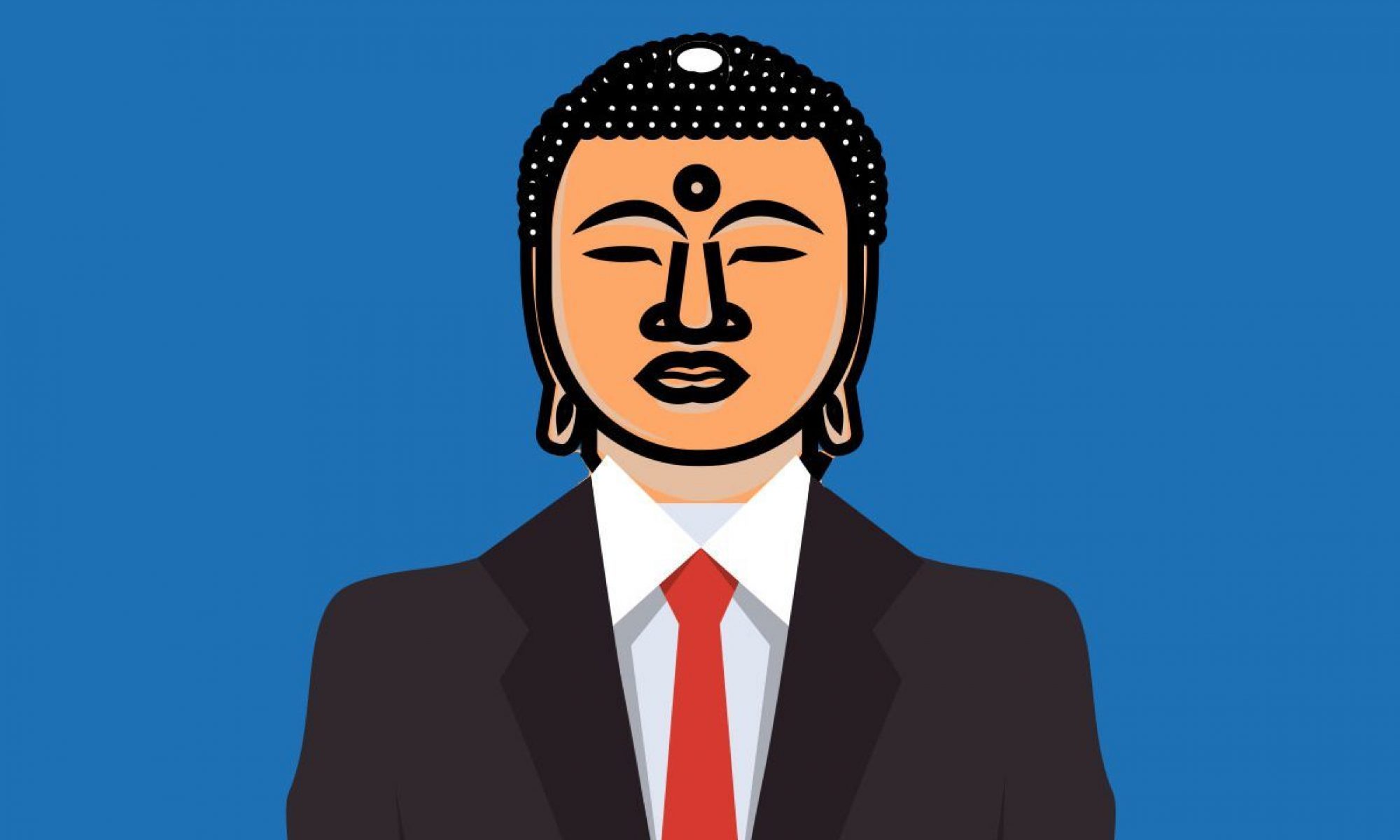
Dao Du Jour II, Day 10: Yogic Yoga

Chapter 10: Techniques

โ€œCan you keep your soul in its body,

hold fast to the one,

and so learn to be whole?

Can you center your energy,

Be soft, tender,

And so learn to be a baby?โ€

~ Tao Te Ching: A Book about the Way and the Power of the Way, trans. Ursula K. Leguin (Shambhala, Boulder: 2019)


The genius of Hindu spirituality is its diversity. In the tradition of the four yogas, you pick your path up the mountain: work (karma yoga), devotion (bhakti yoga), study (jnana yoga), or โ€œyogaโ€ as we in the West know it (raja yoga). Whatโ€™s striking about this model is that thereโ€™s a yoga for both our three centersโ€”head (jnana), heart (bhakti), and body (raja)โ€”and our engagement with others and the world (karma).

And of course you donโ€™t need to โ€œchooseโ€ exactlyโ€ฆthe paths switch back and crisscross in all sorts of ways, merging into each other and back apart as mountain paths do. But one path will call to us the most. The beauty of this model of spirituality is that it balances plasticity with rigor; thereโ€™s wiggle room for free play, but structure to foster true growth.

The word yoga means to โ€œyoke,โ€ to unify or integrate. A truly yogic yoga, then, would exercise all four of these dimensions because theyโ€™re all part of our being. The trick is find out where we are over- and under-developed, where the kinks in our hose are, where the breaks and dislocations and knots and snarls lie. If we arenโ€™t truly centered, we need to find out what we are centered on, slowly relax our grip, and let the patient undertow of the soul gently guide us back.


New to the Dao Du Jour? Check out “Day 0.”

Dao Du Jour II, Day 9: Place Race

Chapter 9: Being Quiet

โ€œBrim-fill the bowl,

itโ€™ll spill over.

Keep sharpening the blade,

youโ€™ll soon blunt it.

Nobody can protect

A house full of gold and jade.

Wealth, status, pride,

are their own ruin.โ€

~ Tao Te Ching: A Book about the Way and the Power of the Way, trans. Ursula K. Leguin (Shambhala, Boulder: 2019)


This weekend, Richard Branson will, assuming all goes well, claim bragging rights for winning first place in the billionaire space race (BSR). I remember some years back Branson did a publicity stunt to celebrate an inaugural flight of his airplane company by bungee jumping off the Palms casino in Las Vegas. The winds were stronger than expected that day, and pushed his backside to graze the building during his descent. As he slowed down for his dismount, Branson looked dazed, shaken, and in serious pain. He flashed a smile for the crowd and the cameras, then limped off stage.

When you think about the hype around this space soap opera, itโ€™s odd: weโ€™ve put people in space before. So whatโ€™s new? The commercial aspects: companies are funding it, and the purpose is tourism.

The contrast between this and the moon-landing in 1969 illustrates how we have become what Ross Douthat calls โ€œthe decadant societyโ€: โ€œa victim of its own success.โ€ No one was unconsciously rooting for the Apollo 11 to blow up. But not a few people Iโ€™ve talked to over the last couple of weeks about the BSR have ironically quipped that they wouldnโ€™t be that upset if Bezos and co. donโ€™t make it back. When Neil Armstrong stepped on the moon and intoned that it was โ€œone small step for man, and one giant leap for mankind,โ€ it was a world-historical moment, the completion of a national project announced by JFK a decade early, and cause for collective celebration. Where Armstrong was a pilgrim, Branson will be a tourist. When Branson and Bezos go up, it will be one small leap for the 1%. As Jamie Wheal quips, the BSR space-capades are like Atlas Shrugged in space.

Wheal relays the story of when technology writer Douglas Rushkoff was invited by a band of billionaires to give a talk about the future of technology. Rushkoff assumed heโ€™d be giving a lecture to a large audience, but it turned out that his $50,000 speaking fee was for talking with just five men. The question each of these men paid $10,000 to ask him was this: โ€œHow do I maintain authority over my security force after the event?โ€ The โ€œevent,โ€ Rushkoff explained, โ€œwas their euphemism for the environmental collapse, social unrest, nuclear explosion, unstoppable virus, or Mr. Robot hack that takes everything down.โ€

The idea here is that the Chosen will escape to their sea-steading platforms, their New Zealand bunker fortresses, their space colonies, or upload their consciousness to the Cloud when their bodies give out: that they can protect their โ€œhouses made of gold and jade.โ€

But just as there would be no SpaceX without NASA and no Tesla without the Department of Energy, there would be no market without the rule of law and money would have no value without civilization. The men asking that question of Rushkoff failed to realize that men of their class planning for the apocalypse were hastening its arrival, brim-filling the bowl and over-sharpening the blade. They are, in effect, shorting civilization. Betting on ruin is a symptom of ruin.

Bransonโ€™s stunt, and the city where it happened, are revealing. There is no greater symbol of decadence in American culture than the Sin City. And while Branson was moving in the opposite direction heโ€™ll be going in this weekendโ€”with gravity rather than against itโ€”and though the scale was dramatically smaller, the physiological effect will be similar: a rush of blood to the head, a passing euphoria, a sense of self-importance that swiftly fades, and then a restlessness and a need to move on to the next big thing. But what could get you higher than space?

Perhaps the quiet of space will evoke a mystical rapture among the .01%, a cosmic consciousness that shrinks their egos down to size, a literal conversion in the sense of a turning around, shifting their gaze from the heavens and back to earth, to escape the urge to Escape and embrace the need to Return. Perhaps then we will be cheering on the billionaire place raceโ€”the race to terraform not Mars, but Earth.


New to the Dao Du Jour? Check out “Day 0.”

Dao Du Jour II, Day 8: This is Ice

Chapter 8: Easy by Nature

โ€œTrue goodness

is like water.

Waterโ€™s good

for everything.

It doesnโ€™t compete.

It goes right

to the low loathsome places,

and so finds the way.โ€

~ Tao Te Ching: A Book about the Way and the Power of the Way, trans. Ursula K. Leguin (Shambhala, Boulder: 2019)


I have at long last gotten around to reading Danteโ€™s The Divine Comedy, the high-water (or perhaps low-water?) mark of medieval literature. In part one, Inferno, a central conceit of Danteโ€™s cosmology is the โ€œHarrowing of Hell,โ€ an apocryphal anecdote in which Christ descended to Hell after dying on the cross and granted salvation to the deserving dead. Itโ€™s perhaps the most graphic depiction of the Jesus move: to embrace suffering rather than try to escape it.

One of the most surprising things about Danteโ€™s Hell is that its floor is not fire, but ice. There is a โ€œlogicalโ€ reason for this in Danteโ€™s cosmology: since the sun is the center of the universe and Hell is the center of the Earth, Hell is the farthest from the sun, with the sun, of course, representing God. Satan rests at the bottom of the world imprisoned in a block of ice, incessantly beating his wings and generating a fierce wind that keeps the ice frozen. Satan โ€œcompetesโ€ by trying to fly up to Heaven.

But ice, of course, is water in disguise. Stuck in the blackest pit of Hell, Satan is so surrounded by true goodness that he canโ€™t see it. As Ken Wilber puts it, spirit is not hard to find, but impossible to avoid.

If you try to compete with water, youโ€™ll always lose, because water is playing a different game than you are. Stop beating your wings.


New to the Dao Du Jour? Check out “Day 0.”

Dao Du Jour II, Day 7: You, Tube

Chapter 7: Dim Brightness

โ€œSo wise souls

leaving self behind

move forward,

and setting self aside

stay centered.

Why let the self go?

To keep what the soul needs.โ€

~ Tao Te Ching: A Book about the Way and the Power of the Way, trans. Ursula K. Leguin (Shambhala, Boulder: 2019)


โ€œOut of the dimness,โ€ Walt Whitman wrote, โ€œopposite equals advance.โ€

Every organism stays alive by constantly policing the boundary between its self and its environment. There are always scouts tacking about the liminal space, the no manโ€™s land between in and out, self and non-self, life and death. But every organism, so far as we know, is spared the ordeal of this osmotic operationโ€”consciousness. Humans donโ€™t just struggle to surviveโ€”we struggle with the struggle. We desire an end to the struggleโ€”not death, but heaven, nirvana, happiness, fulfillment, self-actualization, flourishing, retirement, and on and on. โ€œCuz people believeโ€ฆthat theyโ€™re gonna get away for the summer,โ€ as Oasis sang in โ€œChampagne Supernova.โ€ Nihilism, Nietzsche wrote, is the โ€œwill to the end.โ€

Itโ€™s all too easy to get tangled in the thicket of terms that frequent our talk about human natureโ€”persona, ego, self, soul, conscious, unconscious, mind, brain, spirit. But if we let go of the terms, or at least relax our death grip of them, itโ€™s pretty easy to sort out. Carl Jung called the conscious self the ego, the part we show the world the persona, the part we hide from ourselves and others the shadow, and the truest part behind and beneath all of that the Self. In this passage from the Daodejing, what Jung called the ego is called โ€œself,โ€ and what Jung called Self is called โ€œsoul.โ€

Building on Jungโ€™s concept of the shadowโ€”the ugly parts of ourselves we disown, repress, and project onto othersโ€”Robert X posited the idea of a โ€œgolden shadow,โ€ the gifts we project onto others. We give away our gold because we are afraid of what others will think of us and, most importantly, of our own power. More precisely, we are afraid that our own power is not really our own, that some secret cord ties us to the center of the world, that the energy of the cosmos courses through us.

But we arenโ€™t really giving away our gold, weโ€™re just hoarding it. We hoard it because we have mistaken self for soul (or, in Jungโ€™s terms, ego for Self). This keeps us stuck in placeโ€”not centered, but floating. The paradox with hoarding, of course, is that you never feel secure and never think you have enough. If you hoard your breath, youโ€™ll die. If you let it go, youโ€™ll live. If we boil down the psychobabble of our self-talk, what remains is spirit, but spirit is just breathโ€”the most bodily business. The Earth, as philosopher Jason Wirth writes, is simply the โ€œconspiracy of life.โ€

Alan Watts half-jokedโ€”the highest truths always trade in humorโ€”that we are really just โ€œtubes.โ€ Weโ€™re organisms after all! What a relief.


New to the Dao Du Jour? Check out “Day 0.”

Dao du Jour II, Day 6: Mackenzie Prime

Chapter 6: What Is Complete

โ€œThe valley spirit never dies.

Call it the mystery, the woman.

The mystery,

the Door of the Woman,

is the root of earth and heaven.

Forever this endures, forever.

And all its uses are easy.โ€

~ Tao Te Ching: A Book about the Way and the Power of the Way, trans. Ursula K. Leguin (Shambhala, Boulder: 2019)


โ€œThe French novelist Andrรฉ Malreaux professed that the 21st century may or may not be religious. It will, however, be more feminine than the 20th century.โ€ ~ Rรฉgis Debray

Western culture is oriented around Sky godsโ€”Yahweh, Zeus, Mardukโ€”and it is no accident that in our modern religion of technology and capitalism, what Neil Postman called โ€œtechnopoly,โ€ the pantheon of deitiesโ€”Musk, Bezos, and Kurzweilโ€”are Heaven-bent. Onward and upward to Space, Mars, the Cloud. Planet Starbucks awaits.

The transhumanist fantasies of Silicon Valley have a great deal to do with the denial of death and the typically masculine fear of it. The Great Men of the past were content to seek the immortality of their names in the historical record; those of the present are chasing the real deal.

The spirit of the Daodejing, however, offers up the matrix of a mythology for our time. If history has been dominated by the Escapism of the masculine ideal up through the 20th century, perhaps we are in the middle of a tectonic cultural shift; cultural moments like the #MeToo movement are the tip of an iceberg, a wisp of the emerging zeitgeist of Return. Fukuyamaโ€™s prophecy of the โ€œend of historyโ€ was not so much wrong and incomplete. If History 1.0 is about differentiating humanity from the biosphere, History 2.0 is about integrating with it. History 1.0 was driven by a zero-sum logic of scarcity, conquest, and competition, of speeding and scaling, of transcending natural limits. History 2.0 will be driven by a logic of abundance, symbiosis, and cooperation, of slowing and rooting, of embracing natural limits. What we call โ€œsustainabilityโ€ is just a corporatized form of โ€œforever.โ€

In the Ministry of the Future, novelist Kim Stanley Robinson envisions a new โ€œstructure of feeling,โ€ a quasi-religion one character half-jokingly calls โ€œMatriotism: โ€œGaia citizenship, or what have you. Earth citizen, commons member, world citizen. One Planet. Mother Earth. All these terms used by people who are coming to think of themselves as part of a planetary civilization. Main sense of patriotism now directed to the planet itself.โ€

This sounds naรฏve and silly until you realize that what we call โ€œpatriotismโ€ is relatively new. The conservative instinct is to regard patriotism as โ€œnaturalโ€ and be skeptical of its meaningful extension beyond the bounds of the nation-state. The problem with this way of thinking is that the nation-state is a modern construct, not the state of nature. Patriotism is precisely the expansion of an individualโ€™s horizon of care, loyalty, and belonging beyond their immediate kin and local territory to large groups of strangers and large amounts of land. If such an expansion was possible before, why not another? As more and more people are born into a worldwide web and a chaotic climate, it will become more and more natural for them to think in planetary terms.

Contrary to the dystopian bent of so much cli-fi, Robinsonโ€™s rollicking fable ends well. After all the geoengineering and carbon pricing and international coordination is done and the Keeling Curve is going down, the heroine, the Prime Ministress of the Future, does a flyover of the planet in an air ship, including a new port city built in the arctic to stabilize the polar ice cap. In a wickedly funny dig at the richest man in the world, Robinson names the city โ€œMackenzie Prime.โ€


New to the Dao Du Jour? Check out “Day 0.”

Dao Du Jour II, Day 5: The Great Bellows

Chapter 5: Useful Emptiness

โ€œHeaven and earth arenโ€™t humane.

To them the ten thousand things

are straw dogs.

โ€ฆ.

Heaven and earth

Act as a bellows:

Empty yet structured,

it moves, inexhaustibly giving.โ€

~ Tao Te Ching: A Book about the Way and the Power of the Way, trans. Ursula K. Leguin (Shambhala, Boulder: 2019)


According to legend, shortly before his death St. Thomas Aquinas, architect of the most systematic intellectual edifice of Catholic tradition, the 3,000 page Summa Theologica, was struck by a mystical experience on the proverbial road to Damascus and proclaimed, โ€œAll I have written is so much straw.โ€ A great cathedral leveled by a bolt from the blue.

The paradox of mysticism is that it offers a kind of final consolationโ€”a self-authenticating certainty that, amazingly, all really will be and already is wellโ€”yet after the rapture recedes, the world seems empty and pointless. Another way of putting this is that mysticism entails a kind of positive nihilismโ€”from the โ€œstandpointโ€ of ecstasis, the revelation that the world has no meaning is a great relief, the search for โ€œmeaningโ€ is shown to be fruitless because the world is its own magic. But when the music stops, the silence can feel unbearable, and the questions creep in: โ€œWas it all in my head? Am I crazy? What’s the point, really?โ€ And so on. A new dualism tries to worm its way into the mindโ€”between mystical and mundane, transcendent and immanent, ecstatic and quotidian experience.

โ€œStraw dogsโ€ here refers to disposable objects, to impermanence. Impermanence only seems like a cruel and unfair feature of the universe from the standpoint of a permanent selfโ€”puffed up, holding its breath, trying to stop the flow of air, which is just a more concrete word for spirit. Only he who loses his breath will gain it. And losing your breathโ€”emptying yourselfโ€”is the only way to receive the gift from the great bellows.

The emptiness of the great bellows is not the cold vacuum of space, not the eternal silence of infinite spaces that fill poor Pascal with dream, but a great cauldron of possibility that bodies the world forth. Would that Job had read the Daodejing. It would have given him a more satisfying answer by showing him the confusion of his question. Perhaps we are to understand his โ€œrewardโ€ at the end as a sign that this insight is more valuable than any โ€œstraw dogs,โ€ material possessions.


New to the Dao Du Jour? Check out “Day 0.”

Dao Du Jour II, Day 4: Generation A

Chapter 4: Sourceless

โ€œThe way is empty,

used, but not used up.

Deep, yes! ancestral

to the ten thousand things.

โ€ฆ.

Quiet, yes, and likely to endure.

Whose child? born

before the gods.โ€

~ Tao Te Ching: A Book about the Way and the Power of the Way, trans. Ursula K. Leguin (Shambhala, Boulder: 2019)


Reread the passage, but this time substitute โ€œthe earthโ€ for โ€œthe way.โ€

We are accustomed to imagining the earth as Gaia, the Great Mother of all life. We are less prone to picture it as a child, but in the scope of cosmic time, the earth is a newborn.

One of the articles of faith of the environmental movement is that humanity is destroying mother earth. The inconvenient truth for such apocalyptic environmentalists, however, is that the earth will be just fine. The earth is not a living thing, not a โ€œsuper-organism,โ€ and ironically, it is human hubris to think that our actions could cripple or kill it. Decimate animal species, disrupt the climate, and erode the conditions for our own survival? Yes. Destroy the world? No, thatโ€™s godsโ€™ territory. But even in the great myths, the godsโ€™ destruction of the world was only ever the destruction of the human world. The cosmos quietly endures, and the earth may be a young child of the universe, but it was around billions of years before us and our gods. Gods are the children of men.

Stewart Brand is correct to conclude that we are as gods, and may as well get good at it. But getting good at playing god means raising our gods well. If it is not a matter of being gods or humans, but of what sort of gods we wish to be, then we have to figure out how to stop being childish gods.

There is no greater mark of modernity than the abstraction of the ancestral. Our ancestors are foreign and strange to us, sealed off and separated by oceans, language, and revolutions political, cultural, and technological, as though they were from another planet. The โ€œancestor worshipโ€ of todayโ€™s indigenous holdouts present to us as superstition, perhaps more respectable than YouTube conspiracism but cut from the same spiritual cloth.

But just as the ancestral ethos was the backbone of hunter-gatherer societyโ€”i.e., the vast majority of our speciesโ€™ lifeโ€”ancestor worship may be the key to surviving our technological adolescence and saving our civilization.

Every ancestor was once a child, and every child is an ancestor in waiting. The presentism of our culture, the short-term mindset of the quarter in our economics and the election in our politics, the on-demand character of our consumer culture, even the retirement planning that governs our careersโ€”these are all powerful temporal headwinds that make it hard for us to see the fullness of time. Children are raised to be achievers in the short game of the economy, not ancestors in the long game of civilization.

There is no shortage of critiques of how todayโ€™s โ€œintensive parentingโ€ involves a neurotic over-involvement with children that turns them into little cult objects. But maybe it stems from an unconscious recognition of the great task before usโ€”not to get our children into Harvard, but to raise what philosopher Roman Krznaric calls โ€œgood ancestors.โ€ Our words for culture and cult derive from the Latin cultus, which means worship. As David Foster Wallace reminds us, there is no such thing as not worshipping. We worship what we pay attention to. Every family is a kind of cult. The only question is what sort of cult it wishes to be.

The advantage our ancestors had was that life didnโ€™t change all that much from one generation to the next, so by paying attention to the present, you were paying attention to the past and the future. Our problem is that, starting 10,000 years ago with the agricultural revolution, increasingly with the industrial revolution 300 years ago, and dizzyingly with the informational revolution 30 years ago, thereโ€™s been too much change too fast for each generation to make sense. The generation gaps grow as time speeds up, and each generation feels abandoned by the one before it, self-absorbed trying to make sense of its own strange seam of time, and lacking the spiritual, mental, and moral resources to hand things off to the next one. As Joseph Campbell put it, in modernity you canโ€™t have a unifying mythology because before anything new can constellate it gets throw off. And as Zak Stein explains, when the conditions for intergenerational transmission of knowledgeโ€”in a word, educationโ€”break down, civilization cannot continue.

But the future has begun to encroach on our presentism. As the Boomers begin boarding the ships for the Gray Isles, the last three generationsโ€”X, Y, and Zโ€”find themselves abandoned together on this little island of time at the end of history. Itโ€™s like a temporal Pale Blue Dot. How we respond is up to us: shrugging in nihilism or shouldering the burden of glorious purpose. The more we pretend we are not ancestors, the less likely we are to have descendants, and if we do, the less likely they are to worship us.


New to the Dao Du Jour? Check out “Day 0.”

Dao Du Jour II, Day 3: Hushing

Chapter 3: Hushing

โ€œSo the wise soul governing people would empty their mindsโ€ฆkeep people unknowing, unwanting, keep the ones who do know from doing anything.โ€

~ Tao Te Ching: A Book about the Way and the Power of the Way, trans. Ursula K. Leguin (Shambhala, Boulder: 2019)


Here we see Lao-Tzu seem to embody the very patriarchal ethos he defines himself in opposition to: Confucian conservative command and control. Hardly the hippie libertarian trickster of latter day New Age culture encouraging you to embrace your funk.

But that presumes that the one governing thinks they are in the know, and that is precisely what is denied here. Much like Plato proposed in the Republic that the ones who should rule are the ones who donโ€™t want to rule, Lao-Tzu is saying that the ones who think they know how to rule are the ones who must be kept from power. When you read the Yeats quote today, โ€œThe best lack all conviction, while the worst are full of passionate intensity,โ€ itโ€™s natural to think of the mainstreaming of conspiracy theories today and the demagogues who fan its flames. Ironically, the attack on the โ€œadministrative deep stateโ€โ€”that is, the people who actually know what theyโ€™re doingโ€”comes only ostensibly from the ignorant and uneducated. For they know a great many things that we donโ€™t.

They know that Obama is a Muslim born in Kenya; they know that โ€œBenghaziโ€ [sic]; they know that COVID 19 was leaked from a lab in China; they know that Bill Gates arranged for microchips to be embedded in your skin through the vaccine; they know that the 2020 election was stolen. They know all of these things with passionate intensity, for knowing, in this sense, simply is passionate intensity. What started as the Tea Party, a noisy band of low libertarian, garden-variety anti-government barkers, and metastasized into the Trump Party (there can be no doubt that that is exactly what the GOP now is) actually started a long time ago: as the โ€œKnow Nothing Partyโ€ of the 1950s: nativist, isolationist, anti-intellectual, rooted in yeoman gnosis. It is what George Packer, in his essential essay in this monthโ€™s Atlantic, calls โ€œReal America.โ€

Those of us in โ€œSmart Americaโ€ think we know better. But believe it or notโ€”I suspect you may not because you are likely a Smart Americanโ€”โ€œI believe in Scienceโ€ and โ€œScience saysโ€ are a stoneโ€™s throw from โ€œโ€™Cuz Hillaryโ€™s emails.โ€ Taylor Dotson has cleverly labeled this kind of politicsโ€”the brandishing of facts, fact-checks, and figures, of evidence, empiricism, and expertise, of โ€œstudies,โ€ โ€œresearch,โ€ and so on to demonstrate that your position is clearly, obviously, self-evidently correctโ€”โ€œFact-ismโ€:

Who hasnโ€™t given in to the urge to reflexively drop a Snopes link, or to reference a scientific article whose abstract we only skimmed, in order to avoid thinking carefully about why a great-aunt or former college acquaintance doesnโ€™t trust Anthony Fauci?

The basic logical problems with Factism are that it misconstrues the relationship between science and policy and the nature of science itself. Fauciโ€™s knowledge about epidemiology is in a different galaxy than yours or mine. His knowledge about ethics is probably in the same ballpark, or even the same room. Science not only doesnโ€™t give us certaintyโ€”especially probabilistic sciences like epidemiology and climatologyโ€”but even if it did, that wouldnโ€™t tell us what we ought to do. Moreover, that โ€œreflexivelyโ€ reflectsโ€”you guessed itโ€”passionate intensity.

But the knowledge of Real America is not what they think they knowโ€”the conspiracy stuff. Itโ€™s what they know we need: belonging. Belonging is what Real America thinks has been stolen from it, what the neoliberalism of Free America destroyed, what the meritocratic knowledge workers of Smart America donโ€™t realize they need, and what Just America call โ€œinclusionโ€ and wants to engineer through social policy.

Dotson calls it connection:

If the underlying problem with scientism and conspiracism is the way each promises certainty, thereby fostering division, then we ought to look toward a politics that is preoccupied less withย knowingย and more withย fostering connection.

Packer calls it patriotism:

โ€œThis feeling canโ€™t be wished out of existence. And because people still live their lives in an actual place, and the nation is the largest place with which they can identifyโ€”world citizenship being too abstract to be meaningfulโ€”patriotic feeling has to be tapped if you want to achieve anything big. If your goal is to slow climate change, or reverse inequality, or stop racism, or rebuild democracy, you will need the national solidarity that comes from patriotism.โ€

Belonging, patriotism, connectionโ€”call it what you want. Itโ€™s the unspoken category of Donald Rumsfeldโ€™s epistemology: the โ€œunknown known.โ€ If people have it, theyโ€™ll โ€œwantโ€ and โ€œknowโ€ less; theyโ€™ll just go about their lives.

Whether you deploy a Scientific worldview or a Biblical worldview, you think you know more than you do. Information without knowledge is emptyโ€”meaninglessโ€”but knowledge without wisdom is blindโ€”dangerous. Being informed matters, being knowledgeable matters more, but being wise matters most.


New to the Dao Du Jour? Check out “Day 0.”

Dao du Jour II, Day 2

Chapter 2:ย  Soul Food

โ€œEverybody on earth knowing

that beauty is beautiful makes ugliness.

Everybody knowing that goodness is good

makes wickedness.โ€

~ Tao Te Ching: A Book about the Way and the Power of the Way, trans. Ursula K. Leguin (Shambhala, Boulder: 2019)


To Western ears, this view is disappointing, perhaps even cause for despair. Western culture is based on winningโ€”good triumphs over evil, God prevails over the Devil, humanity conquers nature, freedom overcomes tyranny, capitalism outcompetes communism. Itโ€™s an asymmetrical universe. Daoism seems to see a 50/50 universeโ€”a draw.

But this would be mistaken. The most important word in todayโ€™s passage is โ€œknowing.โ€ Itโ€™s not that life isnโ€™t beautiful and good. Itโ€™s when we, as individuals, communities, and nations, fall out of the experience of beauty and goodness and try to capture them with concepts. When we step out of the flow of experience and try to explain and defend it, we begin to turn it into something itโ€™s notโ€”into its opposite.

The holy trinity of the Greek philosophical tradition is “the Good, the True, and the Beautiful.” The danger Daoism cautions us against is collapsing the three into the True, and claiming to have knowledge of it, whether revealed in Scripture or discovered by Science. When โ€œeveryone on earthโ€โ€”or just a critical mass of peopleโ€”โ€œknowsโ€ what is โ€œright,โ€ watch out. Theyโ€™re usually in the grip of a theology or a theory. And those who disagree are by default cast as “ugly” and “wicked.”

Everyone on earth knowing that beauty is ugliness makes true beauty.

Everyone on earth knowing that goodness is wicked makes true goodness.


New to the Dao Du Jour? Check out “Day 0.”

Dao du Jour II, Day 1: Taoing

Chapter 1: Taoing

โ€œSo the unwanting soul sees whatโ€™s hidden,

and the ever-wanting soul sees only what it wants.

Two things, one origin, but different in name,

Whose identity is mystery.

Mystery of all mysteries!

The door to the hidden.โ€

~ Tao Te Ching: A Book about the Way and the Power of the Way, trans. Ursula K. Leguin (Shambhala, Boulder: 2019)


There is a basic danger surrounding the confrontation with mystery. The danger is thinking that it is actually hidden from us. That someone, or some group, or some institution, or some place is closer to it than we are. That it is a super special secret. That it is exotic, arcane, esoteric. That it sits behind a locked door, and that we lack the key or combination.

But just as the gates of hell are locked from the inside, so with the door to the hidden.

This chapter also tells us that โ€œheaven and earth begin in the unnamed; the named is the mother of the ten thousand things.โ€ Thick layers of cultural accretion warp our vision of heaven: we picture it as a different dimension of existence, a realm of angelic and somehow purely spiritual beings, which of course makes no sense because pictures involve images, and images entail space, and space entails bodies. But in the seminal texts of Western culture from the Greeks and the Hebrews, heaven literally just means the sky.

When we sever heaven and earth, the other world and this world, death and life, we sever ourselves from our source. The soul then becomes โ€œever-wantingโ€: wanting to escape the gravity of the earthโ€”of limits and weight and bodies and pain and deathโ€”for the frictionless flotation of heaven. This takes both religious and secular forms: believers seeking deliverance from the vale of tears, billionaire tech moguls escaping to space. Earth is a kind of evil from which we want to escape. The unwanting soul already has what it wants.

But of course, the wanting and unwanting soulโ€”in Christian language, the soul in a state of sin and graceโ€”are one and the same. Letting that paradox be is, paradoxically, the way toward wanting well.


Dao Du Jour, Day 81: Limits of the Logos

Chapter 81:

“True words aren’t eloquent.

Eloquent words aren’t true.

Wise men don’t need to prove their point;

men who need to prove their point aren’t wise.”

~ Stephen Mitchell (trans.), Tao Te Ching: A New English Version (New York: Harper Perennial), 2006.


On trial before the Athenians, his life hanging in the balance, Socrates begins his apology (defense) by speaking about speech. He urges the judge and jury, his fellow citizens, to judge what he says on the substance, not the style of what he says; the what, not the how. “I’m not going to lawyer you,” he is basically telling them. He distinguishes himself from the Sophists, a group of men the Athenian elite paid handsomely to school their sons in the art of rhetoric to groom them for leadership in politics. Forget the pathos, Socrates urges them; focus on the ethos–my character–and, most importantly, the logos–the content–of my speech.

Socrates was on trial for corrupting the youth and impiety–not believing in the gods of the city. In the speech, he effectively turn the charges on his accusers, unmasking their hypocrisy and showing that they are more guilty of the charges than he is because they claim to know what they don’t know.

The real apology for Socrates is not defending himself against the charges, but acknowledging the limits of the logos–of human knowledge about the gods and the good.

In his Confessions, St. Augustine laments how he abused his God-given powers of speech to climb the social ladder in a confused pursuit of love and belonging. The schools, he complained, trained him in the art of speaking well; the religious sect he joined, a gnostic group called the Manichees, prided themselves on their eloquence and “loquaciousness”; and his position in the elite echelons of the empire was ensured due to his eloquence in public speaking, especially empty encomiums for the emperor. For Augustine, though, the proper use of speech was to praise God; hence his autobiography is studded with Biblical quotations–almost ad nauseam. The implication is that his own attempt to give an account of his life, the word of Man, will always fall short of the true account, the Word of God.

The real confession for Augustine is not owning up to his sins, but acknowledging his nature–as a sinner, yes, but as limited in speech. No matter how clever we become, we are always as babes babbling about ultimate reality.

We are to God, or the Dao, as children are to adults. The more we apologize and confess–the less we pretend–the more playful and fruitful our speech will be.


I hope you’ve enjoyed the first series of the Dao Du Jour. In the next installment, I’ll be using Ursula Le Guin’s translation of the Daodejing.


New to the Dao Du Jour? Check out “Day 0.”

Dao Du Jour, Day 80: Somewheres and Nowheres

Chapter 80:

“If a country is governed wisely,

it’s people will be content.

….

Since they dearly love their homes,

they aren’t interested in travel.

….

And even though the next country so close

that people can hear its roosters crowing and its dogs barking,

they are content to die of old age

without ever having gone to see it.”

~ Stephen Mitchell (trans.), Tao Te Ching: A New English Version (New York: Harper Perennial), 2006.


One of the many ways we are all trying to get back to “normal” as the pandemic recedes is the resumption of travel. After a year in lockdown, many of us find ourselves disagreeing with Dorothy’s mantra in the Wizard of Oz that “there’s no place like home.” Our is the opposite: “there’s no place like anywhere else.” Home doesn’t quite feel like home if we can’t leave it.

Though regular travel, or at least an annual summer vacation, is normal for most Americans and baked into our experience of home, it is a thoroughly modern phenomenon. Before the rapid urbanization and industrialization of the 19th century, most people rarely traveled, and in the Middle Ages, apart from pilgrimage, travel was difficult, dangerous and rare. Beyond travel, the special restlessness of the American soul, an echo of manifest destiny and the fascination with the frontier, shows up in our increasing mobility.

The sociologist Dalton Conley cuts Americans into “Somewheres” and “Nowheres,” a distinction I distill into “people in place” and “people in space.”

Somewheres are people who live in rural and exurban areas, the people who don’t–and whose children don’t–leave for college and the big city, who are neither outwardly nor upwardly mobile, who invest in and grow the local stock of social capital and thicken the social fabric of a place. Somewheres live closer to the ground, led by the weight of necessity.

Nowheres are people who, before they could walk, were being trained to be “shot into space”: like a quantum particle, they exist in a cloud of possibilities, riding the wave function toward the spaces of the best grades, the most elite colleges, the most prestigious internships, the most lucrative and sought after jobs, the Professional Managerial Class, and perhaps the gated community and country club. Nowheres take it for granted that they and their peers will leave their home towns, and that their teens, 20s, and perhaps their 30s are means toward these nebulous ends. Jeff Bezos, whose company is everywhere and nowhere, who fancies himself a real-life Captain Picard shepherding us toward a planetary, space-faring civilization, and who has made it known that he “wants people in space,” is the epitome of the ideal. Nowheres live closer to the Cloud, afloat on the promise of possibilities.

One way of understanding the Trump era–in which the pandemic is both climax and denouement–is the recognition that this division in American life is neither psychologically desirable nor economically sustainable. You don’t have to want the Benedict Option to recognize that there is something wanting, hollow, and unsatisfying about this way of thinking about community life. Ironically, it is on their tour through the universities that students will learn what evolutionary biology, anthropology, and social psychology now tell us: that we are deeply social creatures who evolved to survive and thrive in small groups of extended kin over a relatively limited range of territory; that the view of human nature as a sovereign individual embedded in classical liberalism, the operating system of modernity, is a useful fiction. Of course common sense would tell you the same, but common sense becomes less common when society is programed for destination Nowhere. People raised in such a culture aren’t like to get the memo, and will come to see family, community, and a commitment to the local as a stepping stone, at best, and a hindrance to their self-actualization, at worst. Space beckons.

But in reality, space doesn’t exist. There are only places. We have engineered the social topography of our society in such a way that only a small number of places are regarded as culturally and economically desirable to live, and relegated the rest to “fly over country.” The information economy depends on the cloud, the cloud depends on servers, servers depend on electricity, and electricity, for now at least, depends on oil and gas and infrastructure. Space is not the absence of places, but made possible by places. The primal scream of Trumpism is the return of the repressed of place erupting into space.

The best views from space, ironically, were of the Earth. Whether it was Carl Sagan’s “pale blue dot” or the “blue marble” photo, our early space travels revealed to us how beautiful and precious our terrestrial home really is. As a friend of mine once said, the purpose of vacation is to help you realize how good you have it. Lao-tzu isn’t so much telling you not to travel as encouraging you to be content with where you are; and realize that you travel every time you leave your front door.


New to the Dao Du Jour? Check out “Day 0.”

Dao Du Jour, Day 79: Successful Failure

“Failure is an opportunity.

If you blame someone else,

there is no end to the blame.”

~ Stephen Mitchell (trans.), Tao Te Ching: A New English Version (New York: Harper Perennial), 2006.


When Marx described the concept of “ideology,” he used a powerful metaphor: a “camera obscura,” in which the image of an object is turned upside down. Ideology presents up as down, black as white, wrong as right. Consider the most engrained metaphor of our modern mythology: “pulling yourself up by your own bootstraps.” Orwell said that “to see what is in front of one’s nose is a constant struggle” because people are always trying to draw your attention away from the plain truth. A quick look down at your shoes dispels the myth: the action is impossible to perform.

At around the same time that corporate America and its pacing car, Silicon Valley, began embracing meditation in the workplace as a way to goose productivity, thought leaders began to extol the virtues of failure: “Fail early, fail often.”

As is often the case with the conventional wisdom in American self-help and business culture, it is hard to separate the latest corporate cant from the kernel of wisdom it contains. Ideologies only work if they make contact with the truth, however tenuous. It’s easy to run the standard leftist critique of the new gospel of failure: it’s a form of mass gaslighting that makes people fucked over the by the system–that is, most people–think that it’s their fault–they didn’t work hard enough–not a function of the system being rigged against them; serial failure is a privilege for the few predicated on a secure cushion of success provided by family, social capital, education, etc.; it legitimizes the legion disruptions that Big Tech has wrought on our brains, our economy, our politics, and our culture over the last two decades; it is, in short, kind of what capitalism does.

All of that is (partly) true. But we mustn’t let the satisfaction such analysis yields lull us into smug complacency. That would be a failure of imagination and introspection. For the very same mantra used to needle workers into blaming themselves for failure can be turned around to puncture the “bootstrapping” bubble. Failure is an opportunity to examine your vision of success.

Note that Lao-Tzu does not instruct you to blame yourself as opposed to someone else. He implies that blame itself is a kind of failure, and not the good kind. The Stoic Epictetus thought the same: โ€œAn ignorant person is inclined toย blame othersย for his own misfortune. Toย blame oneselfย is proof of progress. But the wise man never has toย blame anotherย or himself.โ€ Taking responsibility and correcting mistakes is not the same as assigning blame. If you blame yourself, “there is no end to the blame,” because you will begin to identify as a failure.

If failure is an opportunity, then success is a danger. And the greatest enemy of success. If you identify with being successful, you will set yourself up for failure. You will be clinging to your past achievements and the reputation they afforded, and as time passes reality will begin to diverge from that image. Your success will become a camera obscura distorting your vision of what is in front of your nose. You may fend off failure for awhile this way, but by failing rarely, you will fail big. If you fail early and often, the failures are likely to be small, and you can make the necessary course corrections to realign with reality. You will, in short, learn. You will learn better how to swim, rather than just treading water.

Real success is to be constantly succeeding yourself. Real failure is to be constantly succeeding.


New to the Dao Du Jour? Check out “Day 0.”

Dao Du Jour, Day 78: Natural Poets

Chapter 78:

โ€œThe soft overcomes the hard;

the gentle overcomes the rigid.

Everyone knows this is true,

But few can put it into practice.

True words seem paradoxical.โ€

~ Stephen Mitchell (trans.), Tao Te Ching: A New English Version (New York: Harper Perennial), 2006.


โ€œEvery word,โ€ Emerson wrote, โ€œwas once a poem.โ€ Everyone knows this is true, but fewโ€”poets, that isโ€”but it into practice.

But not just poets. We are too precious about what poetry should look life and who counts as a poet. Children are natural poets; for them, every word is new. The Greek root of the word, poeisis, can be translated as โ€œbringing forth.โ€ When the child cleaves off a piece of the world and attaches a word to it, she brings forth meaning from sound.

Over time, of course, the novelty wears off, poetry settles into prose, and we forget the creative power not just of language, but consciousness itself.

True words seem paradoxical because no words are โ€œtrueโ€ or โ€œfalse.โ€ Every word is an interpretation that reveals and conceals the world. But even this conceals a deeper truthโ€”that there is no โ€œtrueโ€ world beyond our perception and language.

True words seem paradoxical because reality is paradoxical. Once we cease and desist from treating paradox as a problem to be solved, once we concede that existence is not even but fundamentally odd, the worldโ€”and the Wordโ€”can once again speak to us and through us.


New to the Dao Du Jour? Check out “Day 0.”

Dao Du Jour, Day 77: Chaosmos

Chapter 77

โ€œThose who try to control,

who use force to protect their power,

go against the direction of the Tao.โ€

~ Stephen Mitchell (trans.), Tao Te Ching: A New English Version (New York: Harper Perennial), 2006.


Contained in this sentence is the essence of a psychology, a politics, an economics, an ecology, and an ethicsโ€”a complete cosmology. The Chinese philosopher Yuk Hui has recently advanced what he calls โ€œcosmotechnics,โ€ a holistic way of thinking about technologyโ€”holistic in the sense that whenever we think about or talk about or use technology, we are always already assuming and enacting a worldview and a set of values. Technology is always about more than tools.

Hui is offering a contemporary and comparative update of Martin Heideggerโ€™s seminal 1954 essay, โ€œThe Question Concerning Technology,โ€ where Heidegger argued that the essence of technology is not, strictly speaking, technological. It is primarily a way of knowing that he characterized as โ€œenframing.โ€ Enframing reduces the mystery of the world to a reservoir of energy and turns nature into a โ€œgigantic gasoline station.โ€ Nature is there to be controlled, a stock of resources to be used, and used up, in service of our human endsโ€”whatever those happen to be.

Heideggerโ€™s concern was that way of knowing was nihilistic in the sense that it is, literally, endless. As C.S. Lewis puts it in the Abolition of Man, most pre-modern civilizations were premised on something like โ€œthe Taoโ€: an absolute morality anchored not in the desires and whims of human culture and psychology, but in the order of things. Humanityโ€™s ends are somehow set, fixed, limited by the basic architecture of reality, and human lives and societies go well when they more or less adhere to them.

But the enframing mindset decouples humanity from nature, โ€œfreeingโ€ us to posit whatever ends we happen to have. That means that there is nothing to stop the logic of regarding nature as a stock of expendable resources from being turned back on humanity itself, e.g., โ€œhuman capital,โ€ โ€œhuman resources.โ€ The great irony of this, Heidegger points out, is that just at the moment where we think we have become gods and triumphed over nature, we are mired in a deeply dehumanizing way of being. Or as Lewis put it, manโ€™s conquest of nature turns out to be natureโ€™s conquest of man: severed from the Tao, man has nothing but his instincts and impulsesโ€”supplied by natureโ€”to guide him. He has abandoned not only his rationality, but his home: the very idea of living in a cosmos.

Daoism embraces a less dualistic view of the humanity/nature relationship than the Western tradition that is perhaps best captured by James Joyceโ€™s formulation โ€œchaosmos.โ€ Hui offers us a potential path toward thinking about, designing, and using technology in a way that is more mindful of, and integrated with, our ecology. Perhaps Daoism can offer a way for both the East and the Westโ€”effectively, the Yin and Yang on the geopolitical stage of the 21st centuryโ€”to build a sustainable futureโ€”a human world that doesnโ€™t go against the direction of the Dao?


New to the Dao Du Jour? Check out “Day 0.”

Dao Du Jour, Day 76: Ha-do-ken!

Chapter 76

โ€œMen are born soft and supple;

dead, they are stiff and hard.

Plants are born tender and pliant;

Dead, they are brittle and dry.

Thus whoever is stiff and inflexible

is a disciple of death.

Whoever is soft and yielding is a disciple of life.โ€

~ Stephen Mitchell (trans.), Tao Te Ching: A New English Version (New York: Harper Perennial), 2006.


When I was learning Tai Chi years ago, the teacher demonstrated a deceptively simple move for us. You turn your left foot out, plant it firmly in the ground, turn your body to the left, drop your center of gravity down and lean over that foot, then slowly push against the ground, extend the right foot forward into a lunge, twist your body to face straight, unfurl your left arm forward, and snap your wrist so that your palm faces forward.

The logic of the moves in Tai Chai, the teacher explained, is to reduce the points of tension in your body and the friction in your movements so that you conduct the energy around and within you with minimal effort. And the most powerful energy reservoir around you is the ground. The strength of your movements comes through you, not from you.

The teacher proceeded to demonstrate said move to us. What we observed was impressive, but what we heard was shocking. It was not so much the speed and elegance with which he executed the move, but what I can only call its focused ferocity. When he finished, we heard not only the snap of his wrist, but the shockwave of air his hand had displaced, as though he had broken a kind of micro sound barrier. Those of you of a certain generation will recognize this for precisely what it was: the “ha-do-ken” fireball move from Street Fighter II.

I can still hear that sound. That sound, he told us, was just the ground. By making your body fluid and transparent to the energy around you, you give voice to what cannot speak for itself.

The same principle applies to the mindโ€”and the mind-body connection. Whoever has a stiff and inflexible mind isnโ€™t really thinking. A stiff mind will lead to a stiff body, and a stiff body will lead to a stiff mind. Odds are there is a place in your body right now thatโ€™s clenched. Stop reading, find it, listen to it, and let it lead you into your next move.


New to the Dao Du Jour? Check out “Day 0.”

Dao Du Jour, Day 75: Alone Together

Chapter 75:

โ€œWhen taxes are too high,

people go hungry.

When the government is too intrusive,

People lose their spirit.

Act for the peopleโ€™s benefit.

Trust them; leave them alone.

~ Stephen Mitchell (trans.), Tao Te Ching: A New English Version (New York: Harper Perennial), 2006.


Do not be misled: the Dao is not a supporter of the GOP. For one thing, the cult of individualism that is the bedrock of modern conservatismโ€”and classical liberalism more broadlyโ€”is alien to Asian cultures generally. Part of this passage, especially the notion of an intrusive government, is a dig at Confucianism, the original โ€œBig Brotherโ€ of antiquity, but Daoism still embraces a relational view of humanity and reality. Lao-Tzuโ€™s point is that that at some point, rules become not only restrictive and oppressive, but insulting to peopleโ€™s intelligence and disrespectful of their humanity.

But if he were around today, Lau-Tzu would hardly be praising the cult of the entrepreneur, advocating trickle-down economics, or dancing the Republican two-step of cutting taxes and slashing regulations. We often assume that what we call neoliberalism is premised on โ€œfree marketsโ€ and deregulation, but as Quinn Slobodian documents in his book on the topic, neoliberalism was actually about re-regulation and โ€œencasingโ€ markets in a legal and political architecture that resulted in the dizzying levels of inequality we see today.

What that means is that, paradoxically, in order to โ€œleave the people aloneโ€ in todayโ€™s age, government is not the problem but the solution. Taxes must be raised on corporations and the wealthy because โ€œtaxes are too highโ€โ€”not marginal tax rates, but the increased cost of living for the average person in terms of education, healthcare, and housing, combined with stagnant wages. For the longest time, we have mistaken โ€œgovernment intrusionโ€ for something called โ€œlate capitalism,โ€ forgetting that economic waves, however driven by powerful global currents, are downstream from politics to the extent that the decisions leaders make determine how nations surf them. In perhaps the most contorted ideological pose conceivable, the notion that capitalism is the problem is a kind of ideology that masks the real threat: a misunderstanding of the optimal relationship between politics and economics, between democracy and capitalism, and of the true nature and proper role of values in determining the shape of society. The tectonic shift we are just beginning to undergo away from Reaganism and toward a โ€œNew New Dealโ€โ€”one more racially inclusive and environmentally conscious than the originalโ€”is a return to values-based governance, and a rejection of the fantasy of value-neutral public policy, which neuters the peopleโ€™s will and neutralizes the very idea that there is such a thing as society.

To act for the peopleโ€™s benefit, remember there is such a thing as the common good.

To trust them, decouple welfare from work.

To leave them alone, pass laws as if they arenโ€™t.


New to the Dao Du Jour? Check out “Day 0.”

Dao Du Jour, Day 74: Ministry of the Future

Chapter 74:

โ€œTrying to control the future

is like trying to take the masterโ€™s carpenterโ€™s place.

When you handle the master carpenterโ€™s tools,

chances are that youโ€™ll cut yourself.โ€

~ Stephen Mitchell (trans.), Tao Te Ching: A New English Version (New York: Harper Perennial), 2006.


Stoicism and Daoism are often accused of fatalism: the Logos and the Dao are going to do what theyโ€™re going to do, and youโ€™d best accept it rather than โ€œpush the river.โ€ Go with the flow and like it! This offends our modern Pelagian sensibilities and, indeed, it is puzzling that Stoicism has become so trendy in contemporary self-help culture. If the lionโ€™s share of self-help literature is based on so many versions of โ€œthe power of positive thinkingโ€ and the โ€œlaw of attraction,โ€ Stoicism might be cast as โ€œthe power of negative thinking,โ€ or as Tim Ferriss puts it, โ€œpractical pessimism.โ€ Something like a โ€œlaw of subtractionโ€ is contained in Lao-Tzuโ€™s prescription for gaining wisdom: โ€œsubtract something every day.โ€ For the Stoic, we must try not to control what cannot be controlled; for the Daoist, we must try not to try doing anything.  

But ceasing our attempts to control the future doesnโ€™t mean writing the future off. It means changing how we relate to it. In the spirit of Stoicism, Stephen Covey, author of the 7 Habits of Highly Successful People, introduced a useful framework for positing ourselves relative to the future. The individual is placed at the center of three concentric circles. The first is the circle of control. The second is the circle of influence. The third is the circle of concern. Obviously, the optimal allocation of your attention involves is to maximize focus on what you can controlโ€”e.g., how much sleep you get tonightโ€”and minimize focus on what youโ€™re concerned aboutโ€”e.g., the prospects for peace in the Middle Eastโ€”while devoting a decent amount of energy toward influencing those around youโ€”e.g., friends, family, and colleagues. If you focus too much on what youโ€™re concerned about, youโ€™re going to โ€œcut yourself.โ€

If we layer the circle of Hierocles on top of this one, and set it in a temporal context, interesting things start to happen. In this framework, the circle of the self is nested within progressively larger circlesโ€”family, community, nation, etc.โ€”extending to humanity itself, the cosmopolitan perspective that the Stoics introduced into Western culture. Today, we would include an even more encompassing circleโ€”the environment and nonhuman beings. The adage think โ€œglobally, act locallyโ€ tracks this ideaโ€”we should attempt to control and influence ourselves, others, and the world in ways that are aligned with global concerns. But when we add the temporal dimension, it gets more complicated.

In her new book, Under a White Sky, Elizabeth Kolbert grapples with precisely this question of how we are to relate to the future. The Baconian ethos of controlling nature to relieve the human estate, so successful in some respects, has generated a surfeit of social and environmental problems that threaten to do our civilization in in the long run. But exactly because of that success, it is tempting to think that by doubling down on control, we can fix these problems. If that modern vision was about gaining knowledge to control nature, the 21st century version of it will be about gaining knowledge to control the future. Kolbert, channeling the world-weary cynicism of many an environmentalist, sighs that all we can hope for is to โ€œcontrol our control of nature.โ€ It is not a matter of whether we will be gods, but what sorts of gods we will be. Yet this position seems tragic: we are destined to death by 1,000 โ€œcuts.โ€

But the apprentice carpenter is prone to error not just because he doesnโ€™t know how to use the masterโ€™s tools, but because he doesnโ€™tโ€™ know wood. A master is a master first of all of his material, not his tools. The tools are a means toward revealing the shapes that slumber in the wood. He does not so much impose a pre-existing form in his mind on the blank canvas of the wood; he draws out the forms suggested by signature of the wood, and the tools are like different moves in the dance he leads it into.

The modern project has in large part been about treating natureโ€”the woodโ€”like a blank canvas that we can pain anything onโ€”that we can turn into any shape we damn well please. It encodes an attitude toward the future that is fundamentally escapist: the earth is something to be not just used, but used up, and the future is regarded as an otherworldly paradise, freed from the laws and limits of this vale of tears. The future is something to which we wish to escape.

But our civilization is undergoing a tectonic shift in our relationship not just to the planet, but the future. Just as we must begin to think more globally, we have to think in longer time horizons. Luckily enough, our species is pretty good at this: indigenous and traditional cultures always played the long game. The difference is that they played the local game, not the global one. Our task, then, is truly new: to play a game both long and global.

The future is not something we can the ability or the right to control. It is something we have the ability and the responsibility to protect. We must trust that the woodโ€”the natural worldโ€”will tell us how to redesign our civilization so that we can develop the tools necessary to bring it forth. The endgame is not escaping the earth, but learning how to be earthlings.


New to the Dao Du Jour? Check out “Day 0.”

Dao Du Jour, Day 73: Web 3.0

Chapter 73:

The Tao is always at ease.

It overcomes without competing,

answers without speaking a word,

arrives without being summoned,

accomplishes without a plan.

Its net covers the whole universe.

And though its meshes are wide,

it doesnโ€™t let a thing slip through.

~ Stephen Mitchell (trans.), Tao Te Ching: A New English Version (New York: Harper Perennial), 2006.


To see what is in front of oneโ€™s nose, George Orwell put it, is a constant struggle, and perhaps the hardest part of that struggle, the hardest thing to see, is technology. Why? Because it is more and more provides glasses through which we see. As Heidegger put it, the essence of technology is nothing technological: instead, itโ€™s a way of understanding reality, a way that we are typically blind to.

If we consider how dramatically the printing press changed the course of world history over a few centuries, and how early we are in the days of what is probably an even more transformative shift in our information ecology, we can slip through the grasp of our current social imaginary, confident that it too shall pass. Where the early days of the world wide web were utopian, the second act of the internet has been characterized as the โ€œtechlash,โ€ a bevy of concerns about the harmful psychological, political, cultural, and economic effects of Big Tech. Both stories were apocalpytic: where Web 1.0 was seen as ushering in a kind of libertarian socialist [sic] paradise, Web 2.0 is seen as leading us toward, alternatively, an idiocracy and/or an authoritarian surveillance superstate, or what Jaron Lanier calls โ€œDigital Maoism.โ€ The former story has been reincarnated as the Singularity, aka the Rapture for Geeks, while the latter story has been variously depicted in the series Black Mirror.

What would Web 3.0 look like? As with any technology, over time the internet will become more and more integrated into the lifeworld; indeed, that process is already proceeding apace, as we see in the so-called Internet of Things. Right now, we are still adjusting ourselves psychologically and culturally to the new tech, and are beginning to realize we must adjust the new tech to accommodate the neurobiological limits of our organisms. But when our self-conceptions and social norms and political and legal systems are still running the old software that codes the human being as a separate, solitary, sovereign individualโ€”the anthropology of classical liberalismโ€”the internet will present as, alternatively, deliverance from isolation or a threat to freedom.

Seen properly, the internet encodes the same big idea as ecology: that reality is a fabric of relationships, not a collection of atoms. Nature and technologyโ€”and we must not forget that nature produced technological beingsโ€”are guiding toward an understanding of our place in the universe captured not just by the Dao, but the image of โ€œIndraโ€™s Netโ€ from Hinduism: a vision of the universe as a web, with each node a jewel that reflects the whole. Each is a part of the whole, but the whole is contained in each part.


New to the Dao Du Jour? Check out “Day 0.”

Dao Du Jour, Day 72: On Magma and Dogma

Chapter 72:

โ€œWhen they lose their sense of awe,

people turn to religion.

When they no longer trust themselves,

they begin to depend upon authority.โ€

~ Stephen Mitchell (trans.), Tao Te Ching: A New English Version (New York: Harper Perennial), 2006.


Brother David Steindl-Rast offers a pregnant metaphor to help us think about the evolution of religions: a volcano.

The founder of a religion is a volcanic eruptionโ€”that one-in-a-billion person blessed with a god-consciousness that blows the minds and hearts of his people, turning over the tables of conventional values, as Jesus does in the temple. The founder breaks the old tablets of good and evil, and creates space for new ones. Like the trickster figure in mythology, the founder disrupts, but it is a creative disruption. It is liberating the lava compressed by the culture.

But after the initial burst of dynamism, as the founder dies and his message gets interpreted and institutionalized first by his followers and then by followers of his followers, the lava flow begins to slow, congealing and crustifying into the kind of rock in which it was previously imprisoned. Magma becomes Dogma.

One of the things that astonished the Jewish authorities about Jesus was that he spoke “as one who has authority.” From the dogmatic point of view, such a person is Satanic; from the magmatic point of view, such a person is enlightened. Itโ€™s easy to conflate the Satanic and the magmatic since they both oppose the dogmatic, but they are quite literally worlds apart. The Satanic is what Robert Kegan calls the “imperial self,” imposing its will on the world, while the Magmatic is more like Kegan’s “self-authoring self,” who is liberated from both his selfish impulses and the “conformist self,” the fear of excommunication from his culture.

What separates them is aweโ€”awe at the sheer existence of the world–the Buddha eye, Christ consciousness, the childlike way of being that sees the kingdom of heaven in the here and now. The Buddha eye can see the lava in the land. Lava is fast-moving land, land is slow-moving lava.

The church is perpetually at war with the mystics because it is trying to stuff God into images, words, ideas, beliefs, and rules. But this is like trying to contain a volcanic eruption, to build a box to hold lava. The most important feature of the tabernacle, the ark of the covenant, is that it was empty. As nature abhors a vacuum, God abhors a box.

We need boxes, of course. But the boxes that religions offer people should be like presents: not to be stared at and worshipped, but to be opened, to discover the surprise hidden within. The Buddha likened his teachings to a raft designed to help you across the river; only a foolish person would get to the other side and continue to carry the raft around on his back. The present is not the box. After youโ€™ve opened the box, you can throw it away.

Children, of courseโ€”and dogsโ€”know better. They can play just fine with the wrapping paper. Itโ€™s adults that need to play the game of hide and seek we do with trash and treasure, boxes and presents, dogma and magma.


New to the Dao Du Jour? Check out “Day 0.”

Dao Du Jour, Day 71: The Philosopher’s Disease

Chapter 71:

โ€œNot knowing is true knowledge.

Presuming to know is a disease.

First realize that you are sick;

then you can move toward health.โ€

~ Stephen Mitchell (trans.), Tao Te Ching: A New English Version (New York: Harper Perennial), 2006.


Huston Smith, the late great scholar of world religions, told a story of when he was studying Zen Buddhism in Japan. One day during a private interview with a master, sitting face to face, cushion to cushion, he asked a question about the nature of the self. The master looked at him intently, leaned forward, and said sternly: โ€œYou are suffering from the philosopherโ€™s disease.โ€

One of the great ironies of Western philosophyโ€”which Alfred North Whitehead summed up as a series of footnotes to Platoโ€”is that though its mythic founder, Socrates, wrote nothing and claimed to know nothing, the tradition he initiated came to be associated with the idea that our minds can grasp the truth of things. Philosophy became about building conceptual castles and trying to know it all. It became more about grasping than letting go, more scientific and less spiritual, more head-centered and less heart- and body-centered. Nietzsche pinned the blame on Socrates himself for poo-pooing the poets and throttling the creative spirit with an over-emphasis on the rational side of human nature. But whoever is to blameโ€”and Nietzsche is probably wrong about Socrates, and Plato, and even Christianityโ€”itโ€™s fair to say that in the West, the path of knowing has been much more cleared and cultivated than the path of not-knowing.

We need both. Another way of interpreting the yin/yang symbol is with knowing/non-knowing, or knowledge/wisdom, or knowledge/ignorance. Treating ignorance as something to cultivate rather than eliminate is counterintuitive, akin to a judo move. But it is essential to working with others and the world as they are, rather than as we “know” them to be. The awareness of one’s ignorance awakens the desire to learn.

In Christopher Nolanโ€™s latest film, Tenet, the good guysโ€™ only weapon is โ€œignoranceโ€โ€”only by not knowing the true nature of the threat they face can they hope to defeat it. This forces them to trust each other. The โ€œphilosopherโ€™s diseaseโ€ with which we are all somewhat afflicted living in the West leads us to misconstrue โ€œfaithโ€ in intellectual termsโ€”as though itโ€™s about believing certain propositions or ideas. Yet as Alan Watts pithily puts it, where belief clings, faith lets go. Faith actually means a certain disposition of heart, an attitude toward the world that we might best call trust. In Tenet, the fate of the world hinges on the good guys trusting one another.

In America today, as Pete Buttigieg argues in his latest book, Trust, the restoration of trust is the key ingredient to healing our society. If we hope to avoid a descent into Idiocracy, perhaps what we need to steer our information economy in the right direction is a “wisdom economy.” In an information rich society, meaning becomes the scarce resource. Just as we need to decarbonize our energy economy and remove CO2 from the atmosphere, perhaps we need to de-clutter our minds, to lay down what Nietzsche called the โ€œknowledge stonesโ€ that weigh us down and drag us toward folly. In the future, it may turn out that wisdom, that most โ€œimpracticalโ€ of things, may be the most valuable resource.


New to the Dao Du Jour? Check out “Day 0.”

Dao Du Jour, Day 70:

Chapter 70:

โ€œMy teachings are easy to understand

and easy to put into practice.

Yet your intellect will never grasp them,

And if you try to practice them, youโ€™ll fail.

My teachings are older than the world.

How can you grasp their meaning?

~ Stephen Mitchell (trans.), Tao Te Ching: A New English Version (New York: Harper Perennial), 2006.


At the outset of his legendary interviews with Bill Moyers, The Power of Myth, Joseph Campbell remarked: “One of our problems today is that we are not well acquainted with the literature of the spirit.” The main way we try to talk about spiritual matters in mainstream culture nowadays is through the concept of โ€œmeaning.โ€ The hunger for something called meaning is a surely a sign that something is missing in the culture, but itโ€™s also a sign of how inarticulate we are in moral, religious, and spiritual dimensions of life. As David Brooks pithily put it:

โ€œThe philosophy of meaningfulness emerges in a culture in which there is no common moral vocabulary or framework. It emerges amid radical pluralism, when people donโ€™t want to judge each other. Meaningfulness emerges when the fundamental question is, do we feel good?

โ€œReal moral systems are based on a balance of intellectual rigor and aroused moral sentiments. Meaningfulness is pure and self-regarding feeling, the NutraSweet of the inner life.โ€

At this point, meaning is just more happiness. To paraphrase Nietzsche, man does not pursue meaning; only the American does that.

From the Daoist perspective, the main problem with meaning is that itโ€™s a conceptโ€”too mental, too abstract, too heady. Western culture has brought us many benefits, but the Greek and especially modern Enlightenments have bequeathed to us a tendency toward abstraction that borders on neurosis. Socrates said that the unexamined life is not worth living, but itโ€™s also true that the unlived life is not worth examiningโ€”and that the over-examined life is not really lived. Kierkegaard said that life is lived forward and understood backward; meaning is born in hindsight, midwifed through reflection. The danger with meaning is that if you seek it out, youโ€™ll never find it. It would be like walking forward while looking backward and expecting to get where you want to go.

The meaning-industrial complex rests on a false premise: that the world is not enough. Once we have accepted that the world is a wasteland, that meaning is something we project onto it like a film onto a blank screen, the game is up. Meaning is not hard to find, but impossible to avoid. Like Godโ€™s grace, you have to try really hard to escape it, and the hard thing is seeing that you are tryingโ€”that the problem is not with the world, but with your vision.

Stop looking for meaning, and youโ€™ll find it everywhere you look.


New to the Dao Du Jour? Check out “Day 0.”

Dao Du Jour, Day 69: In Defense of the Ego

Chapter 69:

โ€œThere is no greater misfortune

than underestimating your enemy.

Underestimating your enemy

means thinking that he is evil.โ€

~ Stephen Mitchell (trans.), Tao Te Ching: A New English Version (New York: Harper Perennial), 2006.


The ego gets a bad rap. One of the articles of faith in progressive spirituality, the background of our wellness and self-help culture, is that the ego is the main villain in the drama of our lives. It’s encapsulated in a book you’ve probably seen at airport bookstores, Ryan Holiday’s best-seller, The Ego is the Enemy. When we remark of someone that he or she “has no ego,” it’s taken as one of the greatest compliments.

But we often forget what the word actually means: it’s Latin for “I.” It may be that our culture is so fixated on transcending the ego that we forget to get to know it well in the first place. As the modern Buddhist saying goes, you have to be somebody before you can be nobody.

The inverse of the quote from the Daodejing above is that overestimating your self means thinking that you are good. But the mirror image of this is underestimating yourself and thinking you are evil, and overestimating your enemy and thinking he is good. Developmental psychologist Robert Kegan likes to say that we lean in one of two directions: arrogant or insecure.

Draw a circle on a piece of paper. This first circle is your self. The space outside the first circle is other people and the world. Now draw a slightly smaller circle inside of the first one, and a slightly larger circle outside of it. The small circle is leaning insecure; the ego is too small. The large circle is leaning arrogant; the ego is too big. The smaller the margin between your ego and your self, the more in touch with reality you are. As with many things in life, our guide here is Goldilocks.

When we say that someone has “no ego,” what we are really saying is that they have a healthy one. We really mean that we can’t see their ego because it is so seamlessly integrated with the world around them; their sense of self tracks the actual border between themselves and others. You know where they stand because they know where they stand. I have a colleague who I love to describe as “a place where the universe opens.” Something about people like that attracts us because they seem more awake and aware and in touch with reality–because they are. We are not so much attracted to them as through them. There’s a queer satisfaction from just being in their presence, an intuitive sense of fit that stands out from the default background of brokenness through which most of us usually stumble. They glide through life like a fish through water, free from self-consciousness yet mindful of their effect on those around them. They see something we don’t because their sight is not as refracted through the warped prisms of ego, and they want us to see it too. They draw us into their space because they have properly and precisely drawn the border between themselves and the world around them.

It’s curious that we talk about people having a big ego or no ego, but rarely that they have a small one. Small egos are just as dangerous than big ones because they cast big shadows. If you don’t own up to your self, your shadow is going to own you, and your shadow is going to be precisely proportional to the space between your shrunken ego and your self. If you try to make yourself smaller than you are, cramming your energy into a confined space, you’re eventually going to explode. If Goldilocks sits in the baby chair, it’s going to break. In some ways, big egos are easier to handle since they are more overt–assholes are easy to spot. But the small egos are subtler and harder to detect because they pretend that they don’t shit. If you don’t admit you have an asshole, you’re going to be an asshole; to others, if you have a big ego, or to yourself, if you have a small ego.

In reality, of course, we are all in different degrees of brokenness, trying to triangulate between our egos and the world to find the sweet spot of our authentic self. You have an asshole. You have an ego. The more you come to terms with that, the fewer internal and external enemies you’ll have. The goal is not to be rid of flaws, but to order your broken bits into a unique mosaic to let the light beyond you shine through you and help others order their own.

As Kegan also put it, either you feast on your shadow, or you starve on your ego. The thicker the walls of the ego, the more fuel there is for transformation. It is not by accident that, as the saying goes, the greatest saints are often the greatest sinners.


New to the Dao Du Jour? Check out “Day 0.”

Dao Du Jour, Day 68: Everything is Actually Dancing

Chapter 68

โ€œThe best athlete wants his opponent at his best.

The best general

enters the mind of his enemy.

The best businessman serves the communal good.

The best leader

follows the will of the people.

All of them embody the virtue of non-competition.

Not that they donโ€™t love to complete,

but they do it in the spirit of play.

In this they are like children

and in harmony with the Tao.

~ Stephen Mitchell (trans.), Tao Te Ching: A New English Version (New York: Harper Perennial), 2006.


For some people, competition carries a pejorative connotation, but the word literally means โ€œto strive together.โ€ Usually we understand it in zero-sum terms: there are winners and losers in athletics, war, business, and politics.

But to be an enlightened player in these arenasโ€”to truly playโ€”means to play the game without attachment to the outcome. To win is to play well, to play well is respect and challenge and dance with your opponent.

In dance, there is a โ€œleadโ€ and a โ€œfollow.โ€ But anyone who has danced knows that these roles are a gross simplification of actual dancing. The lead can only lead well if he follows his partner, if he is receptive and responsive to the subtle shifts in her body, and the follow can only follow well if she if she guides offers the flexibility to be led. The dance only works, in short, if the lead and the follow are playing lead and follow, not identified with leading and following. โ€œLeadโ€ and โ€œfollowโ€ are no more real than you and me. They are words that point to the strange energy that is us and moves us and moves between us all that we call the Dao.


New to the Dao Du Jour? Check out “Day 0.”

Dao Du Jour, Day 66: Dao-Engineering

Chapter 66

โ€œAll streams flow to the sea

because it is lower than they are.

Humility gives it its power.

If you want to govern the people,

you must place yourself below them.

If you want to lead the people,

you must learn how to follow them.โ€

~ Stephen Mitchell (trans.), Tao Te Ching: A New English Version (New York: Harper Perennial), 2006.


Geoengineering used to be one of the more fringy, sci-fi solutions to climate change, but it is gradually nudging its way into the Overton window and being looked at as a (potentially necessary) part of the solution. At one level, it presents as the endgame of human hubris, of the very way of thinking that got us into this mess in the first place: the modern project of controlling nature sanctioned by Francis Bacon, who deemed knowledge the power to bend nature to โ€œrelieve the human estate,โ€ and Rene Descartes, who said we must become the โ€œmasters and conquerors of nature.โ€ Taking the controls of โ€œspaceship earthโ€ seems like the logical extension of this ethos.

But at another level, geoengineering may be, bizarrely, congruent with the Dao. Counterculture icon Stewart Brand famously said, โ€œWe are as gods. We may as well get good at it.โ€ His point, I think, is that we always have been. Nature issued beings able to consciously manipulate their environment; it is only in the modern age that the effects of that natural power have become planetary in scope and perilous in nature. To demonize human technology, as environmentalists often do, is to not only write off humanity and succumb to fatalism, but to reject the Dao. We, too, are a part of natureโ€”including our ability to alter nature.

The problem is not engineering. People rarely make mention that the automobile, public emissions enemy #1, solved a serious public health problem in urban areas: horse manure. Every technology produces shit, just as every living organism does; and subsequent technologies clean it up and, in turn, produce a new kind of shit. Electric vehicles clean up the shit of carbon emissions. That is the dialectic of progress.

The problem is engineering that does not โ€œplace itself belowโ€ and โ€œlearn how to followโ€ people and planet. Engineering whose design is guided by the needs of the people who live there and the ecological contours of the place is the solution. Even Bacon recognized that to command nature, you must obey her.

And whether we want to call it geoengineering or not, intelligently and morally designed technology is our only hope. We must overhaul the parking lot we have paved over paradise so that it harmonizes with paradise. Through biomimetic technologies and design philosophies such as William McDonoughโ€™s โ€œcradle to cradleโ€ approach, in which โ€œwaste equals foodโ€ and human production processes are seamlessly integrated into natural systems, we can build sustainable infrastructure.

The first part of history was the Great Escape from nature. The second part of history will be the Great Return to nature. And in a way, coming to our sense, coming back down to earthโ€”which will require great humility on our part, acknowledgement that we are, in the end, human, of the earthโ€”is what we have been doing for the entire life of our species. We began in the trees, and only the discovery of fire allowed us to come down, sleep on the ground, build settlements, and dwell on the earth. Only the reinvention of fire, to use Amory Lovinsโ€™ term, will allow us to stay here. If we can get good enough at being gods, we have a chance at becoming fully humanโ€”and keeping the sea literally lower than we are.


New to the Dao Du Jour? Check out “Day 0.”

Dao Du Jour, Day 65: The Known Unknown

Chapter 65

โ€œThe ancient masters didnโ€™t try to educate people,

but kindly taught them to not-know.

When they think that they know the answers,

People are difficult to guide.

When they know that they donโ€™t know,

People can find their own way.โ€

~ Stephen Mitchell (trans.), Tao Te Ching: A New English Version (New York: Harper Perennial), 2006.


One of the most common complaints from the Professional Managerial Class is that they are too busy. They are overscheduled, overcommitted, stretched too thin. They have difficulty saying no to things. Thatโ€™s what theyโ€™ve been trained to do by our education system. They got the first half of Lao-Tzuโ€™s adageโ€”โ€œto gain knowledge, add something everydayโ€โ€”but not the second halfโ€”โ€œto gain wisdom, subtract something everyday.โ€ In the age of Twitter, even the Daodejing becomes TLDR.

The ideology of the meritocracy and the animating spirit of the knowledge economy is governed by the logic of addition: more data, more information, more connections, more growth, more degrees, more certificationsโ€”more more. To paraphrase E.F. Schumacher, perhaps a Daoist economicsโ€”a wisdom economyโ€”would follow a logic of subtraction. It would be based on a basic faith in the innate wisdom of each person. The education in such a society would be wisdom-centric, not fact- or even skill-centric: toward helping young people cultivate the intellectual and moral virtues needed to know what they donโ€™t know. To have an economy as if people mattered, we need an education system designed as if wisdom matters.

With that foundation, the acquisition of knowledge and the gathering of information would take care of themselves. The process would be focused, selective, and efficient. As it stands, our economic and educational systems generally hold an inverted view of the hierarchy of knowledge. The natural hierarchy is wisdom/knowledge/information. But in the information age, ruled by what Yuval Noah Harari calls the โ€œreligion of Dataismโ€, the Fact has been uprooted from its natural environment, decoupled from its original context, and served up to the gods of the algorithm for reassignment and the individual for consumption. Meaning is thus deregulated, and action in a meaningless world is hard. Without a coherent understanding of the world (knowledge) and the ability to act and live well (wisdom), information is pointless.


New to the Dao Du Jour? Check out “Day 0.”

Dao Du Jour, Day 64: Step Zero

Chapter 64

โ€œThe journey of a thousand miles

starts from beneath your feet.

Rushing into action, you fail.

Trying to grasp things, you lose them.โ€

~ Stephen Mitchell (trans.), Tao Te Ching: A New English Version (New York: Harper Perennial), 2006.


This first lineโ€”one of the most quoted in the textโ€”is often translated differently: not โ€œfrom beneath your feet,โ€ but โ€œwith a single step.โ€ I cannot speak to which translation is more accurate, but I sense the way in which the latter gloss is appropriated, particularly in the start-up culture in which Lao-Tzu is, paradoxically, a patron saint, turns the meaning of the phrase on its head. It centers the goal, rather than the ground. It is too easily grafted onto “move fast and break things.”

While the courage to take the first step is crucial, what matters more is that itโ€™s a step in the right direction. The second line supports this idea. The first step is folly if the final one is in the wrong place. The most important step is not the one you take with your feet, but with your mind. The most important step is not step one, but step zero.

Step zero is being rooted in the ground. Being rooted in the ground means knowing that itโ€™s the precisely the same place youโ€™ll be at the end of any journey, that the grass there is always going to be as green as the grass here. Only then can you walk freely and see your goal clearly, for what it is: a future ground. Only then can you see each place in double/exposure, as both ground and goal, to be able to make the gestalt shift between figure and ground with ease.

If you donโ€™t take step zero, all your movement will be furious haste, and you will never really arrive at where youโ€™re going.


New to the Dao Du Jour? Check out “Day 0.”

Dao Du Jour: Day 63

Chapter 63

โ€œConfront the difficult

while it is still easy;

accomplish the great task

by a series of small acts.

The Master never reaches for the great;

Thus she achieves greatness.

When she runs into difficulty,

She stops and gives herself to it.โ€

~ Stephen Mitchell (trans.), Tao Te Ching: A New English Version (New York: Harper Perennial), 2006.


One of our greatest evolutionary advantages is our ability to pretend. Our ability to tell stories helped us create religions and cultures that bound us together, helped us work well together, and not only ensured not just our survival, but enabled us to build complex civilizations.

But this unique cognitive tool is a double-edged sword. The stories a people tell themselves can delude them, or lead them to oppress the โ€œbad guysโ€ in their story. The stories a person tells himself can lead him to deny and repress ugly realities, to Disney-fi thingsโ€”to pretend.

When we come upon an obstacle, we often deny it is there, distort its nature, or decide to just hit the gas and ram through it. We do not stop and acknowledge it, but keep moving. When we spot a plot hole in our working story, we try to quickly weave over it and restore the psychic fabric it threatens to undo.

But over time, the jagged obstacles over which our narrative is overlaid will begin to tug at and tear it, and weโ€™ll have to go back to make repairs, which increases the complexity of the weave, which leads to tangles, which leads to knots. And our refusal to stop and deal with the obstacles on their own terms creates new obstacles.

The obstacles are not the exception, but the norm and, beyond that, the occasion for a good story. As Marcus Aurelius put it, โ€œthe obstacle is the way.โ€

Somewhere in the middle distance of your vision, there is an obstacle blistering the vista of your ideal future. Itโ€™s probably already inducing tension somewhere in your body, a little pinch on the periphery of your awareness.

Stop, drop your story, and roll toward it.


New to the Dao Du Jour? Check out “Day 0.”

Dao Du Jour: Day 62

Chapter 62

โ€œWhy did the ancient Masters esteem the Tao?

Because, being one with the Tao,

when you seek, you find;

And when you make a mistake, you are forgiven.

That is why everybody loves it.โ€

~ Stephen Mitchell (trans.), Tao Te Ching: A New English Version (New York: Harper Perennial), 2006.


Our default understanding of the โ€œreal worldโ€ is not of a game to be played, or an adventure to be had, but more like a test to be passed. Nature is seen as indifferent to our concerns, and unforgiving of our mistakes. Hell is our cultureโ€”there is always a โ€œhellโ€ in any culture, no matter how secularโ€”is something as poorly defined as it is inevitable: failure. Success and failure stand in for heaven and hell and, as is fitting for a culture that inherited its achievetron ethos from the Protestant work ethic of Calvinism, since no one can know who is saved and who is damned, status anxiety reigns supreme.

Because the Dao is not something that can be attained, it is not something that can be lost. There is nothing that can get you kicked out of the Garden.


New to the Dao Du Jour? Check out “Day 0.”

Dao Du Jour: Day 61

Chapter 61

โ€œWhen a country obtains great power,

it becomes like the sea:

all streams run downward into it.

โ€ฆ.

A great nation is like a great man:

When he makes a mistake, he realizes it.

Having realized it, he admits it.

Having admitted it, he corrects it.

He considers those who point out his faults

as his most benevolent teachers.

He thinks of his enemy

As the shadow that he himself casts.โ€

~ Stephen Mitchell (trans.), Tao Te Ching: A New English Version (New York: Harper Perennial), 2006.


After the Cold War, democratic capitalism appeared to be the last man standing at the โ€œend of history,โ€ and the U.S., itโ€™s most powerful example, bestrode the world as the sole superpower. But 9/11, the Great Recession, and the resurgence of nationalism and authoritarianism at the fringes of the West and beyond point to a troubling prospect: historyโ€”the perennial struggle between great powers and competing ideologiesโ€”is back. History didnโ€™t stop; it was just on holiday.

The narrative emerging now is that the U.S is in or entering into a new cold war with China, a competition between democratic capitalism and authoritarian capitalism destined to fall into what historian Graham Allison โ€œThucydidesโ€™ Trap.โ€ The conflict is real, but we must beware the story we tell about the conflict, since stories can become self-fulfilling prophecies. China is a big fish, but the time to focus on fish has passed. We can no longer ignore the sea.

The Big Story of the 21st century is not about a clash of civilizations, but of civilization against itself. Climate change is the transcendent challenge for humanity, the call of history, the summons of the sea. We will rise to meet itโ€”as a country and as a civilizationโ€”or it will rise to swallow us whole. For centuries we have been trying to control nature and bend it to our will. But as C.S. Lewis remarks in his classic The Abolition of Man, โ€œmanโ€™s conquest of nature turns out to be natureโ€™s conquest of man.โ€ Francis Baconโ€™s adage that โ€œto conquer nature, you must obey herโ€ must be put to a use he never would have imagined. Nature will be our great teacher in our attempts to save ourselves, as we figure out how to unlock the power of the sun, the wind, the earth, and the atom in order to switch from what energy scientist Amory Lovins calls โ€œfuels from hellโ€ to โ€œfuels from heaven.โ€

Climate change is the shadow cast by civilization. Humanity is not the enemy, as some environmentalists believe. But if we wish to clean up the mess we have made of the planet, we have to clean up our collective psyche and do some shadow work, quit blaming other nations, stop projecting our faults onto them, and take up arms in the great struggle of our time. Ronald Reagan famously remarked that if only aliens would arrive from outer space, it would help us unite across nations and focus our hostility outward. How funny, then, that the threat with that potential to unite humanity proved to be not extraterrestrial, but terrestrial.


New to the Dao Du Jour? Check out “Day 0.”

Dao Du Jour: Day 60

Chapter 60

โ€œGive evil nothing to oppose

and it will disappear by itself.โ€

~ Stephen Mitchell (trans.), Tao Te Ching: A New English Version (New York: Harper Perennial), 2006.


From the standpoint of the cynicism that passes for wisdom that we call common sense, โ€œloving your enemyโ€ and โ€œturning the other cheekโ€ seem naรฏve and foolish. What could be more intuitive than opposing evil with good?

But from the Daoist point of view, good and evil are points of view that generate and reinforce one another. Like Buddhism, Daoism tends to see โ€œevilโ€ as a product of delusional states of mind, and the most important form of evil you contend with is in yourself. So long as you deny or repress your dark side, you will project it onto other people, or malevolent forces, outside of yourself, and you will more and more identify as a good soldier fighting the good fight. Paradoxically, you are not possessed by demonic spirits, but by your own perceived โ€œgoodness.โ€

But facing your inner demons, confronting your shadowโ€”running toward the monsters under the bed of consciousnessโ€”helps you see its other halfโ€”and yours. And then when you look outward, you will not see evil people, or enemies, but split human beings, divine animals like yourself doing the best they can. And then you can work with them, and they will be willing to work with you, because you are no longer projecting your shadow onto them. The โ€œmutually assured projectionโ€ that dominates much of our social life is not even a zero-sum game; itโ€™s a tragedy of the commons where we all end up worse by pursuing our perceived self-interest. We pursue it poorly because we are confused about who we are.

If you do not give evil the resistance it expects, it will fall forward onto the ground before you, and you will see its backside. And it will be afraid, because the front it was projecting will be revealed precisely as a front.

But one of you has to go first.


New to the Dao Du Jour? Check out “Day 0.”

Dao Du Jour: Day 59

Chapter 59

โ€œFor governing a country well

there is nothing better than moderation.

The mark of a moderate man

Is freedom from his own ideas.โ€

~ Stephen Mitchell (trans.), Tao Te Ching: A New English Version (New York: Harper Perennial), 2006.


When Hillary Clinton selected Senator Tim Kaine as her running mate in 2016, he made his public debut on Meet the Press. One of the first non-questions he was asked by David Gregory was โ€œSome people worry that youโ€™re โ€˜too boring.โ€™โ€ Kaine repliedโ€”with wide-eyed enthusiasm, ironicallyโ€”โ€œYes, Iโ€™m boring!โ€ Donald Trump was many things. Boring was not one of them.

Ever since JFK, boring has not played well in American politics, but Trump represented the near total fusion of politics and entertainment. Amid the carnage of his presidency compounded by the chaos of the pandemic, many Americans had a moment of clarity: desperate for deliverance from the unbearable volatility of Trumpโ€™s America, they pulled a George Costanza, and โ€œdid the opposite.โ€ They traded the tantrums of Trump for the boredom of Biden. There is arguably no virtue in which Trump is more lackingโ€”and which Biden has more of in spadesโ€”than moderation. He is precisely how Plato described the tyrant: ruled by lawless appetites and utterly lacking in self-control.

An excess of moderation is what his monkish, seven-almond-eating former boss, President Obama, was criticized for. But as Aristotle would point out, you cannot have too much of a virtue, since a virtue is precisely a mean between two extremes. Obama did not have too much moderation, but not enough courage and, despite his formidable intelligence, not enough wisdom. As Oscar Wilde said, โ€œEverything in moderation, including moderation.โ€

Wilde was likely talking about the need to go on a bender every now and then (or more often than that), but another way to understand his aphorism is that moderation and boldness are not mutually exclusive. Moderation does not mean constant caution or risk-aversion. For Plato, the cardinal virtues work togetherโ€”the truly moderate person is just, wise, brave, and moderate. That means that in a desperate time, the moderate man is willing to take desperate measures, and because he has โ€œfreedom from his own ideas,โ€ he will know when that time has arrived. He will throw caution to the wind when the wind threatens to tear his house apart. He will abandon โ€œbipartisanshipโ€ when one party is acting in bad faith. He will know when to distrust his own inclination to play to the middle, seek consensus, and find common ground. He will know when to go big, and how big to go.

Because he is believed to be boringโ€”because he is moderateโ€”he can do big things.


New to the Dao Du Jour? Check out “Day 0.”

Dao Du Jour: Day 58

Chapter 58

โ€œWhen the will to power is in charge,

the higher the ideals, the lower the results.

Try to make people happy,

and you lay the groundwork for misery.

Try to make people moral,

and you lay the groundwork for vice.โ€

~ Stephen Mitchell (trans.), Tao Te Ching: A New English Version (New York: Harper Perennial), 2006.


The phrase โ€œwill to powerโ€ makes our modern minds run immediately to Nietzsche, yet Nietzsche would agree with the second and third assertions Lao-tzu makes here.

โ€œMan does not pursue happiness,โ€ Nietzsche quipped. โ€œOnly the Englishman does that.โ€ For Nietzsche, โ€œhappinessโ€ was the watchword and the value worshipped by modern materialistic liberal societies. He described modernity as the โ€œreligion of comfortableness,โ€ preoccupied with health and the preservation and prolongation of life. The โ€œdeath of God,โ€ for him, was not just about the waning of Christian belief in a secular society, but of the absence of grounds for heroism and great sacrifice. For the ancients, a transcendent source of meaning was supplied to us; in the modern world, we have to create it. And thatโ€™s hard. So most of us settle for โ€œhappinessโ€โ€”a little pleasure in the day, a little pleasure in the evening.

And that pursuit of โ€œhappiness,โ€ Nietzsche thought, is what โ€œmoralityโ€ amounts to. Both were characterized by conformity and mindlessness. To be a moral person in the modern world didnโ€™t require the cultivation of character and the acquisition of the virtues; it meant more being nice to people, tolerating moral and religious differences, following the law, and paying your taxes. To be happy is to maximize pleasure and minimize pain.

But Nietzsche thought this recipeโ€”the basic formula of classical liberalismโ€”produced thin soup that would not satisfy the human soul. A politics bent merely on physical security and economic prosperity does much for the body, but little for the soul. It would produce โ€œmiseryโ€ in the form of loneliness and spiritual confusion, and โ€œviceโ€ in form of violent reaction of the animal spirits seeking expression and release from the dull conformity of bourgeois life. The problem is not that these ideals were โ€œtoo highโ€ but too low.

Indeed, this โ€œFight Clubโ€ interpretation of Nietzscheโ€”if it feels good do it, rage against the machine, punk rock, fuck the system, be an iconoclastic nonconformist Nietzscheโ€”merely reflects our impoverished modern understanding of power. Joe Biden likes to drop the line that we should lead not by the example of our power, but by the power of our example. For Lao-tzu, true powerโ€”and for Nietzsche, the most mature form of the will to powerโ€”is mastery over yourself, not over others. You lead others by leading yourself, and you lead yourself by following something greater than yourself. The man who dominates others is a slave to his desires; the man who serves others is free from them. The highest form of the will to power is the skillful harnessing and channeling of deโ€”which gets translated, variously, as virtue, power, or virtuosity.

The true Nietzschean is not an โ€œundermanโ€ rebelling against social conventions, but an โ€œovermanโ€ who has mastered the rules of social grammar but knows how and when to break them.


New to the Dao Du Jour? Check out “Day 0.”

Dao Du Jour: Day 57

Chapter 57

โ€œIf you want to be a great leader,

you must learn to follow the Tao.

Stop trying to control.

Let go of fixed plans and concepts,

And the world will govern itself.โ€

~ Stephen Mitchell (trans.), Tao Te Ching: A New English Version (New York: Harper Perennial), 2006.


The gnomic character of the Daodejing makes it a kind of spiritual and philosophical Rohrschach blot. For instance, itโ€™s not terribly hard to read a kind of vague libertarianism into the Daodejing: Lao-tzu as the free spirit on the fringes of society rolling his eyes at all of Confuciusโ€™ oppressive rules. But this would be a mistake.

Libertarianism is a schizophrenic ideology. For one, it attacks the institutions that make its liberty possible; it free rides off of a system it wants to dismantle. For another, it presumes a level of control over oneโ€™s life of which most people arenโ€™t capable. For another, if implemented it would result in a domestic and global anarchy that would infringe on the liberty it prizes above all. For another, it is a uniquely American ideology produced by a rare set of historical and geographical circumstances. Itโ€™s desire to secede from the body politic to form a paradise is like colonialism in reverse, an extension of the voyage to the New World. If the Singularity is the Rapture for geeks, the libertarian island paradise is the New Age for socially liberal capitalists. In the end, the libertarianโ€™s quarrel is not with government, but with reality itself. There is a reason libertarian billionaires are obsessed with New Zealand, psychedelics, and space.

But most importantly, libertarianism doesnโ€™t see itself as an ideology (to be fair, few do). A good rule of thumb: ideology hides best where it is most decried. This is true not just for many Marxists, but many on the Right who see Marxism where there is none.

Ideology is a secular form of idolatry. It is worshipping a set of ideas about the world, elevating the human power to understand and control the world above the world itself. It presumes a lack of faith in other people to determine their destiny, and a lack of trust in the world to right itself.

We see this taking shape in the debate about the American Rescue Plan, which is an assault on the Reaganomic ideology that has dominated for the last 40 years. Reagan didnโ€™t actually govern like this, but the ideological cult that formed in his wake was committed to the following creed in a manner that can only be deemed theological: Taxes must be cut. Regulations must be slashed. Budgets must be balanced. Work must be incentivized. Inflation must be kept at bay. The market must decide. As these things tend to go, the dogma was somehow followed both slavishly and selectively.

But when the winds change, the great leaderโ€”of even just a decent oneโ€”pays heed and changes course. He embarks, as FDR said, on a process of โ€œbold, persistent experimentation,โ€ not with blind faith in the power of government to fix and control everything, but mindful of his or his predecessorโ€™s errors, and with trust that something will workโ€”that if we โ€œfollow the Daoโ€ and fumble through the darkness, we will stumble into light and โ€œthe world will govern itself.โ€


New to the Dao Du Jour? Check out “Day 0.”

Dao Du Jour: Day 56

Chapter 56

โ€œThose who know donโ€™t talk.

Those who talk donโ€™t know.

Close your mouth,

block off your senses,

blunt your sharpness,

untie your knots,

soften your glare,

settle your dust.

This is the primal identity.โ€

~ Stephen Mitchell (trans.), Tao Te Ching: A New English Version (New York: Harper Perennial), 2006.


We all know the adage that actions speak louder than words, but Daoism goes further: non-action (wuwei) speaks louder than actions. Or, as the American Buddhist saying goes, โ€œDonโ€™t just do something, sit there!โ€ In this chapter, we find the closest thing to explicit meditation instructions there is in the text.

Our attempts to escape the labyrinth of our everyday problemsโ€”our words, thoughts, and actionsโ€”often tie us up in knots, kick up dust, and create echo chambers, compounding the problems. How much of our speech and movement floats on a cloud of fallacy and fear? Our way out is not to try another string, move in a different direction, or find the magic words to find, approach, and unlock the exit.

The thread of Ariadne is already at our feet. We just need to stop, sit, and let our eyes adjust to the darkness. The flaw was not in the labyrinth itself, but in the the manner and premise of our search. That flaw, that hairline fracture, that crack that emerges into consciousnessโ€”that is the thread.


New to the Dao Du Jour? Check out “Day 0.”

Dao Du Jour: Day 55

Chapter 55

โ€œHe who is in harmony with the Tao

is like a newborn child.

Its bones are soft, its muscles are weak,

but its grip is powerful.

โ€ฆ.

The Masterโ€™s power is like this.

He lets all things come and go

effortlessly, without desire.

He never expects results;

thus he is never disappointed.

He is never disappointed;

thus his spirit never grows old.โ€

~ Stephen Mitchell (trans.), Tao Te Ching: A New English Version (New York: Harper Perennial), 2006.


That powerful grip, evolutionary biologists will tell you, is a vestige of our primate inheritance. When we lived in the treesโ€”and when we were hairyโ€”and needed free hands to move from branch to branch, we would have needed a way to hold onto infantsโ€”or they would have needed a way to hold onto us. A baby death-grip on the hair of his motherโ€™s belly is pretty adaptive in such circumstances.

Without that powerful grip, itโ€™s hard to imagine how we would survive, let alone achieve a good grasp of reality itself. As we grow, that physical clinging becomes mental and emotional clinging, and over time, our greatest asset becomes our greatest liability. Once we fall out of the garden of the eternal presentโ€”donโ€™t forget that Eve grasps the fatal fruitโ€”and become aware of time and death, we begin trying to get a grip on the future in the form of expectations. To let go of expectations is to come to grips with reality in an entirely different sense.

The first half of life is getting a grip. This is easy, since biology and culture program us for it. The second half is letting it go. This is hard, because you can only do it on your own, and it is not a matter of doing.


New to the Dao Du Jour? Check out “Day 0.”

Dao Du Jour Day 54: Music of the Spheres

Chapter 54

โ€œLet the Tao be present in your life

and you will become genuine.

Let it be present in your family

And your family will flourish.

Let it be present in your country

And your country will be an example

To all countries in the world.

Let it be present in the universe

And the universe will sing.

How do I know this is true?

By looking inside myself.โ€

~ Stephen Mitchell (trans.), Tao Te Ching: A New English Version (New York: Harper Perennial), 2006.


This is one of the few chapters in the text that suggests in injunction to meditate, and that such meditation is the gateway to realizingโ€”that is, knowing and manifestingโ€”the Dao. It reflects the idea of โ€œinterbeing,โ€ the commonplace notion that everything is interconnected, that we are a โ€œsingle garment of destiny.โ€ But talk about interconnection tends to focus on the external, macro-world. And this obscures something important.

Last week I was teaching Thomas Hobbesโ€™ Leviathan, the Ur-text of modern political philosophy and, arguably, the godfather of classical liberalism. The original cover of the book pictures a Gulliver size king looming over a quaint little city, sword in one hand, scepter in the other. But if you look closely at him, you will notice something funny: his armor. Each link in his chain mail is a person. His armorโ€”what protects him from challenges to his power, what enables him to freely wield the sword that protects the cityโ€”is composed of the people. Only through their unity and cooperation is there a leader, a state and, therefore, the possibility of a peaceful lifeโ€”at all.

Nietzsche took this idea and applied it to the psyche. The individual is not, strictly speaking, an individual, but a chaotic collection of drives. It is a counterintuitive idea that even a little introspection shows to be undeniable. For Nietzsche, the whole game of being human was a creative project of finding out how to best organize, integrate, and channel the energies of our drivesโ€”our karmic inheritanceโ€”in concert with the forces outside of us. As scholar Graham Parkes puts it, hitting upon the existential essence of music, for Nietzsche the ultimate task was โ€œcomposing the soul.โ€

You know when your soul is composed, or when youโ€™re in the presence of someone whose is. You spontaneously attract, or are attracted to, anything or anyone that strays into your orbit. They obey the inverted gravity of your field. Chaos and entropy are gently conducted and incorporated into the ongoing song.

If you let your inner universe singโ€”if you look hard and long enough inside yourselfโ€”the outer universe will take care of itself.


New to the Dao Du Jour? Check out “Day 0.”

Dao Du Jour: Day 53

Chapter 53

โ€œStay centered in the Tao.

When rich speculators prosper

while farmers lose their land;

when government officials spend money

on weapons instead of cures;

when the upper class is extravagant and irresponsible

while the poor have nowhere to turnโ€”

all this is robbery and chaos.

It is not in keeping with the Tao.โ€

~ Stephen Mitchell (trans.), Tao Te Ching: A New English Version (New York: Harper Perennial), 2006.


As the protests and riots that swept the nation last summer got inevitably got caught and spun about in the current of the culture wars, the journalistic spotlightโ€”or the eye of Sauron, depending on the media conglomerateโ€”briefly settled on a new booked called In Defense of Looting. The Martin Luther King, Jr., quote, โ€œA riot is the language of the unheardโ€ zipped around social media. Activists insisted that liberalism is white supremacy. Looting, vandalism, and outright violence were ignored, downplayed, or excused by much of the mainstream media. Of course, this was prime rib red meat for the Right; you could not conjure superior images or themes to trigger the amygdala of the conservative brain than the chaotic scenes surrounding the BLM protests. The Democrats are lucky the optical fallout only cost them Florida, rather than the White House.

It is tempting to assume that Daoism is a natural ally of the Left, and at some level it is, but itโ€™s complex. King also said โ€œEvery time there is a riot, George Wallace wins.โ€ I recently taught his legendary โ€œLetter from a Birmingham Jail,โ€ in which he presents what you might call his practical philosophy of protest. He outlines four steps to a successful protest movement: 1) fact-finding to prove the presence of injustice, 2) negotiation with the opposition, 3) purification, and 4) nonviolent direct action.

The most important of theseโ€”and the most difficultโ€”is the third step. It involves a kind of ascetic training in order to prepare your soul and body for verbal attacks and physical assaults, to purge yourself of all hatred and resentment of your oppressors, to cultivate compassion for them as human beings possessed by a hateful ideologyโ€”all in preparation to put oneโ€™s body on the line for the cause of justice. By absorbing the violence into yourself and letting go of the desire for revenge, you put an end to the samsaric cycle of violence and retribution. You have to be willing to let yourself be destroyed so that you do not destroy in kind. You have to, in short, โ€œstay centered in the Dao.โ€

It may surprise to hear that St. Thomas Aquinas, the moral philosopher in chief of the Catholic church whose Natural Law theory informs much conservative thinking, agreed that poverty in a rich society was โ€œrobbery and chaos.โ€ The poor man with a starving family who steals food when there is plenty to go around is not, strictly speaking, stealing; he is taking what he is owed. Private property rights are important but not absolute; they are subordinate to the right to the means to life, what Catholic social teaching calls the โ€œuniversal destination of goods.โ€ That doesnโ€™t mean looting is legitimate, but it does mean that it is a symptom of a socioeconomic system out of balance.

King, of course, anchored his quest for social justice in the Christian tradition, but any tradition will do. If you donโ€™t have a secure foothold in the โ€œgrounded position,โ€ youโ€™ll be in the โ€œfloating position,โ€ easily knocked off balance, seized by passion, or swept up in the mob mentality. The more firmly you are rooted in the ground, the less you will need to push, and the more powerful your pushing will be. The less you divide the world into saints and sinners, winners and losers, oppressors and oppressedโ€”the more you keep in view that you are part of a โ€œseamless garment of destinyโ€โ€”the more you will be able to reweave the social fabric, rather than tearing it even more.

โ€œStay centered in the Dao.โ€ But lean to the left.


New to the Dao Du Jour? Check out “Day 0.”

Dao Du Jour: Day 52

Chapter 52

โ€œIn the beginning was the Tao.

All things issue from it;

All things return to it.

โ€ฆ.

Seeing into darkness is clarity.

Knowing how to yield is strength.

Use your own light

And return to the source of light.

This is called practicing eternity.โ€

~ Stephen Mitchell (trans.), Tao Te Ching: A New English Version (New York: Harper Perennial), 2006.


The translator is here clearly alluding to beginning of the Gospel of John, which alludes to the beginning of the book of Genesis. But the message of the Dao is subtly different from that of the Bible, or at least its standard interpretation.

When God creates in Genesis, it is out of and in opposition to chaosโ€”we are told that that there is a โ€œformlessโ€ void, โ€œdarkness,โ€ a โ€œdeep,โ€ and โ€œwaters.โ€ God then brings intelligence and order into being, separating the waters into those โ€œbelowโ€โ€”the seaโ€”and โ€œaboveโ€โ€”the sky (think about itโ€”if youโ€™re living 4,000 years ago and water falls from the sky, youโ€™d probably conclude that the ceiling was leaking). This separation clears the space for a cosmos. When human beings violate the cosmic order in the Noah story, the watery chaos rushes back in; the implication is that God is keeping the chaos at bay, that we depend on Him for our survival, and that yielding to the darkness is evil.

In the Tower of Babel story, this human overreach takes the function of humanity trying to build a stairway to heaven; supposing that pooling their intelligence and resources, they can escape their mortal condition and become like God. Whether it is Adam and Eve (the fruit), Cain (his brotherโ€™s life), or the builders of Babel (bricks and mortar), humans get into trouble when they, literally, take matter into their own hands, when they play at being God, when they are โ€œpracticing eternity.โ€

But the Dao is the โ€œWordโ€ and the darkness. Seeing into darkness is clarifying because it shows us the limits of what we know and who we are. Using your own light means recognizes its limits, and the blind spots veiled in darkness, and the source, therefore, of future growth and development. Darkness, in fact, is the โ€œsource of the light.โ€ Think about what that means: creation is not a dead event that happened in the distant past, but a living process coming toward you out of the future. Yielding to it, leaning into the unknown, gives you strength.

You can dredge the same message out of Genesis, but it takes a lot of work. Perhaps that is perfectly fitting given the structure of creationโ€”six days for laborโ€”practicing timeโ€”one day for revelationโ€”practicing eternity.


New to the Dao Du Jour? Check out “Day 0.”

Dao Du Jour: Day 51

ย 

Chapter 51

The Tao gives birth to all beings,

nourishes them, maintains them,

cares for them, comforts them, protects them,

takes them back to itself,

creating without possessing,

acting without expecting,

guiding without interfering.

That is why love of the Tao

is in the very nature of things.”

~ Stephen Mitchell (trans.), Tao Te Ching: A New English Version (New York: Harper Perennial), 2006.


Loving human beings is hard in a loveless world. Ever since the advent of romantic love among the troubadour poets in the Middle Ages, the romantic has been entangled with the tragic. In the Christian context, the fire of romantic love was kept from consuming the soul because the noble lady wasโ€”in theory, at leastโ€”the occasion for awakening the poetโ€™s love for divine beauty. He was not just attracted to her, but through her. Sexual love, and even human love, pales in comparison to divine love; the erotic, in this register, is not merely a biological category but a cosmic one.

But in a secular age, running the same program crashes the computer. It places on the beloved a burden that she cannot bear. Itโ€™s a lot of pressure to be a soul mate in a soulless world. Itโ€™s the inverse of the classical Biblical error of trying to be like God: treating your beloved like a Goddess. Itโ€™s paradoxically dehumanizing.

What if this delusion that subtly suffuses todayโ€™s default approach to romantic love were based on a deeper oneโ€”namely, that love is a merely human, all too human thing? What if, instead, Eros is somehow the engine of evolution? What if the universe were really the Dao, Gaia, the Cosmic Mother, in whose Agapic embrace we can rest? What if, trusting in that background, romance could then be what it shouldโ€”us playing our part in Lila, Godโ€™s play, participating in the divine dance?

I donโ€™t know whether any of that is True. But isnโ€™t it pretty to think so?


New to the Dao Du Jour? Check out “Day 0.”

Dao Du Jour: Day 50

Chapter 50

โ€œThe Master gives himself up

to whatever the moment brings.

He knows he is going to die,

And he has nothing left to hold on to:

No illusions in his mind,

No resistances in his body.โ€

~ Stephen Mitchell (trans.), Tao Te Ching: A New English Version (New York: Harper Perennial), 2006.


When I was learning how to practice zazen, the style of seated meditation in Zen Buddhism, one of the best pieces of advice I got was to aim for a posture in which you can be physically relaxed, but mentally alert. Itโ€™s a hard posture to pull off.

When we are physically relaxed, our minds tend to drift, dull, and doze. Many a meditator nods off. When we are mentally alertโ€”say, tearing through our inbox at workโ€”we tend to tense up, clench our jaws, crane our necks, bunch up our shoulders and upper back. Put another way, when we are physically relaxed, our minds flood with illusions, and when we are mentally alter, our bodies tighten with resistance.

Relax the body. Focus the mind. See what the moment shows you.


New to the Dao Du Jour? Check out “Day 0.”

Dao Du Jour: Day 49

Chapter 49

โ€œThe Master has no mind of her own.

She works with the mind of the people.

โ€ฆ

The Masterโ€™s mind is like space.

People donโ€™t understand her.

They look to her and wait.

She treats them like her own children.โ€

~ Stephen Mitchell (trans.), Tao Te Ching: A New English Version (New York: Harper Perennial), 2006.


We Americans are allergic to the paternalism of antiquity. Whether itโ€™s the philosopher-kings of Plato or the junzi of Confucius, we are wont to read the ancient approach to politics as unacceptable because it doesnโ€™t respect the modern values of freedom and equality. Nobody tells us what to do!…especially not high-minded, overeducated bureaucrats who think they are smarter and better than us. But this prejudice against paternalism rests on an immature view of adults and children.

To treat people like your own children is not to condescend to them, but to respect them. It is not to impose your vision of the good on them, but to claim a stake in their own flourishing. It is not to fill their minds with your ideas, but to empty them (โ€œpeople donโ€™t understand herโ€) so that they can think for themselves. It is not to coerce them to behave in accord with your rules, but to grow the space between stimulus and response (โ€œwaitโ€) so they can act with inner freedom. It is not to make yourself feel superior, but to encourage them to not feel inferiorโ€”or superiorโ€”to anyone. To treat people like your own children is not to regard them as childish, but to help them become more childlike.

Paradoxically, without a little paternalism, people wonโ€™t be truly free, and wonโ€™t treat each other equally.


New to the Dao Du Jour? Check out “Day 0.”

Dao Du Jour: Day 48

Chapter 48

โ€œIn the pursuit of knowledge,

every day something is added.

In the practice of the Tao,

Every day something is dropped.โ€

~ Stephen Mitchell (trans.), Tao Te Ching: A New English Version (New York: Harper Perennial), 2006.


In the Christian tradition, Jesus is the โ€œChristโ€โ€”the saviorโ€”because he empties himself. The Greek word used to describe this action is kenosis. We would do well to let more of the kenotic spirit into our modern lives.

Increasingly today, the upper middle class preoccupation with lifestyle design, from influencer culture to self-help books, has taken on an ascetic character. From Headspace to the Four-Hour Workweek, from Minimalism to Marie Kondo, the last decade was dominated by the desire to optimize, eliminate, simplify, automate, and reduce โ€œfriction.โ€ Andrew Taggart brilliantly profiles the demigods that populate our social imaginary, what he calls โ€œsecular monksโ€:

Secular monks inherit from Calvinism the veiling of the transcendentโ€”in their case, the veiling of the very possibility that the transcendent could ever disclose itself. They inhabit an epistemically uncertain world and suffer existential anxiety and loneliness. Above all, they commit to workโ€”to working on themselves and on the worldโ€”as the key to salvation. Practitioners submit themselves to ever more rigorous, monitored forms of ascetic self-control: among them, cold showers, intermittent fasting, data-driven health optimization, and meditation boot camps.

Perhaps it should not be surprising that a knowledge economy is suffused with a gnostic ethos. The clichรฉ that our consumer society is plagued by something called โ€œmaterialismโ€ is wrong. Consumerism expresses a profound contempt for the body, for physical objects, for the earth, preferring the frictionless realm of cyberspace or the promised land of Martian colonies to the filthy business of life on earth. It chases โ€œlessโ€ with the mindset of โ€œmore,โ€ driven by an escapist ethos built on an extractive economy. The knowledge economyโ€”or the gnostic economyโ€”rests on a dangerous dualism between spirit and matter. Cyberspace depends on servers, servers depend on electricity, and electricity depends on matter, energy, and earth.

The ascetic only superficially resembles the kenotic, though both are characterized by spiritual ambition.

Where the ascetic is moved by desire, the kenotic is moved by compassion.

Where the ascetic wants to escape reality, the kenotic revels in it.

Where the ascetic ascends, the kenotic descends.

Where the ascetic is all discipline, the kenotic is abandon.

Where the ascetic is Apollonian, the kenotic is Dionysian.

Where the ascetic saves, the kenotic spends.

Where the ascetic clings, the kenotic lets go.

Where the ascetic wants control, the kenotic says yes to chaos.

Where the ascetic sees a logic of scarcity, the kenotic sees one of abundance.

Where the ascetic says letโ€™s move to Mars, the kenotic says earth is enough.

If the ascetic spirit drives the knowledge economy, what would an economy of the kenotic spirit look like?

Perhaps a wisdom economy?


New to the Dao Du Jour? Check out “Day 0.”

Dao Du Jour: Day 47

Chapter 47

โ€œWithout opening your door,

you can open your heart to the world.

Without looking out your window,

you can see the essence of the Tao.

The more you know,

the less you understand.โ€

~ Stephen Mitchell (trans.), Tao Te Ching: A New English Version (New York: Harper Perennial), 2006.


The pandemic has made amateur monks of us all. Weโ€™ve had to close all sorts of doorsโ€”our social circles, our schools, our businesses. And in many cases, thatโ€™s felt like closing our hearts. Social distancing has made us feel socially distant. Our world have narrowed. And we have lots of time to just stare out the window.

But as with normal retreats, this long strange journey is also an opportunity to withdraw from the world to see it more clearly. In meditation, you do not look out your window, but at your window. We gain knowledge by looking out our window, and wisdom by looking at it. The more you look at your window, the more and better you will see when you look out of it.


New to the Dao Du Jour? Check out “Day 0.”

Dao Du Jour: Day 46

Chapter 46

โ€œWhen a country is in harmony with the Tao,

the factories make trucks and tractors.

When a country goes counter to the Tao,

warheads are stockpiled outside the cities.

There is no greater illusion than fear,

no greater wrong than preparing to defend yourself,

no greater misfortune than having an enemy.

Whoever can see through all fear

will always be safe.โ€

~ Stephen Mitchell (trans.), Tao Te Ching: A New English Version (New York: Harper Perennial), 2006.


This week I taught Machiavelliโ€™s The Prince, which offers the opposite advice: the ruler should always keep his focus on war and readiness for war, and the key to keeping power is to be afraid of foreign invasions and domestic uprisings. To prevent both, you must make people fear you. Fear is not an illusion to โ€œsee through.โ€ It is the truth that stands behind all illusions.

But your main enemy is not people, but Nature. Nature is not the Dao, but โ€œFortuna,โ€ which Machiavelli casts in feminine terms as a force the ruler must try to master, to, if necessary, โ€œbeat and strike her.โ€ Only the prince equipped with virtรบโ€”the root of which is Latin for โ€œmanโ€โ€”has a chance of outfoxing and overpowering Fortuna to wrest power and glory from her clutches. But Fortuna is much more Kali or Tiamat than Providence or Gaia. Harmony with her is impossible; the best that can be hoped for is defensive rearguard actions that temporarily fend off her swallowing us whole. Or tearing us to pieces.

Machiavelli would have been fascinated by Trumpโ€”someone should write a Machiavellian assessment of his reignโ€”but he arguably never could have predicted what Fortuna would throw at the United States: a cold civil war based on illusions that are both cause and effect of fear. The chief โ€œenemyโ€ is no longer foreign, but domestic. Machiavelli works well for the world of realpolitik, the geopolitics of the world of the 20th century. But our situation is becoming increasingly characterized by what Ross Douthat calls โ€œdreampolitikโ€: large segments of the population captured by alternative realities split off from the broader body politic, convinced their fellow citizens are their enemies.

In this world, FDR and the Dao are more useful than Machiavelli. The only thing we have to fear is fear itselfโ€”and the illusions it fosters and is fueled by. Just as we pulled ourselves out of the Great Depression through muscular government action and wartime mobilizationโ€”โ€œthe factories make trucks and tractorsโ€โ€”we must pull ourselves out of this perilous moment by making America make again, and leading the 30 year project to decarbonize the global economy and avert catastrophic climate change.

If we do that with speed, at scale, and with solidarityโ€”and with a lot of Fortuna on our sideโ€”then we just may help humanity attain harmony with the Dao.


New to the Dao Du Jour? Check out “Day 0.”

Dao Du Jour: Day 45

Chapter 45

โ€œTrue perfection seems imperfect,

yet it is perfectly itself.

True fullness seems empty,

Yet it is fully present.โ€

~ Stephen Mitchell (trans.), Tao Te Ching: A New English Version (New York: Harper Perennial), 2006.


For the Daoist, the proverbial glass is neither half-full nor half-empty. The conventional binary of โ€œoptimismโ€ and โ€œpessimismโ€ is a product of an impoverished way of seeing. Optimism is too fixated on the future, pessimism too preoccupied with the past. Both are caught in what Tai Chi calls the โ€œfloating position.โ€ Vaclav Havel agreed:

โ€œHope is definitely not the same thing as optimism. It is not the conviction that something will turn out well, but the certainty that something makes sense, regardless of how it turns out.โ€

This reflects a deep trustโ€”a kind of faithโ€”not in a set of dogmas, but in the basic order of things. As Alan Watts put it, where belief clings, faith lets go.

For the Daoist, the glass is empty, however โ€œfullโ€ it might appear. It may be relatively full or relatively empty, but ultimately it is fully empty. This seems contradictory to the logical mindโ€”โ€œtrue wisdom seems foolish,โ€ we also read in this chapterโ€”but as Pascal noted, โ€œthe heart has reasons that reason cannot fathom.โ€ The heart-mind, according to Chinese philosophy, is that part of us that can intuit things felt but not seenโ€ฆthe hidden logos, the Force, the Dao.

In the modern age, we have lost the faith that, in the final analysis, things hang together, that we are part of a “cosmos”–literally, a well-ordered state of affairs. We don’t have to fall back on belief in the bearded man in the sky; that was never much faith to begin with. We have to fall forward into the world as it is, trusting that the emptiness of space is less an abyss and more an ocean that will buoy us up, the fount of all forms.


New to the Dao Du Jour? Check out “Day 0.”

Dao Du Jour: Day 44

Chapter 44

โ€œSuccess or failure: which is more destructive?โ€

~ Stephen Mitchell (trans.), Tao Te Ching: A New English Version (New York: Harper Perennial), 2006.


It was not enough for us to enshrine โ€œsuccessโ€ as the meaningless and therefore unattainable goal of the game of late capitalism. We also had to go ahead and fetishize โ€œfailure.โ€ George Carlin quipped that in America, you never have to die; you get to just โ€œpass away.โ€ In the same vein, โ€œfailureโ€ just brings you closer to โ€œsuccess,โ€ so weโ€”or rather, the Silicon Valley influencers who were the few lucky winners who despite their brilliance and heroic industry are either monstrously deluded due to their success or cynically gaslighting those less fortunate and whose products and platforms are causing the psychological and political equivalent of climate changeโ€”tell young people to fail early and often. Fail up! Fail forward! Marx had a powerful image for how ideology works: a โ€œcamera obscura,โ€ in which the true world is turned upside down.

I donโ€™t mean to knock the value of grit, hard work, and risk-taking. These are essential virtues, and we almost always need more of them. I donโ€™t mean to knock capitalism. In its healthiest form, it is both the most moral and the most effective and efficient way to organize our economic lives.

But at some point, cultural scripts about success and failure start to mess with peopleโ€™s minds. This semester I am teaching a seminar for seniors on work and leisure. They are about to start their adult lives with, theoretically, greater advantages than most people their age in history: coming out of an elite university in the richest country in the history of the world. And theyโ€™re terrified. Yes, thereโ€™s the pandemic, climate change, the fracturing and fragilizing of democracy, the vertiginous inequalities of late capitalism. But I suspect theyโ€™d be feeling this way regardless of these swirling storm systems.

Cleansed of ideological distortions, though, the gospel of failure carries a grain of truth. Perhaps the best advice Iโ€™ve ever heard about success was that true success would be to succeed yourself. If you are not dying and being reborn every five or ten years, youโ€™re probably doing something wrong. This is a more psycho-spiritual view of success. Failure is โ€œnot an option,โ€ it is a necessity. Not because complete success is possible, but because everything is built to fail. Rather than embrace this truth, the American mind chases a fantasy of perfect, permanent success, and when reality does not bend to its influential wishes and the soul or body breaks down, it calls that failure success in disguise. It tries to make the whole world yang, and when yin asserts itself, it says white is the new black.

Todayโ€™s chapter closes: โ€œBe content with what you have; rejoice in the way things are. When you realize there is nothing lacking, the whole world belongs to you.โ€ The serpent gets a bad rap in Genesis, but in the ancient near East, the serpent was a sacred animal and a symbol of eternity. The snake regularly sheds its skin. As Joseph Campbell puts it, the serpent represents the power of eternity in time, the force of life continually casting off dead weight, regenerating itself, being reborn. The snake’s skin fails, and it succeeds itself. The snake is not how it appears to others. The snake is not its skin. It is the sinuous line slithering across and around the yin/yang symbol.

Don’t follow the snakes advice and try to be like God. Try to be like the snake.


New to the Dao Du Jour? Check out “Day 0.”

Dao Du Jour: Day 43

Chapter 43

โ€œThe gentlest thing in the world

overcomes the hardest thing in the world.

โ€ฆ

Teaching without words,

Performing without actions:

That is the Masterโ€™s way.โ€

~ Stephen Mitchell (trans.), Tao Te Ching: A New English Version (New York: Harper Perennial), 2006.


What is the hardest thing in the world?

The images this passage summons are the gentle river patiently wearing down the hard mountain, or the martial artist deftly deflecting a rushing attacker. The hard is found in the heavy and the dense, the crude and the brutal. But these are not the hardest thing in the world.

The hardest thing in the world is a human mind that believes it knows the world. Words are futile volleys of arrows glancing off its proud faรงade. Actions aimed at prying it open only tighten its grip. How to teach without words and perform without actions? Look to the true Master.

The true Master is nature. โ€œThe gentlest thing in the worldโ€ is a mountain. Precisely by not movingโ€”through its supreme silence and inimitable inactionโ€”it forces the human mind and body to yield to it. In return, it reveals the view from above, helping us let go of the view from below. And as we descend, it makes us let go of that view too.


New to the Dao Du Jour? Check out “Day 0.”

Dao Du Jour: Day 42

Chapter 42

โ€œOrdinary men hate solitude.

But the master makes use of it,

embracing his aloneness, realizing

he is one with the whole universe.โ€

~ Stephen Mitchell (trans.), Tao Te Ching: A New English Version (New York: Harper Perennial), 2006.


In 2014, a social psychologist conducted an experiment in which people had the choice of either doing nothing for a short period of around 15 minutes, or shocking themselves. The results were, wellโ€ฆyou can fill in the blank. The experiment appeared to support Pascalโ€™s famous aphorism, โ€œAll of mankindโ€™s problems stem from manโ€™s inability to sit quietly in a room alone.โ€ More specifically, perhaps the problems stem from menโ€™s inability to do so; more precisely, the masculine powerโ€™s revulsion at solitude sows chaos.

The lines above todayโ€™s selection read this way: โ€œAll things have their backs to the female and stand facing the male. When male and female combine, all things achieve harmony.โ€

If the male turns its back on the female, he will only see her shadow. He will, that is, only see Kali. And Kali makes you fight, flee, fawn, or freeze. Kali provokes furious action, frenetic motion, reactive energy, rash behaviorโ€”anything but sitting still.

But to turn toward Kaliโ€”to โ€œembrace his alonenessโ€โ€”the male has to fall backward into the black. The little shocks he distracts himself with to feel alive and accomplished are so much pornography filling in for the real thing; if he really wants to give birth to something, he has to turn toward Kali. He has to go, as Plotinus put it, from the alone to the Alone. He has to say yes to solitude.


New to the Dao Du Jour? Check out “Day 0.”

Dao Du Jour: Day 41

Chapter 41

โ€œThe path into the light seems dark,

the path forward seems to go back,

the direct path seems longโ€ฆ.โ€

~ Stephen Mitchell (trans.), Tao Te Ching: A New English Version (New York: Harper Perennial), 2006.


Psychoanalysis, it has been said, is expensive, inconclusive, and interminable. In contrast to modern therapeutic approaches like Cognitive-Behavioral Therapy that tend to focus more on problem solvingโ€”on the futureโ€”psychoanalysis presents as a long, leisurely walkabout through the wilds of the psyche, a spelunking sojourn through the vast caverns of oneโ€™s past. Who has the time these days?

But however inefficient this continental method may sound to American ears, it had a practical purpose: what Freud called โ€œregression in service of the ego.โ€ The logic is that the unconscious is governed by its own peculiar logic; it โ€œseems dark,โ€ but its threshold is a โ€œpath into the light.โ€ The gamble is that by treating with the monsters dwelling in the darkness of the psyche, we will unsnarl the knots in the net that binds us back up top; and that without this descent and return, all our efforts on the surface will only ensnare us more tightly in a matrix of our own making. In Song of Myself, Walt Whitman wrote, โ€œout of the dimness, opposite equals advance.โ€ Or as development psychologist Robert Kegan likes to put it, โ€œEither we feast on our shadows, or starve on our egos.โ€

Sometimes, the only way forward is downward.


New to the Dao Du Jour? Check out “Day 0.”

Dao Du Jour: Day 40

Chapter 40

โ€œReturn is the movement of the Tao.
Yielding is the way of the Tao.

All things are born of being.

Being is born of non-being.โ€

~ Stephen Mitchell (trans.), Tao Te Ching: A New English Version (New York: Harper Perennial), 2006.


It follows from this that โ€œbeingโ€ is not a thing. What, then, is being?

Existentialism is one of the most perilous parts of our march up the mountain because itโ€™s easy to get stuck there. Hamletโ€™s indecision is the classic example, the soul circling about on a rocky promontory, unable to see the point in either pressing on to the summit or coming back down the mountain.

Without yogaโ€”some form of mental and physical practice to jolt the soul awake from its stupor of abstractionโ€”the existential engine stalls. The word yoga is related to the word for โ€œyoke,โ€ and its goal is to align the movements of our being with the order of things.

If we are stuck to โ€œbeing,โ€ we will be cut off from things, because being is not an idea or a concept of a kind of super-being like God floating in some ether. If we yield to non-being, we will see being for what it is: nothing else than what Daoism calls โ€œthe 10,000 things.โ€ The 10,000 things just are the play of being and non-being, form and emptiness, time and eternity.

In Biblical terms, creation is not an event in the distant past, but a process taking place right now. To paraphrase Hamlet, there is nothing past or future, but thinking makes it so.


New to the Dao Du Jour? Check out “Day 0.”

Dao Du Jour: Day 39

Chapter 39

โ€œWhen man interferes with the Tao,

the sky becomes filthy,

the earth becomes depleted,

the equilibrium crumbles,

creatures become extinct.โ€

~ Stephen Mitchell (trans.), Tao Te Ching: A New English Version (New York: Harper Perennial), 2006.


When The Matrix came out in 1999, no one considered it to be an environmental allegory. Instead, we cast it as Frankenstein for the digital age: the hubris of humanity playing god, our creations turning on us and threatening the survival of our species. Climate change had not yet slid into the Overton window, but now that it has, watching The Matrix in light of it makes sense. What folks in the โ€œexistential riskโ€ space refer to as the โ€œcontrol problemโ€ of artificial intelligence is likely to become more and more entangled with the climate problem.

This week, one of the leading science journalists of our time, Elizabeth Kolbertโ€”author of The Sixth Extinctionโ€”came out with a new book, Under a White Sky: The Nature of the Future, reporting on the state of play around the climate problem. Among the many controversial cutting-edge technologies she profiles is geo-engineering, the main form of which involves injecting sulfate particles into the atmosphere to deflect solar radiation in order to cool the planet. As one of her sources bluntly remarks, we are at the point where we are seriously talking about โ€œdimming the fucking sun.โ€

When Morpheus explains to Neo how the machines took overโ€”โ€œsome time in the early 21st centuryโ€โ€”he says that as a last ditch effort to win the war, humanity darkened the sky in order to cut off the machineโ€™s power sourceโ€”the sun. Yet this turned out to seal humanityโ€™s fate, since the machines realized they could use human bodies as batteries by growing them in fields, sucking their life force energy away as they sleepwalked through a virtual reality simulation. 

Few paid attention, however, to the deeper meaning of The Matrix sequelsโ€”partly because of wooden acting and stilted scripts, partly because they contained a spiritual teaching far too high for popular culture. In the second and third films, we learn that the simple morality play of the first filmโ€”โ€œhumanity good, machines badโ€โ€”is yet another illusion. The machines themselves turn out to be incarnations of spirit. In Hegelian terms, the machines are humanityโ€™s alienated essence, and the war is the โ€œcunning of reasonโ€ conspiring to reconcile them to each other. Neo is the Christ-like mediator between the two.

A form of this Manichean morality tale characterizes much of the environmental movementโ€”โ€œ humanity/technology/capitalism bad, nature goodโ€โ€”and colors Western appropriations of Daoism. The rhetoric of balance, harmony, and equilibrium conjures the idea that humanity is, as Agent Smith puts it, a โ€œcancer on this planet.โ€

The problem with this line of thinking is that nature created a species that interferes with nature. To regard humanity as the problem is, paradoxically, to interfere with the Dao. As Stewart Brand famously put it, โ€œWe are as gods. We may as well get good at it.โ€ Our destiny is not what we have tacitly been trying to do for millennia: leave this planet. It is to make it our home for the first time; to restore the balance we began to disrupt with the advent of agriculture; to run the industrial revolution in reverse; and, as energy scientist Amory Lovins puts it, to โ€œreinvent fire,โ€ switching from scarce โ€œfuels from hellโ€ to unlimited โ€œfuels from heaven.โ€ Like the machines, carbon dioxide is our alienated essence, the shadow of our civilization. We must confront it, take responsibility for it, bury it, and refrain from projecting it.

If we interfere with the Daoโ€”if we not grow our consciousness to develop technologies to adapt to the world we have wroughtโ€”the sky will become filthy, the earth will be depleted, and creatures will go extinct. Few figures seem more at odds with both Daoism and environmentalism than Francis Bacon. Yet Bacon said that to be commanded, nature must be obeyed. It is earth (geothermal), fire (solar and nuclear), wind, and water powerโ€”and the fifth element, the spark of intelligence within usโ€”that will lead us to energy heaven.

Only then will we have true โ€œenergy independence.โ€ Only when our civilization is fueled by heaven will we give up trying to get there. Only then will we finally be earthlings.


New to the Dao Du Jour? Check out “Day 0.”

Dao Du Jour: Day 38

Chapter 38

โ€œWhen the Tao is lost, there is goodness.

When goodness is lost, there is morality.

When morality is lost, there is ritual.

Ritual is the husk of true faith,

The beginning of chaos.โ€

~ Stephen Mitchell (trans.), Tao Te Ching: A New English Version (New York: Harper Perennial), 2006.


This chapter is a surgical strike against Confucius, for whom li, ritual propriety, was the key ingredient to a successful society. The Confucian saw the ideal society as a carefully choreographed play aimed at maximizing order. The Taoist saw this as a social straightjacket snuffing out spontaneity, sure to court the very thing it tried to control. Lao-tzu is the trickster in the garden Confucius cultivated, telling you to live a little, bite the apple, and see what happens. 

For the traditionalist, rituals are sacred and separate from the profane. 

For the modernist, rituals are silly because nothing is sacred and therefore nothing is profane. 

For the postmodernist, rituals are sacred but found in the profane–and the mundane.ย 

Growing up in a modern culture, itโ€™s hard not to encounter a religious ritual like the Catholic mass as pointless, inefficient, hollow. There is no room for individual thought or action, since the participant is purely passive. Of course, in truth, the idea is for theย soulย to be active in prayer. But since modernity, afflicted by what Max Weber called the โ€œdisenchantment of the world,โ€ doesnโ€™t quite believe in souls, a mass seems like a big waste of timeโ€”and boring as all hell.

Yet after a while, everything on the modern plane seems like a big waste of time, because nothing really matters. Since nothing is sacred, time isnโ€™t really worth saving, so it canโ€™t really be wasted. The distractions designed to fend off the existential ennui evoked by an entropic universe start to lose their luster, and rituals once again become interesting.

For the postmodern โ€œspiritual but not religiousโ€ set, there is no ritual more popular than the morning coffee. That caffeine has become the de facto sacrament of the information age, slavishly imbibed before we cross the threshold into the temple of productivity, speaks volumes about our cultureโ€™s priorities. Caffeine may be one of the โ€œold gods,โ€ but in the wasteland any god will do. But apart from that, the re-enchantment of the world has, for many of us, taken the form of simply being more present in the most mundane activities. These little sips of quiet we steal away before being sucked into the maelstrom of the marketplaceโ€”the coffee, the meditation, the yoga, the gratitude journalsโ€”certainly contain notes of Daoism. But this nibbling at the margins will not quite satisfy. It is as though we know we have to hold our breath all day, and inhale as many big gulps of air as we can before plunging into the fray.

Contra conventional wisdom, though, the traditional attitude has much to recommend it. The Sabbath is not the โ€œendโ€ of the week, a kind of bonus-round tacked on to the main event, a chance to get some R and R to be productive the week after; but it is the โ€œendโ€ of the week in the sense of the purpose of the week, the answer to the question of why the work, why the weekโ€”why timeโ€”matters at all.ย As Josh Cohen explains in his gem of a book Not Working, “The Sabbath, explicitly sanctifying non-work, encourages us to imitate this divine lassitude; its disappearance from contemporary life may have as much to do with the sacralization of work as it does with the secularization of society.” The truth is that modernity tells a noble lie about religion; as David Foster Wallace put it, there’s no such thing as atheism–everybody worships. And modernity worships the false idol of work.

The only way to recover the โ€œtrue faithโ€–to ascend from chaos back to up to the Dao–is with what John Lewis called โ€œgood trouble.โ€ A little chaos now is like a vaccine that inoculates us against a lot of chaos later. Itโ€™s true that we need order as an โ€œantidote to chaos,โ€ as Jordan Peterson puts it, but after a while order becomes boring and unbearable. The routines that streamline our lives, the habits that William James called the great flywheel of society, over time congeal into ruts that stifle the spirit. Chaos can be an antidote to order. Rituals are great, as long as we arenโ€™t too religious about them. A little chaos in the morning, a little chaos at work, a little chaos on the Sabbath.

A little chaos, not too much.


New to the Dao Du Jour? Check out “Day 0.”

Dao Du Jour: Day 37

Chapter 37

โ€œIf powerful men and women

could center themselves in [the Dao],

the whole world would be transformed by itselfโ€ฆ.

People would be content

with their simple, everyday lives,

in harmony, and free of desire.โ€

~ Stephen Mitchell (trans.), Tao Te Ching: A New English Version (New York: Harper Perennial), 2006.


Few passages in the Daodejing sound more utopian than this. Yet few ages, arguably, are more cynical than ours. Sure, the elimination of desire and world peace are impossible and, in the case of the former, economically disastrous.

But if we adopt the hermeneutic of Trump apologists and take the passage โ€œseriously, but not literally,โ€ it has something important to tell us.

One of the many lessons of the Trump years was that who is in charge matters. For a long time, many Americansโ€”call them casual centristsโ€”didnโ€™t think or worry much about politics, naively assuming that the system would take care of itself, or cynically believing that theyโ€™re all crooks anyway, so why bother?

The very idea that the character of the leader doesnโ€™t matter was foreign to the ancients. For Plato, the ideal leader was the philosopher. The philosopher was not a professor of philosophy, but a person who had attained self-mastery, possessed the virtues, and was driven above all toward the truth and the common good.

The idea that character doesnโ€™t matter in politics flows from the political atomism of our cultural DNA: classical liberalism. As Patrick Dineen has pointed out, the idea that we are first and foremost individuals, islands unto ourselves, isnโ€™t just corrosive to the flourishing of human society; itโ€™s false. You donโ€™t even need to ask Aristotle; just consult your local evolutionary biologist.

People instinctively look to the leaderโ€”even if theyโ€™re disgusted, even if they canโ€™t look away. And even if they are repulsed and donโ€™t follow his example, it makes them just a little bit more cynical, a little bit more jaded. Itโ€™s precisely that fatalism that is fatal to a free society. Without leaders centered inโ€”or at least orbitingโ€”the Dao, itโ€™s harder for people to be center themselves.

But what follows from this is that we are all powerful men and women, caught, as King put it, in a seamless garment of destiny. We are part of the same social fabric that produced Trump. We must then take responsibility for ten thousand tiny ways we โ€œtransform the worldโ€ every day. We must center ourselves precisely by remembering that we are not the center of things.


New to the Dao Du Jour? Check out “Day 0.”

Dao Du Jour: Day 36

Chapter 36

โ€œIf you want to shrink something,

you must first allow it to expand.

If you want to get rid of something,

You must first allow it to flourish.โ€

~ Stephen Mitchell (trans.), Tao Te Ching: A New English Version (New York: Harper Perennial), 2006.


In How to Change Your Mind, Michael Pollan relays one of the key โ€œflight instructionsโ€ given by veteran โ€œpsychonautsโ€ to people embarking on their first psychedelic trip: if you see a monster, go toward it.

As with all monsters, this requires defying our most powerful guardiansโ€”our desires and fearsโ€”as well as the conventional wisdom around monsters. At root, the word โ€œmonsterโ€ means a โ€œshowing.โ€ He is always trying to show you something, even if he canโ€™t articulate itโ€”especially if he canโ€™t articulate it. And he will not retreat from the stage until you get the message.

The monsterโ€™s mediumโ€”raging, roaring, rearing upโ€”is his message. All he really craves is attention. It is hardly surprising that our contemporary culture is so monstrous: we live in an attention economy, where the latest form of manufactured scarcity is consciousness itself.

The art of monster-whispering requires not just courage and patience, but a heroic dose of imagination. Here, Lao-tzu calls it โ€œthe subtle perception of the way things are.โ€ The way things are is not how they seem. The monster is not as he appears; or rather, he is precisely as he appears, if we look carefully enough: afraid.

So seen, he disappears.


New to the Dao Du Jour? Check out “Day 0.”

Dao Du Jour: Day 35

Chapter 35

โ€œShe who is centered in the Tao

can go where she wishes, without danger.

She perceives the universal harmony,

Even amid great pain,

Because she has found peace in her heart.โ€

~ Stephen Mitchell (trans.), Tao Te Ching: A New English Version (New York: Harper Perennial), 2006.


There is little we would like more right now than to โ€œgo where we wish, without dangerโ€ and little more we desire than to feel centered. You can tell how long weโ€™ve been in the underworld when memories from the before-times seem strange; I was recently recalling my first time meeting a colleague years ago, and it struck me as strange that we werenโ€™t wearing masks. We canโ€™t go anywhere without danger, and if anything, we feel too centeredโ€”because weโ€™re always home. You canโ€™t really go home if youโ€™re always there.

Whatโ€™s incongruous about this chapter is that it decouples danger and great pain. Modern Buddhists like to say that โ€œpain is unavoidable, suffering is optional.โ€ Physical, emotional, and mental pain is going to happenโ€”hence the first Noble Truth, โ€œLife is sufferingโ€โ€”but what we control is how we respond to it. Todayโ€™s suffering is tomorrowโ€™s pain.

But pain conducted produces harmony. It reminds us that we are caught in a labyrinth, and gives us an Ariadneโ€™s thread to fumble our way out so that we can see its brilliant design. The pandemic has been a tragedy, but the crisis, as the clichรฉ goes, is also an opportunity to appreciate the reality and fragility of the world we have inherited and innovated: politically, culturally, economically, and ecologically entwined. Society is largely a conspiracy to protect its members from the truth, but the truth is just a broader, more concrete, and less nefarious conspiracyโ€”that of life.

Life is the business of human beings and life forms breathing together in the same space, the background against which our religious and political stories appear childish things. The pandemic has laid bare the truth of our 21st century civilization, which is really the truth of civilization itself: our destiny is not to leave this plane or planet for heaven or space, but to learn how to live on it, how to breathe together with all of its inhabitants.

The great danger is that we cocoon ourselves with comforts inside the cave of conventional wisdom, which largely consists of conspiracy theories, some more benign than others. The pandemic must be the โ€œgreat painโ€ that breaks this spell, and helps enough of us perceive the โ€œuniversal harmonyโ€ that we can begin to face the music: climate change. Like our democracy, our home is not a given, but a goal.


New to the Dao Du Jour? Check out “Day 0.”

Dao Du Jour: Day 34

Chapter 34

โ€œSince [the great Tao] is merged with all things

and hidden in their hearts,

it can be called humble.

Since all things vanish into it

and it alone endures,

it can be called great.

It isnโ€™t aware of its greatness;

Thus it is truly great.โ€

~ Stephen Mitchell (trans.), Tao Te Ching: A New English Version (New York: Harper Perennial), 2006.


Mother Theresa (allegedly) said we cannot do great things, only small things with great love.

St. Valentine was not, in fact, the patron saint of lovers. He was a 3rd century Christian cleric and martyr who ministered to persecuted Christians. The legend of St. Valentine was created in the 14th century, and the industry of Valentineโ€™s Day developed centuries after that. But both the legend and what little we know of the reality of the saint tell us a great deal about the hidden meaning of perhaps our most light-hearted holiday.

What yokes the life and legend of St. Valentine is devotion. Our modern conception of romantic loveโ€”that marriage should be based on personal passion rather than economic necessity and social statusโ€”derives in large part from the tradition of courtly love from the Middle Ages. But this idea was profoundly moral and religious: the knight errant does not simply devote himself to a noble lady because of her beauty and purity, but because she embodies qualities that reflect the divine. Put another way, he is not attracted to her, but through her, to something that transcends her. The danger of this, of course, is obsession: to idealize her and put her on a pedestal. That is the dark side of passion.

But the other side of passion is captured, to the best of our knowledge, by the real St. Valentine: selfless, sacrificial love. David Foster Wallace put it well:

โ€œthere are all different kinds of freedom, and the kind that is most precious you will not hear much talk about much in the great outside world of wanting and achievingโ€ฆ. The really important kind of freedom involves attention and awareness and discipline, and being able truly to care about other people and to sacrifice for them over and over in myriad petty, unsexy ways every day.โ€

To do small things with great love is precisely to do great things.


New to the Dao Du Jour? Check out “Day 0.”

Dao Du Jour: Day 33

Day 33

โ€œKnowing others is intelligence;

knowing yourself is true wisdom.

Mastering others is strength;

Mastering yourself is true power.โ€

~ Stephen Mitchell (trans.), Tao Te Ching: A New English Version (New York: Harper Perennial), 2006.


One of the many fascinating findings in analyses of Trump supporters is that men who identify as โ€œcompletely masculineโ€ were more likely to vote for him and approve of his policies. Hardly a shocker.

But it gets at something elemental, something too easily dismissed as simple misogyny or, in cutting-edge cultural parlance, โ€œtoxic masculinity.โ€ Like โ€œracism,โ€ โ€œtransphobiaโ€, and โ€œnativism,โ€ misogyny is a term referring to a real thing whose power declines in proportion to how commonly it is deployed.

Itโ€™s true that Trump and Trumpism are suffused by a brutal and basic form of masculinity. Itโ€™s true that this lines up perfectly with findings from social psychology that conservatives are less tolerant of ambiguity and less open to experience than liberals, and hence drawn to black and white views of morality and gender identity; indeed, for conservatives generally, the very idea of a differentiation between sex and gender, between biological reality and social construction, seems confused and confusing.

But itโ€™s also true that this is a deep stratum in our body-minds, a foundational piece of our evolutionary inheritance. We ignore itโ€”or attempt to exorcise itโ€”at our individual and collective peril. The Daodejing nudges us to โ€œknow the male, but keep to the female,โ€ not to cling to the female and castrateโ€”or cancelโ€”the male.

One way to understand Trumpism is to see it as a symptom of a deeper cultural problem: a lack of respect for traditional masculinity, and the collapse of the socioeconomic stage that allows it to flourish. Put another way, if you do away with traditional masculinity, toxic masculinity will take its place; one of the blind spots of many progressives is that they cannot distinguish between the two, and hence dismiss both. And that, of course, is cause and effect of toxic femininity.

Beneath all of this is an elemental truth: the masculine and feminine powers are not merely social constructs. In fact, social constructs are not merely social constructs or, alternatively put, the idea of โ€œsocial constructsโ€ is a social construct; they are a part of an integral whole in the world that we separate in analysis in order to better understand the complexity of reality. For human beings, it is natural to construct social reality. The reason we have trouble seeing this is that we have inherited the idea that nature and nurture are separateโ€”that our nature is merely our genetic priors. For Aristotle, however, our nature included โ€œnatureโ€ and nurture because we are social, political, meaning-making animals; our nature is to create culture.

And when it comes to sexuality and gender, the culture we create is bounded by biological forces. The sexual forces of male and female are like relatively fixed biological anchors, and the psychological forces of masculine and feminine are like ships tied to them but relatively free to move depending on the currents of culture. Gender is distinct from, but cannot be completely detached from, sex. Otherwise, the entire idea of a distinction between male and female, masculine and feminineโ€”that is, the very ideas of sex and genderโ€”become meaningless.

The obvious form of โ€œmastering others is strengthโ€ is the alpha male monster bullying people into submission. But the opposite form of this is the dark female powerโ€”Tiamat or Kaliโ€”that, unconscious of her own masculinity, captive to her shadow, tries to destroy the other, all in the name of respect for otherness.

โ€œMastering yourselfโ€ means, in part, recognizing and expressing the masculine and feminine withinโ€”and not necessarily in equal proportions. At its best, traditional masculinity is one of the most successful formulas for doing this. The code of chivalry, traditional virtues like humility and moderation, and the ideal of the โ€œgentle-manโ€ all sublimate the will to dominate to a higher purpose and connect with the โ€œtaming of testosteroneโ€ that, as Ken Wilber puts it, is one of the primary tasks and fruits of civilization. That formula may be incomplete, has certainly been applied incorrectly, and needs to be supplemented; but it is a mistake to abandon it as a mere cypher for misogyny, patriarchy, and/or white supremacy.


New to the Dao Du Jour? Check out “Day 0.”

Dao Du Jour: Day 32

Chapter 32

The Tao canโ€™t be perceived,

smaller than an electron,

it contains uncountable galaxies.

โ€ฆ.

When you have name and forms,

know that they are provisional.

When you have institutions,

know where their functions should end.

Knowing when to stop,

you can avoid any danger.

~ Stephen Mitchell (trans.), Tao Te Ching: A New English Version (New York: Harper Perennial), 2006.


The use of the modern word โ€œelectronโ€ is obviously a liberty taken by the translator, but it also reflects one of the most influential modern appropriations of Daoism: the identification of quantum physics with Eastern mysticism more broadly. Popular New Age or New Age-adjacent books like the Tao of Physics and the The Dancing Wu Li Masters posited a parallel between the new physics and Eastern conceptions of impermanence and interdependence. Beyond this, they helped to spread the idea that science and spirituality are not incompatible, and that physics somehow โ€œprovesโ€ the Tao.

In Quantum Questions, Ken Wilber convincingly argued that this line of thinking is misguided. But his intention was not to dismiss spirituality as โ€œwoo woo,โ€ as the Defenders of Science commonly do. His approach was similar to evolutionary biologist Stephen Jay Gouldโ€™s view of science and religion as โ€œnon-overlapping magisteriaโ€โ€”a clunky phrase for a simple idea: do not, so to speak, try to join what God has separated.

But a problem with the way this idea is spun is that science gets seen as โ€œobjectiveโ€ and โ€œrationalโ€ and โ€œempirical,โ€ while religion is โ€œsubjectiveโ€ and โ€œemotionalโ€ and based on โ€œfaith.โ€ Science is the realm of the known and knowable, religion that of mystery.

Without for a minute dismissing the legitimacy and sophistication of contemporary physics, perusing the work of popular writers like Brian Greene or Neal DeGrasse Tyson, itโ€™s hard to come away without thinking that the universe if fundamentally weird. It is as though physics and philosophy have switched places: the hard science is now in the business of positing abstract entitiesโ€”superstrings and god particles and dark matter. Physics is the new metaphysics. At some point, you feel compelled to ask whether we are just bumping up against the limitations of our knowing.

And here, the medievalsโ€™ approach may be of use, without adopting their theology. Their idea was that faith and reason were not incompatible, but mutually entailing. We have to know the limits of our reason (โ€œknowing when to stopโ€) in order to make room for what transcends it. What transcends it may be mysterious, but that is no excuse for pretending it doesnโ€™t exist, or asserting that someday science will โ€œexplain it.โ€ When science does that, it stops being science and turns into scientism.

Likewise, when religions claim to have the Total Explanation for Everything, they stop being religions and become cults.

Only be stopping can we start to see the mystery.


New to the Dao Du Jour? Check out “Day 0.”

Dao Du Jour: Day 31

Chapter 31

โ€œWeapons are the tools of violence;

all decent men detest them.

Weapons are the tools of fear;

a decent man will avoid them

except in the direct necessity

and, if compelled, will use them

Only with the utmost restraint.

โ€ฆ.

His enemies are not demons,

But human beings like himself.โ€

~ Stephen Mitchell (trans.), Tao Te Ching: A New English Version (New York: Harper Perennial), 2006.


One of my favorite book titles is Chris Hedgesโ€™ War is a Force That Gives Us Meaning. One of the reasons we moderns are meaning-poor, I suspect, is that we are insulated from war. War or the threat of war was a near constant for most of our speciesโ€™ history, so much so that the ancients generally regarded it as natural and inescapable.

The basic idea of modernity is that we should stop fighting and start fuckingโ€”exchanging goods in the physiosphere (economics), bodies in the biosphere (immigration), and ideas in what Tielhard de Chardin called the โ€œnoosphereโ€ (culture). The logic of the post-World War II โ€œliberal international orderโ€ was based on the idea that economic interdependence would make the large-scale national conflicts intolerable and unlikely. The hope was that classical liberalism would act as a sort of booster rocket to help humanity achieve the escape velocity from Thucydidesโ€™ trap and attain Kantโ€™s โ€œperpetual peace.โ€

Itโ€™s true that this rocket ship was built on the backs of slaves, the exploitation of colonies, and the degradation of the environment. But itโ€™s also true, as Steven Pinker demonstrates in The Better Angels of Our Nature, that despite the cataclysmic conflicts of the 20th century, the modern world is far more peaceful than prior eras in history. Within the gates of civilization, at least, we live in a historically anomalous garden of peace and prosperity.

And it turns out thatโ€™s kind of boring.

At the end of the Cold War, Francis Fukuyama famously warned that the โ€œend of historyโ€โ€”the victory of democratic capitalism in the multi-millennial contest of ideologiesโ€”was the beginning of a new threat: the โ€œlast man,โ€ a phrase he took from Nietzsche. The last man is what C.S. Lewis called โ€œmen without chestsโ€ and T.S. Eliot termed โ€œhollow menโ€โ€”all reason and appetite, no heart. With a political system telling him to respect othersโ€™ rights, an economic system telling him to be a good producer and consumer, and a biology telling him that his only purpose is to survive and reproduce, the last manโ€™s only goal is toโ€ฆlast. Tyler Durden distills the plight of the last man in Fight Club: โ€œWeโ€™re the middle children of history, with no purpose or place. We have no great war, or great depression. The great war is a spiritual war. The great depression is our lives.โ€

True peace is not just the absence of war. Rather than exorcise the warrior energies that are part of our evolutionary inheritance, modernity denies their existence, and is confused when they erupt into the public square. It is hard to imagine a better example of this than the QAnon shaman howling in the heart of the Capitol.

Eliminate nature wars, and youโ€™re going to get culture wars. The converse of Bismarckโ€™s adage that โ€œwar is the continuation of politics by other means is also true.โ€ For the vast majority of us in the so-called developed world, the weapons we wield are words. Most of usโ€”particularly those in UMPMC (upper middle professional managerial class)โ€”fancy ourselves decent, reasonable people free from ideology, far more civilized than the โ€œgreat unwashedโ€ idiocrats from the sticks attending Trump rallies, spellbound by the delusion that they are foot soldiers in some world-historical struggle re-enacting 1776. And of course it is horrible that, as Ross Douthat put it, the โ€œdreampolitikโ€ of todayโ€™s Republican partyโ€”the fake news, the conspiracy theories, the live-action role playing game ethosโ€”tore the veil between the virtual and the real on January 6th.

But this move is a mistake, and a subtle form of violence. We other the others because they other. We โ€œthemโ€ them โ€œthemingโ€ us. David Frum put it well in โ€œAgainst Revenge,โ€ the final chapter of his recent book on Trump:

โ€œcomparatively few of Trumpโ€™s voters were intentionally bad actors. Most of them were fallible human beings like everybody else. They were deceived by people they trusted. Fox News and Facebook penned them like farmed salmon inside a lagoon of ignorance. Irresponsible politicians them hauled them flopping into their nets. These Trump voters were not victims, exactly. They could have struggled to overcome their prejudices. They could have sought out better information. They could have made wiser choices. They did grave harm to American democracy. Yet if you are going to hold them accountable for their bad choices, you should also hold yourself accountable for the choices you will make after the political pendulum swings. These are your countrymen. They are not going anywhere.โ€

For if we recognize that we are caught in and, however minutely, contributing to a world-historical conflictโ€”if we awaken from the dream that history has โ€œended,โ€ and realize that the fate of democracy, capitalism, and the climate is bound up with the culture wars in the United Statesโ€”we might come to see our struggle in quite different terms. As Nietzsche put, โ€œin times of peace, the warlike man attacks himself.โ€


New to the Dao Du Jour? Check out “Day 0.”

Dao Du Jour: Day 30

Chapter 30

โ€œThe Master does his job

and then stops.

He understand that the universe

is forever out of control,

and that trying to dominate events

goes against the current of the Tao.โ€

~ Stephen Mitchell (trans.), Tao Te Ching: A New English Version (New York: Harper Perennial), 2006.


When it comes to Fortune, Machiavelli is the Western yin to Lao-tzuโ€™s yang.

โ€œI certainly believe this: that it is better to be impetuous than cautious, becauseย Fortuneย is a woman, and if you want to keep her under it is necessary to beat her and force her down. It is clear that she more often allows herself to be won over by impetuous men than by those who proceed coldly.

โ€œFortune is aโ€ฆraging river, which floods the plains, sweeping away trees and buildings, bearing away the soil; everyone flees before it; all yield to its violence, and no one can resist itโ€ฆโ€

For Machiavelli, Fortune is tantamount to Tiamat.

What separates the two thinkers is the desire to dominate it. Machiavelli believed that the will to conquer the world is part of human nature; Lao-tzu believed that the ability to conquer desire is the key to harmony with nature.

The great leader aims not to be feared or loved, but to be ignored. There is a reason the Biden presidency has come as a relief to so many: boring is a blessing.

But it would be a mistake to cast Trump as a Machiavellian success story. His great masterstroke was to seize to perceive and mercilessly exploit the GOPโ€™s hollowness, rural Americaโ€™s anger, and Hillary Clintonโ€™s unpopularity in 2016. His great mistake was that he tried to Tweet his way around Tiamat in 2020. Fortune, in the form of the pandemic, carried him out to sea.

If he had done his job and stopped Tweeting, he would be president. And we would not be bored.


New to the Dao Du Jour? Check out “Day 0.”

Dao Du Jour: Day 29

Chapter 29

โ€œDo you want to improve the world?

I donโ€™t think it can be done.

The world is sacred.

It canโ€™t be improved.

If you temper with it, youโ€™ll ruin it.โ€

~ Stephen Mitchell (trans.), Tao Te Ching: A New English Version (New York: Harper Perennial), 2006.


This is blasphemy to modern ears. The whole idea of modernity is progress, particularly material progress. As the old Dow slogan put it, โ€œbetter living through chemistry.โ€

The Daodejing tends to mix with progressive spirituality in American culture, so it may be surprising to consider that here, it embraces two core conservative ideas: one, that the world cannot be fixed, and two, that the attempt to fix it often messes it up even more. As the British conservative political philosopher Michael Oakeshott put it, โ€œThose who in Elysian fields would dwell, do but extend the bounds of hell.โ€ Yang is not a problem to solved or managed.

At first glance, this appears to counsel pessimism; and indeed, it certainly recognizes the tragic side of life. But seen rightly, it spells relief. Thomas Merton understood this:

โ€œThere is a pervasive form of contemporary violence to which the idealist most easily succumbs: activism and overwork. The rush and pressure of modern life are a form, perhaps the most common form, of its innate violence. To allow oneself to be carried away by a multitude of conflicting concerns, to surrender to too many demands, to commit oneself to too many projects, to want to help everyone in everything, is to succumb to violence. The frenzy of our activism neutralizes our work for peace. It destroys our own inner capacity for peace. It destroys the fruitfulness of our own work, because it kills the root of inner wisdom which makes work fruitful.โ€

That doesnโ€™t mean we should quit our moral striving and slouch into cynicism. As Pope John XXIII put it, โ€œSee everything, overlook a lot, correct a little.โ€


New to the Dao Du Jour? Check out “Day 0.”

Episode #18: Ask a Philosopher with Ian Olasov


Ian Olasov is a doctoral candidate in philosophy at the Graduate Center of the City University of New York and a public philosopher at large. In his new book, Ask a Philosopher: Answer to Your Most Important and Most Unexpected Questions, Ian weighs in on the results of a social experiment he has run for years: philosophers travel to public places like parks, street fairs, and farmers markets, set up a booth, and invite people to talk about whatever is on their mind. He has written for Slate, Vox, and other publications.

In this episode, Ian regales us with tales from the popular Brooklyn Night of Philosophy, considers what speech act theory can tell us about the rhetoric of the Black Lives Matter movement, and shares what he has learned running the “Ask a Philosopher” booth–from the funky to the weird, provocative, and profound.

Continue reading “Episode #18: Ask a Philosopher with Ian Olasov”

Dao Du Jour: Day 28

Chapter 28

The world is formed from the void,

Like utensils from a block of wood.

The Master knows the utensils,

yet keeps to the block:

Thus she can use all things.โ€

~ Stephen Mitchell (trans.), Tao Te Ching: A New English Version (New York: Harper Perennial), 2006.


In the Babylonian creation myth Enuma Elish, the โ€œvillainโ€ is the goddess Tiamat, a dragon-like monster of the deep who represents chaos, winter, death. In the story, essentially an agricultural allegory for the changing of the season, the โ€œheroโ€ Marduk slays Tiamat to thwart her destructive rampage and rebuilds the world with her body.

In Genesis, God calls forth the cosmos out of the watery chaos, or โ€œthe deep.โ€ The Hebrew word used here is tehom, which is etymologically related to the name Tiamat; hence it is widely believed that the Biblical creation myth is an adaptation of an older story. But notice the differences: Chaos or nothingness doesnโ€™t get a starring role, and there is no living female principle at the creation. In fact, in mythologies of the ancient Near East, the Bible is the odd ball in having no goddesses.

The vision of God drawing order out of the watery chaos later gets worked up into the theological idea of creation โ€œex nihilo,โ€ out of nothing, but in the text, God does no such thing. The void is there first. The general effect of the Genesis narrative is to repressโ€”to negateโ€”the negative principle, and it haunts the Western tradition in various forms:  the problem of hell, the fear of death, punishment in hell and, of course, garbage.

When Jesus warns his followers about a place called โ€œhell,โ€ the word used is Gehenna. This was not an underground cavern filled with fire and fiends. It was a place in Jerusalem that was seen as cursed, formerly a site of child sacrifice, where the carcasses of animals sacrificed at the temple would be piled up and burned. Hell, in other words, was the town dump.

Architect Bill McDonough has a simple formula to explain his eco-friendly design philosophy: โ€œwaste equals food.โ€ Just as the new world order is built out of Tiamatโ€™s body, in the natural world there is no such thing as waste. Whether something is waste or food to you depends on your place in the food chain.

In this chapter, we find three couplets:  the male and the female, the white and the black, and the personal and the impersonal. In each, we are told to โ€œknowโ€ the former, and โ€œkeep toโ€ the latter.

Mind the gap.


New to the Dao Du Jour? Check out “Day 0.”

Dao Du Jour: Day 27

Chapter 27

โ€œA good traveler has no fixed plans,

and is not intent on arriving.โ€

~ Stephen Mitchell (trans.), Tao Te Ching: A New English Version (New York: Harper Perennial), 2006.


Mike Tyson put the point more crudely: โ€œEveryone has a plan until they get punched in the face.โ€

The text does not say to not make any plansโ€”just to not hold onto them too tightly. Every moment, every situation, every day is the same: we come to it with a cluster of ideas, expectations, goals, plans, etc., but reality ultimately dictates the terms and tempo of battle. The art of entering the battle well is to strike just the right balance between narrowing our focus to master the moment and opening our awareness to welcome what it has to show us.

Our productivity-driven culture is great at goalsโ€”at doing the right things (effectiveness) and doing them the right way (efficiency)โ€”and poor at dancing with things (efficacy).

If we donโ€™t dance with things, we are doing to get punched in the face.


New to the Dao Du Jour? Check out “Day 0.”

Dao Du Jour: Day 26

Chapter 26

โ€œThe heavy is the root of the light.

The unmoved is the source of all movement.โ€

~ Stephen Mitchell (trans.), Tao Te Ching: A New English Version (New York: Harper Perennial), 2006.


When I was learning Tai Chi in graduate school many moons ago, this insight was made visceral.

I was paired up with a twitchy freshman to practice a simple drill: you take a straddle stance about three feet away from the other person, they kick straight at you, and you shift your weight to the side, dodge the kick, and clasp their foot.

Keep in mind that a) this is a practice drill, and b) Tai Chi is slow. Like, really slow. Slow like, yes, the way you see elderly Asian people practicing it in the park slow. Or at least, thatโ€™s how itโ€™s supposed to be.

Once we had taken our positions, the instructor, Sifu, gave the go ahead, and my partner, impatient as a greyhound about to be loosed from the starting gate, proceeds to wind up and swing his leg toward my groin.

Luckily, we had just completed the warmup exercises. I mentioned slowness. The warmup has the effect not only of getting your body ready for a workout, but calming the mind and focusing the attentionโ€”Sifu likened it to be naturally stoned.

A long leg hurtling toward my groin, I pivoted instantly, effortlessly, like Neo dodging bullets, and seized his foot in one crisp, sure, snapping motion.

I turned my face to see Sifu next to me, a knowing grin resting on his face: โ€œYou see how quickly you can react when youโ€™re relaxed?โ€ The lesson didnโ€™t just save me from a half hour or so of excruciating pain. It proved to be transferrable to pretty much everything.

The reason I was able to react so quickly, Sifu later explained, was that I was in the โ€œgrounded position.โ€ The idea is Tai Chi is to draw power from your surroundings, particularly from the ground; gravity is not an obstacle to defy, but an energy source to harness. The more rooted we are, the more quickly and correctly we can respond to whatever comes our way.

The oppositeโ€”the posture we hold most of the timeโ€”is the โ€œfloating position.โ€ We are easily knocked off balance or dragged away by distraction.

How often are you in the floating position?


New to the Dao Du Jour? Check out “Day 0.”

Dao Du Jour: Day 25

Chapter 25

โ€œThere was something formless and perfect

before the universe was born.

It is serene. Empty.

Solitary. Unchanging.

Infinite. Eternally present.

It is the mother of the universe.

For lack of a better name,

I call it the Tao.โ€

~ Stephen Mitchell (trans.), Tao Te Ching: A New English Version (New York: Harper Perennial), 2006.


In this chapter Lao-tzu comes the closest to violating the precept he lays down in chapter one: โ€œthe tao that can be told is not the eternal Tao.โ€ Itโ€™s probably the most concerted attempt to describe the Dao in the entire text.

So stated, it sounds similar to the monotheistic idea of a God hanging out in the eternal void before creating the universeโ€”except for two things: it is empty, and it is female.

Modern thinking is allergic to seeing the universe anthropomorphically. Postmodern thinking is allergic to seeing it patriarchally. Itโ€™s easy to see how ancient societiesโ€™ views of the cosmos were refracted through the structure of their societies, with a despotic God being depicted as king of the universe. Itโ€™s easyโ€”and kind of funโ€”to debunk those mythic stories.

But Daoism offers a subtler way of thinking about the cosmos and our place in it. The masculine and the feminine are not simply features of human sexuality and gender identity, but basic principles of the cosmos. Put another way, the polarity between male and female in the human drama is just one iteration of the play of primal energies that suffuses the cosmos.

This is not the same as magical thinking and childish superstition, in which we project our wishes and imaginations onto the world. Itโ€™s the recognition that we should fully expect the basic elements of our being to reflect and cohere with the order of things that gave birth to us. The existentialist notion that we are โ€œstrangers in a strange worldโ€ is a strange doctrine, the sign of an age that has forgotten where it came from.


New to the Dao Du Jour? Check out “Day 0.”

Dao Du Jour: Day 24

Chapter 24

โ€œHe who clings to his work

will create nothing that endures.โ€

~ Stephen Mitchell (trans.), Tao Te Ching: A New English Version (New York: Harper Perennial), 2006.


Paradoxically, the worry, stress, and anxiety we experience around work is a function of not paying attention to our work.

When we โ€œclingโ€ to our work, we are fixated not on what we have to do, but our opinions and feelings about what we have to doโ€”on our selves. Our attention is pulled out of the presentโ€”the task at handโ€”and inward toward concerns over the results and how theyโ€™ll be perceived by others.

But the clinging also takes our focus off of others as recipients and beneficiaries of the fruits or our labor. We dwell on how we will judged.

By taking work too seriously, we diminish its quality, and stymie the condition for its excellence: serious play.


New to the Dao Du Jour? Check out “Day 0.”

Dao Du Jour: Day 23

Chapter 23

โ€œExpress yourself completely,

then keep quiet.โ€


A psychological formula I quite like goes something like this: โ€œwhat you do not express you will repress, and what you repress will cause distress.โ€ Not just in you, but in othersโ€”in small, subtle, osmotic ways.

If we do not express ourselves, we may keep quiet on the outside, but we will face the blowback of noise on the inside. A silenced signal breeds noise that gnaws on us until we explode. Better to express on our own terms, rather than the terms of our repressed feelings.

The chapter casts this in terms of trust and openness: โ€œOpen yourself to the Tao, then trust your natural responses; and everything will fall into place.โ€ It means trustingโ€”both that our thoughts and feelings are legitimate and deserve to be, and that however much we might fear letting them out into the world, they belong there.

An exchange between the dancers Agnes DeMille and Martha Graham illustrates this:

I confessed that I had a burning desire to be excellent, but no faith that I could be.

Martha said to me, very quietly: โ€œThere is a vitality, a life force, an energy, a quickening that is translated through you into action, and because there is only one of you in all of time, this expression is unique. And if you block it, it will never exist through any other medium and it will be lost. The world will not have it. It is not your business to determine how good it is nor how valuable nor how it compares with other expressions. It is your business to keep it yours clearly and directly, to keep the channel open. You do not even have to believe in yourself or your work. You have to keep yourself open and aware to the urges that motivate you. Keep the channel open. As for you, Agnes, you have so far used about one-third of your talent.โ€

โ€œBut,โ€ I said, โ€œwhen I see my work I take for granted what other people value in it. I see only its ineptitude, inorganic flaws, and crudities. I am not pleased or satisfied.โ€

โ€œNo artist is pleased.โ€

โ€œBut then there is no satisfaction?โ€

โ€œNo satisfaction whatever at any time,โ€ she cried out passionately. โ€œThere is only a queer divine dissatisfaction, a blessed unrest that keeps us marching and makes us more alive than the others.โ€

Express yourself completely, so that you may find quiet within.


New to the Dao Du Jour? Check out “Day 0.”

Dao Du Jour: Day 22

Chapter 22

โ€œWhen the ancient Masters said,

โ€˜If you want to be given everything,

give everything up,โ€™

they werenโ€™t using empty phrases.

Only in being lived by the Tao

Can you be truly yourself.โ€

~ Stephen Mitchell (trans.), Tao Te Ching: A New English Version (New York: Harper Perennial), 2006.


How much this last line sounds like St. Paulโ€™s โ€œit is no longer I who live, but Christ who lives in meโ€! In chapter 19 of the Gospel of Matthew, Jesus is asked by a young rich man how to enter the kingdom of heaven. โ€œDo you follow the commandments?โ€ Jesus asks him. Check! But then Jesus makes a more exacting demand, asking the man to sell all of his possessions. Exit young rich man stage right.

This storyโ€”combined with the phrase that it will be harder for a rich man to enter the kingdom of heaven than a camel passing through the eye of a needleโ€”Is typically invoked to illustrate the idea that wealth if frowned upon in Christian teaching and, more generally, that it is incompatible with the moral and religious life. God or Mammon. But that is not the sense of the story.

Jesus is testing the young man to see how attached he is to his possessions. The story is not about the manโ€™s net worthโ€”itโ€™s about the state of his soul. Put another way, the way to read the first beatitudeโ€”blessed are the poor in spiritโ€”is that it calls for spiritual, not material, poverty: an empty, open, free soul unattached to power, property, profit, and prestige.

Jesus is calling the young man to โ€œemptyโ€ himself, not to empty his coffers.

This is the same emptying to which the Daodejing is calling us. The demand sounds extreme only because, like the young man, we imagine it requires some dramatic change in our life circumstances. But what it mainly requires is a shift of perspective, to relate to our life circumstances in a different way. Itโ€™s a different kind of hard.


New to the Dao Du Jour? Check out “Day 0.”

Dao Du Jour: Day 21

Chapter 21

โ€œBefore time and space were,

the Tao is.

It is beyond is and is-not.

How do I know this is true?

I look inside myself and see.โ€

~ Stephen Mitchell (trans.), Tao Te Ching: A New English Version (New York: Harper Perennial), 2006.


A theme that runs through the Daodejingโ€”and Zen Buddhismโ€”is that the path to the knowledge of the self and the knowledge of reality is one and the same. But it is not confined to these traditions. Even St. Augustineโ€™s formula can be cast as โ€œgoing within takes me beyond,โ€ or as one of his interpreters put it, to move โ€œfrom the exterior to the interior, and from the interior to the superior.โ€

To our modern ears, this sounds odd. Why? Because we live in a secular age, which philosopher Charles Taylor suggests is bound by an โ€œimmanent frame.โ€ The immanent frame is the idea that there is no transcendent spiritual reality, no unseen order, nothing really mysterious or spooky going on in the universe. The vision was perfectly encapsulated by Alfred North Whiteheadโ€™s definition of โ€œscientific materialismโ€: โ€œNature is a dull affair, soundless, scentless, colourless; merely the hurrying of material, endless and meaningless.โ€

In this frame, the self is what Taylor calls โ€œthe buffered self,โ€ or what Alan Watts famously called a โ€œskin-encapsulated ego.โ€

In this kind of a universe, if I withdraw into myself, I am eventually going to just hit a wall somewhere in the dark crannies of my unconscious or, worse, Iโ€™ll get lost and descend into madness. Also, Iโ€™m going to realize that wow, Iโ€™m really kind of crazy and weird. Maybe better to not make the trip?

In Taylorโ€™s story, the โ€œbuffered selfโ€ came to replace the โ€œporous self.โ€ The porous self is that of the Biblical world, where God speaks to his people in dreams, of the Greek world, where gods and goddesses possess mortals, of the medieval world, where spirits and devils circle and penetrate the soul. Arguably, the internet has reactivated this โ€œporous self,โ€ but now our minds are vulnerable to hijack by spectral forces from the cloudโ€”algorithms, influencers, bots, trolls, software engineers.

None of this is to say that that old enchanted world of magic and myth is true. But it does suggest that we ought to push the immanent frame and test the boundaries of the buffered self, not based on faith in some invisible order, but by being good skeptics in the original sense of the term:

To look for ourselves.


New to the Dao Du Jour? Check out “Day 0.”

Dao Du Jour: Day 20

Chapter 20

โ€œStop thinking, and end your problems.

What difference between yes and no?

What difference between success and failure?โ€

~ Stephen Mitchell (trans.), Tao Te Ching: A New English Version (New York: Harper Perennial), 2006.


One of the bestsellers of the aughts was The Purpose-Driven Life, by pastor Rick Warren. The term โ€œpurposeโ€ functions in our cultural lexicon somewhat like the term โ€œmeaningโ€: a nebulous, semi-spiritual cypher that contains multitudes, that can be put to any purpose and carry any meaning. And the pursuit of purpose has much to recommend it.

But for Lao-tzu, purpose is a trap. Before she was secretary of state, Condoleeza Rice was a gifted pianist. Her teacher told her biographer that while Rice was technically proficient, she lacked the โ€œdisciplined abandonโ€ needed to become a great concert pianist.

Where Confucianism pushes us to be disciplined, Daoism calls us to abandon. We need both.

The idea that what we decide (โ€œyes or noโ€) and whether our efforts bear fruit (โ€œsuccess or failureโ€) doesnโ€™t really matter sounds nihilistic. Nothing matters, so why bother?

But the Daoist receives this โ€œnothing mattersโ€ as gospel. It is the good news that we are not on trial, that we are not being tested, and that the weight of the world is not on our shoulders. That means that we are freeโ€”to play, to create, to failโ€”to build sandcastles with the intensity and abandon of a child.


New to the Dao Du Jour? Check out “Day 0.”

Dao Du Jour: Day 19

Chapter 19

โ€œThrow away holiness and wisdom,

and people will be a hundred times happier.

Throw away morality and justice,

and people will do the right thing.

Throw away industry and profit,

and there wonโ€™t be any thieves.

If these three arenโ€™t enough,

just stay at the center of the circle,

And let all things take their course.โ€

~ Stephen Mitchell (trans.), Tao Te Ching: A New English Version (New York: Harper Perennial), 2006.


Here again we see conventionally valuable qualities cast as obstacles to human flourishing.

In one of his most potent and penetrating books, The Wisdom of Insecurity, Alan Watts claims that, paradoxically, we can only become secure by accepting that we will never be secure. Insecurity is not a problem to be solved, but a condition to be embraced. Put another way, we do not simply have problems, we are a problem to ourselves. The gnawing feeling of insecurity–that there are loose threads poking out the back of the carefully woven tapestry of our egosโ€”is produced by denying and trying to cover up our natural insecurity.

It is only when we are โ€œoff centerโ€ that we feel the need to think and talk about what is good and true. Lao-tzuโ€™s idea here is that often our attempts to restore balance often throw us even more off center. It is only when we stop struggling to โ€œfixโ€ ourselves, others, and the worldโ€”when we โ€œlet all things take their courseโ€โ€”and when we stop imagining that the center is somewhere else โ€œout thereโ€โ€”that we can finally relax.


New to the Dao Du Jour? Check out “Day 0.”

Dao Du Jour: Day 18

Chapter 18

โ€œWhen the great Tao is forgotten,

goodness and piety appear.

When the bodyโ€™s intelligence declines,

cleverness and knowledge step forth.

When there is no peace in the family,

filial piety begins.

When the country falls into chaos,

patriotism is born.โ€

~ Stephen Mitchell (trans.), Tao Te Ching: A New English Version (New York: Harper Perennial), 2006.


This is the first chapter we encounter that is a direct attack against the rival tradition in Chinese culture at the time: Confucianism. We’ll come back to the quarrel between Lao-tzu and Confucius later.

But apart from that, what is confusing about the chapter is that it presents six good thingsโ€”things we generally aspire to cultivateโ€”as signs of regression.

Think of the self-styled โ€œpatriotsโ€ on the right storming the capitol, or Woke virtue-signaling on the left. When the country falls into chaos, what is good becomes contested, and people compete to beโ€”and be seen asโ€”better than others.

If we are truly living out and secure in our beliefs and values, we donโ€™t feel the need to talk about them so much.


New to the Dao Du Jour? Check out “Day 0.”

Dao Du Jour: Day 17

Chapter 17

โ€œWhen the Master governs, the people

are hardly aware that he exists.

โ€ฆ

The Master doesnโ€™t talk, he acts.

When his work is done,

The people say, โ€˜Amazing:

we did it, all by ourselves!โ€

~ Stephen Mitchell (trans.), Tao Te Ching: A New English Version (New York: Harper Perennial), 2006.


Iโ€™ve been watching the press briefings this first week of the Biden administration, and ten or fifteen minutes into them, a feeling starts to settle in: boredom. Big glorious bureaucratic boredom. Who thought watching a White House press briefing could be as soothing as listening to that British guy in the Headspace app lulling you into samadhi? I usually continue watching, but I donโ€™t have to, because every moment is not packaged to be damn good television.

Perhaps the defining feature of the Trump presidency, in terms of the experience of the average person, was his omnipresence. Like a supermassive black hole warping the galaxy surrounding it and sucking the light and life out of everything that approached it, Trump consumed our attention, relentlessly, from start to finish. Boring the last five years were not.

When the Master does not govern, the people forget they exist. They forget they exist as a peopleโ€”bound together by a shared history, core values, and a common fate. They lose the willingness to trust each other. They lose their sense of agency. They lose the capacity to govern themselves.

The great irony of the end of the 40-year Reagan eraโ€”of which Trump is not the repudiation, but the last dying gaspโ€”is that it has become clear that the real problem is the idea that government is the problem. The attempt to โ€œdeconstruct the administrative stateโ€ has made us realize how much we love bureaucracyโ€”and the ability to turn off the television and get on with our lives.


New to the Dao Du Jour? Check out “Day 0.”

Dao Du Jour: Day 16

Chapter 16

โ€œEmpty your mind of all thoughts.

Let your heart be at peace.

Watch the turmoil of beings,

but contemplate their return.

Each separate being in the universe

Returns to the common source.

Returning to the source is serenity.โ€

~ Stephen Mitchell (trans.), Tao Te Ching: A New English Version (New York: Harper Perennial), 2006.


Every year I teach Genesis to college students. One thing that often puzzles them is the lists of names; why take a whole page to list all of Noahโ€™s descendants?

I tell them a story about when I worked at the Grand Canyon for a summer when I was their age. During orientation, a park ranger was giving a talk about the Native American cultures indigenous to the region. He started by asking how many of us know who our grandparents were?

Everyone raised their hand.

Next, he asked how many of us know who their parents were?

Almost everyone raised their hand.

Finally, he asked how many of us know who their great grandparentsโ€™ great grandparents were? One man in the backโ€”who revealed himself to be of Navajo descentโ€”raised his hand. Imagine, Ranger Roger said, knowing your precise place in a family history reaching back hundreds or thousands of years. For the Jews, the Biblical narratives reminded them who they were and where they came from. What we moderns may deride as โ€œancestor worshipโ€ in primitive cultures serves a vital purpose.

The word โ€œreligionโ€ is related, etymologically, to the word โ€œligament.โ€ To remember where we came from is to literally re-member ourselvesโ€”to restore the connection that the emergence of self-consciousness severs. The term sin tends to be loaded with moral weight, as a personal failing for which we feel guilty, a red balance sheet we are forever trying to clear. But a better way to understand the term is โ€œseparation.โ€ Religion, in this sense, means healing the rifts that rise up within our minds, between our minds and bodies, between each other, and with the world.

We are great at watching the turmoil of beings, but terrible at contemplating their return. โ€œIf you donโ€™t realize the source, you stumble in confusion and sorrow.โ€ Religion, at its best, reverses this existential entropy.

But what does it mean to be religious?


New to the Dao Du Jour? Check out “Day 0.”

Dao Du Jour: Day 15

Chapter 15

โ€œDo you have the patience to wait

till your mud settles and the water is clear?

Can you remain unmoving till the right action arises by itself?โ€

~ Stephen Mitchell (trans.), Tao Te Ching: A New English Version (New York: Harper Perennial), 2006.


From the moment we wake up, the mud starts to seep inโ€”meetings, appointments, deadlines, dogs to walk, groceries to buy, meals to cook, commutes to bear. The cocoon of the covers beckons.

But these things are not the true mud. The true mud is how our minds relate to them. As stoic philosopher Epictetus put it, โ€œIt is not things in themselves that trouble us, but our opinions of things.โ€ If we donโ€™t find a way to let our mud settle, we are going to try and offload it onto others throughout the dayโ€”consciously or unconsciously, crudely or subtly. If we donโ€™t clean our minds up, theyโ€™re going to pollute, and that, in turn, will lead others to pollute. All told, weโ€™ll just wake up tomorrow with more mud on our minds.

The call of the covers, of course, is a siren song. They lead us not to escape from the mud, but to wallow in it, precisely because the mud is not in the world outside of them, but in our own minds. Marcus Aurelius, another stoic thinker, had a considered view of the matter:

โ€œAt dawn, when you have trouble getting out of bed, tell yourself: โ€œI have to go to work โ€” as a human being. What do I have to complain of, if Iโ€™m going to do what I was born for โ€” the things I was brought into the world to do? Or is this what I was created for? To huddle under the blankets and stay warm? So you were born to feel โ€œniceโ€? Instead of doing things and experiencing them? Donโ€™t you see the plants, the birds, the ants and spiders and bees going about their individual tasks, putting the world in order, as best they can? And youโ€™re not willing to do your job as a human being? Why arenโ€™t you running to do what your nature demands?โ€

The opposite mistake of wallowing in the mud is the wish to rid the world of it. As Buddhist monk Thich Naht Hanh likes to say, โ€œNo mud, no lotus.โ€ Rather than pushing the mud away, we must allow it to settle, for it is ultimately the soil that nurtures and reveals the flowers we seek.

And once the mud has settled, we can finally play in it.


New to the Dao Du Jour? Check out “Day 0.”

Dao Du Jour: Day 14

Chapter 14

โ€œLook, and it canโ€™t be seen.

Listen, and it canโ€™t be heard.

Reach, and it canโ€™t be grasped.โ€

~ Stephen Mitchell (trans.), Tao Te Ching: A New English Version (New York: Harper Perennial), 2006.


As the saying goes, we do not see things as they are. We see things as we are.

Our seeing is always from an angle, refracted through our perspective. All seeing is seeing as. Our perspective binds us to reality, but also blinds us from it. That doesnโ€™t mean our perspective shouldโ€”or could!โ€”be abandoned; as C.S. Lewis put it, โ€œto see through everything is the same as not to see.โ€ That way madness lies. What it means is that our perspective is not fixed, but fluid. And a facility to โ€œtake subject as object,โ€ in the words of psychologist Robert Kegan, is the royal road to reality and the guarantor of growth.


New to the Dao Du Jour? Check out “Day 0.”

Dao Du Jour: Day 13

Chapter 13

โ€œHope is as hollow as fear.

โ€ฆ

What does it mean that hope is as hollow as fear?

Hope and fear are both phantoms

That arise from thinking of the self.

โ€ฆ

See the world as your self.

Have faith in the way things are.

Love the world as your self;

Then you can care for all things.โ€


Two of the three theological virtues in the Christian tradition are invoked here by the translatorโ€”hope and faithโ€”yet to convey an apparently un-Christian message. The notion that hope is a hindrance may strike Western ears the way the first noble truth of Buddhismโ€”โ€œlife is sufferingโ€โ€”often does: as a world-weary pessimism. Yet it is hard to read the last lines of the chapter and not detect notes of Jesusโ€™ โ€œlove your neighbor as yourself.โ€

All is not as it seems. The key to this passage is the connection between hope and fear. Both are understood here in terms of desire for a future outcome that is the flipside of a rejection of the way things are. Of course we โ€œhopeโ€ and โ€œdesireโ€ for some things to happen and others not to; the key is to see things going our way as โ€œbonusesโ€ on top of a fundamentally good deal. In Christian terms, this means seeing existence itselfโ€”all of itโ€”as an unmerited grace. How often does Jesus encourage his followers to not worry, to not be afraid?

The recipe for overcoming fear is not to hope for a future, better lifeโ€”here or the hereafterโ€”but to turn completely toward the moment.


New to the Dao Du Jour? Check out “Day 0.”

Dao Du Jour: Day 12

Chapter 12

โ€œColors blind the eye.

Sounds deafen the ear.

Flavors numb the taste.

Thoughts weaken the mind.

Desires wither the heart.โ€

~ Stephen Mitchell (trans.), Tao Te Ching: A New English Version (New York: Harper Perennial), 2006.


All five of these statements seem not only false, but the opposite of the truth: thinking quickens the mind, desire inflames the heart, colors excite the eye, and so on. But this is so only if we take them at face value.

Many believe this chapter to be a set of rough meditation instructions aimed at thwarting the power of distractions to pull us out of the moment. The mind, the heart, and the senses are typically distracted and disintegrated in our daily lives. Instead, the text encourages us to โ€œtrust our inner vision.โ€ But this doesnโ€™t mean retreating to a mountaintop cave, closing our eyes, and plugging our ears. The Master โ€œobserves the worldโ€ and his โ€œheart is open as the sky.โ€

When we focus on colors, sounds, flavors, thought, or desires, we fixate on a part of the whole, and unconsciously close ourselves off from the world.

To really see and hear and taste and know and feel, we have to let go of colors, sounds, flavors, thought, or desires.


New to the Dao Du Jour? Check out “Day 0.”

Dao Du Jour: Day 11

Chapter 11

โ€œWe shape clay into a pot, but it is the emptiness inside that holds whatever we want.

โ€ฆ

We work with being, but non-being is what we use.โ€

One way to think of the Daodejing is a critique of our modern way of thinking about space. Our thinking about space is dominated by impoverished notions of utility, efficiency, productivity rooted in a mashup of perverted forms of Christianity and capitalism. Francis Bacon and John Locke construed the Biblical mandate for humanity to โ€œhave dominion overโ€ and โ€œsubdueโ€ the earth as a license to conquer nature through science and technology and maximize yield of the land. For Locke, the great sin was waste; oneโ€™s very right to property was premised on efficiently using the land. Extractive and consumer capitalism drives us not just to use, but to use up, scarce resources as quickly as possible in order to meet the multiplication of desires it produces.

But in the natural world, waste is food and trash is treasure. Daoism embraces a very different kind of efficiencyโ€”one that is basically conservative. For the Daoist, efficacy (de) is the supreme virtue. It is โ€œmaking the most of your ingredients.โ€ And the most important ingredientsโ€”the real โ€œvalue-addโ€โ€”is not our own manual or mental labor, or the materials from which we fashion our wares, but the empty space that allows the making to take place.

Take speech. All the words we perceive and receiver ride on complex currents of structured air projected through space. If we were more mindful of our breathโ€”and the โ€œconspiracyโ€ (literally, โ€œbreathing togetherโ€) of life in which we are complicitโ€”how much more often and easily would we speak true?

We shape sounds into words, but it is breath that holds whatever we think.

We work with speech, but breath is what we use.

~ Stephen Mitchell (trans.), Tao Te Ching: A New English Version (New York: Harper Perennial), 2006.

Dao Du Jour: Day 10

Chapter 10

โ€œCan you coax your mind from its wandering

and keep to the original oneness?

Can you let your body become

supple as a newborn childโ€™s?โ€

~ Stephen Mitchell (trans.), Tao Te Ching: A New English Version (New York: Harper Perennial), 2006.

Meditation and politics would seem to have nothing to do with each other. But as I noted a couple of days ago, the Daodejing is not just ancient self-help, and does not think we can seriously separate the personal from the political, character from the collective, deโ€”a key term we will come back toโ€”from the doing of the peopleโ€™s business. If the last four years have taught us anything, it is how powerfullyโ€”how viscerallyโ€”the character of a leader and the climate of our politics can affect our consciousnessโ€”even our nervous systems.

In his inauguration speech yesterday, President Biden called us away from the toxic culture of negative partisanship that has consumed us these last four years. We have wandered so long and so far from the good, the true, and the beautifulโ€”hell, even the decent and the factualโ€”that many have begun to wonder whether our country is hopelessly lost, whether Bidenโ€™s call for unity is just an old man shouting into a hurricane.

For those wondering whether it is possible for us to โ€œkeep to the original onenessโ€โ€”whether we can, in Franklinโ€™s words, โ€œkeepโ€ our Republicโ€”the recitation of Amanda Gorman, poet laureate of the United States, was a definitive answer. Her movements were graceful as her words were wise, coaxing the attention of a nation toward the unityโ€”the feeling of home, belonging, and โ€œoriginal onenessโ€โ€”that even those who deny our new Presidentโ€™s legitimacy deep down so desperately desire. If our body politic can become just a little more suppleโ€”if each of us can find just a bit more space between stimulus and responseโ€”we can climb whatever hills we face. Without a little wuwei, there will be no exit from the vicious cycle of polarization.

What the Daodejing calls us to, above all, is trust: to trust in our own minds, in others, and in the nature of things. What do we do each day but try to form a more perfect union in our psyches, in our relationships, in our world?

Dao Du Jour: Day 9

Chapter 9

โ€œDo your work, then step back.

The only path to serenity.โ€

~ Stephen Mitchell (trans.), Tao Te Ching: A New English Version (New York: Harper Perennial), 2006.

One reason it is hard for us to โ€œstep backโ€ these days is that we are always, at some level, plugged in. We carry in our pocket a portable Pandoraโ€™s box, perpetually propagating portents of end of the world, a taskmaster reminding us of all we have to do, and a tether keeping us โ€œon callโ€ to our employers.

Our attempts at achieving โ€œwork/life balanceโ€ are so many sad huts built on a beach in the face of an oncoming tsunami. The current of our culture of โ€œtotal workโ€ is a furious haste and busyness always sweeping us up and carrying us out of the moment.

The Daoist response is not, however, to fight the current, but to yield to it. In yielding to it, it slows; in rising to meet it, it becomes smaller; in working with it, it becomes more workable. Only in yielding to it can we be present to it, only in being present to it can we step back from it, and only in stepping back from it can we enter into it.

Only from a place of serenity can we truly do our work.

Chapter 8: The Low Place

Chapter 8

โ€œThe supreme good is like water,

which nourishes all things without trying to.

It is content with the low places that people disdain.

Thus it Is like the Tao.โ€

Find the โ€œlow placeโ€ that you โ€œdisdainโ€โ€”right nowโ€”and rest your mind and body there for a moment.

~ Stephen Mitchell (trans.), Tao Te Ching: A New English Version (New York: Harper Perennial), 2006.

Dao Du Jour: Day 7

Chapter 7

โ€œThe Master stays behind;

that is why she is ahead.

She is detached from all things;

that is why she is one with them.

Because she has let go of herself,

she is perfectly fulfilled.โ€

~ Stephen Mitchell (trans.), Tao Te Ching: A New English Version (New York: Harper Perennial), 2006.

The Daodejing is commonly cast as an ancient collection of cryptic fortune cookie sayings most relevant, if at all, for spiritual inspiration, the stuff of self-help. But it actually has a great deal to say about politics.

Consider the Dao of Obama.

The 44th president was maligned for โ€œleading from behindโ€ (stays behind), being โ€œaloofโ€ and โ€œprofessorialโ€ (detached), โ€œarrogant,โ€ โ€œsmugโ€ and โ€œcondescendingโ€ (full of himself).

These were all the judgments of lesser men with lesser minds.

Whenever someone is criticized from both sides of a polarity, pay attention. Thereโ€™s typically a lot of ignorance, hypocrisy, and projection going on from those who, unlike the โ€œMaster,โ€ โ€œtake sides.โ€ Because they have taken sides, they canโ€™t see the whole, and they actually donโ€™t see the other side as a side; hence they harbor the delusion that it can be defeated. This is a branch confusing itself for the root.

The phrase leading from behind was popularized by Nelson Mandela:

It is better to lead from behind and to put others in front, especially when you celebrate victory when nice things occur. You take the front line when there is danger. Then people will appreciate your leadership.

The allegedly aloof, professorial president followed a monkish regimen:

Almost every night that he is in the White House, Mr. Obama has dinner at 6:30 with his wife and daughters and then withdraws to the Treaty Room, his private office down the hall from his bedroom on the second floor of the White House residence.

There, his closest aides say, he spends four or five hours largely by himself.

โ€ฆ

โ€œHe is thoroughly predictable in having gone through every piece of paper that he gets,โ€ said Tom Donilon, Mr. Obamaโ€™s national security adviser from 2010 to 2013. โ€œYouโ€™ll come in in the morning, it will be there: questions, notes, decisions.โ€

โ€ฆ

To stay awake, the president does not turn to caffeine. He rarely drinks coffee or tea, and more often has a bottle of water next to him than a soda. His friends say his only snack at night is seven lightly salted almonds.

Finally, David Brooks made an insightful observation a month before Obamaโ€™s election in 2008:

Weโ€™ve been watching Barack Obama for two years now, and in all that time there hasnโ€™t been a moment in which he has publicly lost his self-control. This has been a period of tumult, combat, exhaustion and crisis. And yet there hasnโ€™t been a moment when he has displayed rage, resentment, fear, anxiety, bitterness, tears, ecstasy, self-pity or impulsiveness.

Some candidates are motivated by something they lack. For L.B.J., it was respect. For Bill Clinton, it was adoration. These politicians are motivated to fill that void. Their challenge once in office is self-regulation. How will they control the demons, insecurities and longings that fired their ambitions?

But other candidates are propelled by what some psychologists call self-efficacy, the placid assumption that they can handle whatever the future throws at them. Candidates in this mold, most heroically F.D.R. and Ronald Reagan, are driven upward by a desire to realize some capacity in their nature. They rise with an unshakable serenity that is inexplicable to their critics and infuriating to their foes.

Obama has the biography of the first group but the personality of the second. He grew up with an absent father and a peripatetic mother. โ€œI learned long ago to distrust my childhood,โ€ he wrote in โ€œDreams From My Father.โ€ This is supposed to produce a politician with gaping personal needs and hidden wounds.

But over the past two years, Obama has never shown evidence of that. Instead, he has shown the same untroubled self-confidence day after day.

There has never been a moment when, at least in public, he seems gripped by inner turmoil. Itโ€™s not willpower or self-discipline he shows as much as an organized unconscious.

While statecraft and soulcraft are not the same thing, they overlap more than conventional wisdom suggests. If the last five years have taught us anything, itโ€™s that character matters. Having an โ€œorganized unconsciousโ€ helps us see our own โ€œdark sideโ€โ€”and thus able to see the light in those who oppose us.

What could be more practical in our polarized age?

Dao Du Jour: Day 6

Chapter 6

โ€œThe Tao is called the Great Mother:

empty yet inexhaustible,

it gives birth to infinite worlds.

It is always within you.

You can use it in any way you want.โ€

Kierkegaard called anxiety โ€œthe dizziness of freedom.โ€ Sartre claimed that we are โ€œcondemned to be free.โ€ This is blasphemy to American ears! Freedom is our transcendent value, and we shalt not take its name in vein.

It is easy to read the final line of the chapter as saying the Dao is like a genie who can grant all of your wishes. This reflects the bastardization of Eastern religions common in New Age thinking. The disturbingly but revealingly popular The Secret is the perfect example: if you just want it hard enough, the power of your intention will bend the cosmos, quantum foam and all, to align with your will!

But the message here is the opposite. The intent is not to help you get what you want, but to help you let go of what you want. True freedom is not the power to do or get what we want; it is realizing we already have everything we need. Put another way, once you realize that the pearl of great price is โ€œalways within you,โ€ then you can play, free from the fear that you will lose it or the desire to gain it.

If we fail to make that distinction, the Great Mother transforms into Kali, the Hindu goddess of death. If life is a slow-moving conveyor belt, Kali is the black monster eyeing us the whole time, always hungry, ravenous, gobbling us each all as we plummet like lemmings to our demise. The Big Bloom becomes the Big Bang, an aimless, entropic universe whose direction and default is death. Our reactions to the face of freedom are familiar: fight, flight, fawn, freeze. Death provokes defiance, distraction, delusion, and depression.

But according to the Daodejing, the angst and ennui of the European existentialistsโ€”and the pep pathological positivity of the American New Agersโ€”are misguided. If we do not rage against the dying of the light, but rest in the โ€œdarkness within darkness,โ€ we will give birth to something new. If we embrace Kali, she will embrace us back. And then, we are free to play again. What Zen calls the โ€œGreat Deathโ€ and what the Christian mystic St. John of the Cross described as the โ€œdark night of the soulโ€ is the portal through which we must pass to enter what Jesus called โ€œthe kingdom of heavenโ€โ€”and to do so, we must become โ€œchildlike.โ€

But the kingdom of heaven is not some place or plane beyond earth or after death. Jesus tells us that, like the Dao, it is โ€œwithin you.โ€ (Luke 17:21)

~ Stephen Mitchell (trans.), Tao Te Ching: A New English Version (New York: Harper Perennial), 2006.

Dao Du Jour: Day 5

Chapter 5

โ€œThe Tao doesnโ€™t take sides;

it gives birth to both good and evil.

The Master doesnโ€™t take sides;

She welcomes both saints and sinner.โ€

Is Lao-tzu preaching moral relativism?

To paraphrase David Foster Wallace writing about atheism, in the day to day trenches of adult life, thereโ€™s no such thing as moral relativism. โ€œMoral relativismโ€ only exists as a theory that academic philosophers haggle about, and as a bogeyman in the imaginations of cultural conservatives. In real life, no one actually doesโ€”or couldโ€”live that way.

Just as Nietzscheโ€™s call for us to go โ€œbeyond good and evilโ€ was not sanctioning venery or violence, Lao-tzu is nudging us to consider that the moral categories we cut the world with are mere conventionsโ€”useful some of the time, dangerous when taken as absolute. We all cut the world with different dyads:  saints and sinners, winners and losers, oppressors and oppressed. But when we do this, we cut others and, unconsciously, ourselves, in two.

Indeed, the real โ€œrelativistโ€ is the moral absolutist, the fundamentalist who is blind to how what he calls โ€œgoodโ€ generatesโ€”and is thus related toโ€”what he calls evil. And the true absolutist, the โ€œMaster,โ€ is the one who sees the folly of trying to be โ€œrightโ€ and โ€œwinningโ€ the game of morality, the one, as we saw in chapter 3, who โ€œleads by emptying peopleโ€™s minds.โ€

Such a message might seem opposed to Christianity, since God only creates good, not evil. But is Jesus not like โ€œthe Master,โ€ always going toward the sinners? Like Lao-tzu, Jesus is hell bent (!) on scrambling peopleโ€™s dualistic moral matrices in order to lead them toward unitive consciousness, so precisely captured in St. Paulโ€™s โ€œThere is neither Jew nor Greek, slave nor free, male nor female, for you are all one in Christ Jesus.โ€

Yet as Father Richard Rohr likes to point out, โ€œChristโ€ is not Jesusโ€™ last name. The โ€œmystical body of Christโ€ is not Jesusโ€™ resurrected body floating around in some parallel dimension, but what Daoism calls the โ€œ10,000 things,โ€ a term of art for the cosmos. Or put another way, it is the person Jesusโ€™ resurrected bodyโ€”but that is the same body, of which we are all a part, that we call the universe. โ€œSalvationโ€ is not about believing in Jesus, but becoming like Jesus.

Not without reason does Jesus rebuke his disciples for misunderstanding him. Like a Zen master striking a stiff student, Jesus upbraids them for failing to grasp his parables and metaphors. Warning them to beware the โ€œyeast of the Pharisees,โ€ he asks with exasperation, โ€œHow could you fail to see that I was not speaking about bread?โ€ (Matthew 16:11)

~ Stephen Mitchell (trans.), Tao Te Ching: A New English Version (New York: Harper Perennial), 2006.

Dao Du Jour: Day 4

Chapter 4

โ€œThe Tao is like a well:

used but never used up.

It is like the eternal void:

Filled with infinite possibilities.

It is hidden but always present.

I donโ€™t know who gave birth to it.

It is older than God.โ€

~ Stephen Mitchell (trans.), Tao Te Ching: A New English Version (New York: Harper Perennial), 2006.

Alan Watts liked to tell the story of the astronaut who, upon returning to earth, was asked if he saw God in the heavens. He replied, โ€œYes. And she is black.โ€

One thing this chapter does is disabuse us of the idea that Dao is โ€œGod.โ€ Many of the early translators imposed their own Western, Christian assumptions onto the text, supposing the Dao to be some transcendent super-being separate from nature, distorting a very different tradition with very different priors.

But not entirely different. While it would be wrong to regard the Dao as a cypher for a monotheistic God, it would be just as wrong to put it in the camp of atheism. One reason for this is that atheism is a Western phenomenon that emerged precisely as the rejection of a kind of God that Eastern cultures never embraced in the first place. It would be like addressing a man who never played baseball as a โ€œnon-baseball player,โ€ only to receive the puzzled reply, โ€œWhat is baseball?โ€

Nonetheless, as Iโ€™ll discuss later, the Daodejingโ€”and Zen, the child it bore with Buddhismโ€”is closer to Western spirituality than you might expect. My students are often surprised to learn that St. Thomas Aquinas, the Philosopher in Chief of the Catholic Church, wrote: โ€œWe cannot know what God is. We can only know what God is not.โ€ Despite the magnificent cathedral of the mind he constructedโ€”the Summa Theologica, a veritable Theory of Everythingโ€”here he gives voice to the mystics, what came to be called the tradition of โ€œnegative theology.โ€ For the Hindus, this is the practice of neti, neti, โ€œnot this, not that.โ€ We move closer to true reality not by addition, but by subtraction, eventually even letting go of the very idea of โ€œtrueโ€ reality. As legend has it, just before his death, Aquinas was reported to have uttered, โ€œAll I have written is so much straw.โ€ Was this Aquinasโ€™ realization, or perhaps confession, of the Zen formula that โ€œform is emptiness, emptiness is form?โ€

Wattsโ€™ little parable, and this chapter, tell us three related things about the Daodejing.

First, while we Westerners tend to value the positiveโ€”I can think of no book title more representative of our โ€œtoxic positivityโ€ than The Power of Positive Thinking, whose authorโ€™s church Donald Trump attended as a childโ€”this tradition recognizes the power and potential of the negative. When Pascal, gazing up at the night sky, wrote โ€œthese eternal spaces fill me with dread,โ€ he was voicing the idea that unfilled space is an abomination, neutral at best, negative at worst. The empty is the dead.

The alternative brings us to the second point: recognition and respect for the feminine principle. Arguably no major religion gives greater priority of place to the feminine principle than Daoism. Accordingly, the nothing is not a terrifying void which should lead us to โ€œrage, rage against the dying of the light,โ€ but a creative matrix pregnant with possibilities. Empty space is less a tomb, more a womb. As Martin Luther King wrote, โ€œOnly in the darkness can you see the stars.โ€

Lastly, we donโ€™t just find empty space scary, but empty time. Pascal also wrote: โ€œThe problem with man is that he cannot sit quietly in a room.โ€ If we are not doing something, we are โ€œwastingโ€ our time, not โ€œmaking useโ€ of it. Here, time is taken as a kind of raw material that has no value in itself. It only becomes valuable when we โ€œmix our laborโ€ with it. I take that phrase deliberately from John Locke, who laid the philosophical foundations for our understanding of private property and the โ€œlabor theory of value.โ€ In this view, nature is not enough. For the Daoist, though, this attitude is premised on an un-useful understanding of what is truly useful.

Dao Du Jour: Day 3

Chapter 3

โ€œThe Master leads

by emptying peopleโ€™s mindsโ€ฆ.

He helps people lose everything

they know, everything they desire,

and creates confusion

in those who think that they know.โ€

~ Stephen Mitchell (trans.), Tao Te Ching: A New English Version (New York: Harper Perennial) 2006.

For the Daoist, a mind is not a terrible thing to waste, but a wonderful thing to lose.

Something can only be truly filled when it is fully emptied. How often can we say that our minds are empty? For most of us, each day is bookended by checking our phones, which deliver a steady stream of informationโ€”emails, texts, app notifications, social media posts, and calendar appointmentsโ€”and in the time between we check compulsively, whether due to FOMO, work anxiety, or the craving for dopamine hits. We are rather like the โ€œhungry ghostsโ€ from Tibetan Buddhism, with tiny mouths and distended bellies, doomed to forever gobble without satisfaction. They donโ€™t call it โ€œdoom-scrollingโ€ for nothing.

We cannot be satisfied because we are never really hungryโ€”never really empty. Just as we are surrounded by cheap, abundant calories, we are inundated with cheap, abundant information. And just as fasting can help us feel lighter and become leanerโ€”and help us appreciate a good mealโ€”digital detoxing can help clear our minds and ground us in our bodies.

T.S. Eliot askedโ€”around a century ago!โ€”that โ€œWhere is the wisdom we have lost in knowledge? Where is the knowledge we have lost in information?โ€ By collapsing the three into โ€œinformation,โ€ and believing that the more information the better, we delude ourselves into thinking that we can move closer to certainty and further from confusion by amassing more information. But as we have learned, this often merely reinforces our imprisonment in echo chambers and filter bubbles, as our attention and greedy desire for โ€œcomfort newsโ€ is invisibly monetized while we click, tap, and scroll.

Reading this chapter, it is tempting to picture the โ€œMasterโ€ as a guru, a sage, a monk, or even a great political leader. But the chapter also says โ€œIf you overesteem great men, people become powerless.โ€ The Master is really your own inner sageโ€”what Buddhists call not-knowing, that part of us that is always free, open, and empty, of which we are usually unconscious, and which our culture tends to regard as โ€œuseless.โ€ Lead from there, the text suggests, and you will empty your mind.

And if you empty your mind, what would you let back in?

Dao Du Jour: Day 2

Chapter 2

โ€œWhen people see some things as beautiful,

other things become ugly.

When people see some things as good,

other things become bad.โ€

~ Stephen Mitchell (trans.), Tao Te Ching: A New English Version (New York: Harper Perennial, 2006.)

Two thousand years after Lao-tzu, Hamlet would echo this idea: โ€œThere is nothing good or bad, but thinking makes it so.โ€

Think about the last political conversation you had with someone you disagreed with. Did you make any progress? I suspect not. In our post-truth informational ecology, the conflict is not merely over what is good, but over what is true. There is nothing true or false, but Facebook makes it so.

A paradox arises: isnโ€™t it then โ€œgoodโ€ to realize that all things are both good and bad, depending on your perspective? That strikes the mind as a contradiction only if we confuse thoughts with things. Daoism invites you to consider that contradiction, ambiguity, and paradoxโ€”put more positively, mysteryโ€”are not just bugs of bad thinking, but features of reality. And beyond this, the more we cling to one perspective, one half of a dichotomy, the more we strengthen its opposite.

Lao-tzu is not pushing nihilism and nudging us toward Hamletโ€™s existential despair. He is doing what Jesus does in the Gospel of Matthew when he says โ€œYou hypocrite! First remove the beam out of your own eye, and then you can see clearly to remove the speck from your brotherโ€™s eye.โ€ The word hypocrite is related to the word for โ€œactor.โ€ We are all hypocrites in a senseโ€”actors in the play of society, characters with unique desires, preferences, and histories with our own ideas about what is beautiful, good, and true. Wisdom is realizing our hypocrisy, which is also to realize that we are more than that characterโ€”we are caught in the broader cosmic drama. As Wittgenstein put it, โ€œto draw a line to thought is to think both sides.โ€ Practical wisdom is skillfully holding those two perspectives together while acting in the world.

We can hold our masks lightly. We can, that is, play our roles with a view to the script as a whole–especially the part that is unwritten–rather than see ourselves as the center and the script as fixed. When we do so, we create spaceโ€”for ourselves to realize what is โ€œbadโ€ in what we consider โ€œgood,โ€ and for our fellow actors to see the sameโ€”and to breathe.

Dao Du Jour: Day 1

โ€œThe tao that can be told

is not the eternal Tao.โ€

~ Stephen Mitchell (trans.), Tao Te Ching: A New English Version. New York: Harper Perennial, 2006.

This is the first line in the first chapter of the text. One implication you might draw is: read no further, youโ€™re done! The endโ€”in the sense of the goal, purpose, or โ€œtakewayโ€โ€”is contained in the beginning. The text begins by telling us to let go of text itselfโ€”of words, ideas, concepts. As youโ€™ll see throughout, the Daodejing is intent on disrupting our conventional view of the relationship between mind, word, and world. Our minds create and cling to our words, we come to confuse our words with the world, and this cuts our minds off from the world itself.

Lao-tzu would agree with Emerson: โ€œEvery word was once a poem.โ€

What words are you stuck to today?

Dao du Jour: Day Zero

Welcome to the launch of the Daodujour!

This project has been incubating for almost exactly one year. For one of my new yearโ€™s resolutions last year, I decided to start each day reading a chapter on the Daodejing. My reasons were both personal and professional: I was looking for a source of inspiration to start my mornings off, and I was scheduled to teach Daoism for the first time in the Fall for a course called โ€œPhilosophy as a Way of Life.โ€ The text seemed like the perfect blend of poetry, spirituality, and philosophy to help me being the day with a clear, calm mind primed to create. And I figured it was a feasible goal, since the chapters are essentially poems, no longer than a page and often just a few lines. It ended up being one of the few resolutions I kept.

I was already familiar with Daoist philosophy, had practiced Tai Chi, a martial art it inspired, for an extended period of time, and felt confident I could do justice to it in the classroom. But I wanted more. As a saying from the Asaro tribe of Papua New Guinea puts it, โ€œknowledge is only a rumor until it lives in the muscle.โ€ In their commentary on the Daodejing, Roger Ames and David Hall put it more prosaically: โ€œFor it is affective feeling itself rather than simply cognitive โ€˜knowledgeโ€™ that is the site of knowingโ€ฆ. The Daodejing recommends cultivating those habits of awareness that allow us to appreciate the magic of the ordinary and everydayโ€ (Daodejing: A Philosophical Translation (188). I wanted to soak up the elusive essence of the text, to steep in itโ€”if I wanted to really learn how Daoism can infuse our so-called everyday lives, I reasoned, I need to make it a part of my lifeโ€”every day.

The next question was what translation to use. The Daodejing is one of the most translated texts in world literature, and classical Chinese is notoriously difficult to translate. Beyond this, in Daoism, as youโ€™ll see, obscurity is a feature, not a bug. At some level, the very idea of a โ€œcorrectโ€ translation is a misunderstanding of the tradition, a product of the very mindset from which it tries to release us. The Western mind, so preoccupied with clarity, precision, logical consistency, and analytical acumen, is at a disadvantage approaching the Daoist tradition, rather like a man trying to eat soup with a fork.  

The text has 81 chapters, which meant I could move through it in a little less than three months, which meant I could digest around four translations by the time I had to teach it. I dared not delude myself into thinking I would by then have anywhere near a comprehensive, or even well-rounded, understanding and appreciation for the variety of interpretations and nuances of meaning they draw out of the text. But I figured that if I looked at translations coming from discernibly different perspectives, I would be moving in the right directionโ€”or at least a good one.

I decided to, as it were, triangulate between the philosophical, the Sinological (the study of ancient Chinese language, culture, and history), and the spiritual. One way of thinking about these three perspectives is, respectively, an emphasis on the true, the correct, and the useful. Another, overlapping schema is :

  • moral (how does the text suggest we ought to behave?)
  • metaphysical (what picture of the world does it paint?), and
  • mystical (how does it aim to, in Aldous Huxleyโ€™s phrase, cleanse โ€œthe doors of perception,โ€ and dilate our awareness to open to a deeper dimension of ourselves and the world?).

And, of course, there is the classical big three of the Beautiful, the Good, and the True from the Platonic tradition, or what Ken Wilber distills into Art, Morals, and Science. It is a mistakeโ€”especially with a text like the Daodejingโ€”to cling too tightly to any scheme of categories, and better to approach it with what Zen calls โ€œbeginnerโ€™s mind.โ€ But I figured cognitive flexibility and porousness of perspectives is the right way to circle around and sidle up to its inner sanctum. I wager that the reason certain texts stand the test of time is that they address all of these basic domains of our existence.

I decided to start where I was and with what I already hadโ€”a beat up old copy of the text I had gotten at a used bookstore in collegeโ€”and got to work. Over time, as I entrained the habit and moved from one translation to the other, I found myself folding my reading into my morning walk and journaling routine, and the three actions began to constellate into one. I found the morning ritual grounding and therapeutic, and began to see just how practical and powerful such a gnomic little text could be. And being thus filled to the brim with daily doses of Daoist wisdom, I felt the urge to return the favor, and empty out the results of the reaction it catalyzed in me. I decided that my daily reading should be paired with daily writing.

For 2021, I would write about the Daodejing, share it with people, and see what happened.

The one thing most people know about Daoism is the yin-yang symbol. Indeed, itโ€™s likely one of the things that draws people to Daoism in the first place. The symbol is directed at the subconsciousโ€”or, better, the superconscious (about which more laterโ€ฆ). Like the Cross, or the Star of David, the symbol is arresting and archetypal, hinting at a simplicity beyond complexity. Like a Rorschach blot, it seductively lures you to pour and project, spill and splatter the contents of your psyche onto its faรงade.

The problemโ€”as with all religious symbolsโ€”is that people often get stuck to the faรงade, turning an icon into an idol. Scholar Edward Slingerland explains:

โ€œThe yin-yang symbol is looked upon nowadays as a positive image of mystical wisdom, happily slapped on surfboards and tattooed on twenty-year-old butts. In fact, it actually symbolizes a dark and pessimistic vision, akin to the Buddhist teaching of dukkha or impermanence: all striving leads to disappointment in the end because there is no permanence in the world. The cycle of yin-yang is not to be celebrated but escaped.โ€

~ Trying Not to Try: Ancinent China, Modern Science, and the Power of Spontaneity (94)

How, then, do we escape? Weโ€™ll get to that.

Iโ€™ll be exploring the many meanings of yin and yang as we go, but I realized that it had a keen bearing on my little experiment. One of the most obvious features of the symbol is that dualities are interconnected and mutually interpenetrate each other; there is black in all white and white in all black. Reading is predominantly passive (yin-ish), writing mainly active (yang-ish). When you read, youโ€™re reading something someone wrote, and when you write, youโ€™re writing something someone else will (hopefully) read. Nevertheless, reading only works if the reader is bringing something to the table, and writing only sings if itโ€™s open to the inspiration of the moment and mindful of the reader to whom itโ€™s addressed. To read, you have to grapple with the writer, and to write, you have to listen, not just to the muse, but to the reader. You have to do something like dance.

How right and proper it seemed, given my subject, that my daily reading of the text be paired with daily writing. But I realized this was just a microcosm of a larger problem I had struggled with for years: creative constipation. Iโ€™ve identified as a writer ever since my ego congealed around 15, and while Iโ€™ve kept a serious journal since college and did lots of academic writing in and after graduate school to break into academia, over the last few years I kind of lost the habit. If a writer is a person who feels like a waste of planetary space on days when they donโ€™t write, then by this point part of my psyche must resemble the garbage planet in Wall-E.

The flipside of this is that, as a reader, another part of my psyche resembles the rapacious consumer that produced all that garbage. Of course, I tell myself that itโ€™s all โ€œresearch,โ€ fodder for future writing projectsโ€”books, blogposts, op-eds, long essays. As an Enneagram 5โ€”the โ€œobserverโ€โ€”Iโ€™m driven by the need to feel resourced. At best, this manifests as being well-informed about a topic; at worst, an obsessive-completism that snuffs out the creative spirit.

On top of this was another disordered desire: perfection. Despite knowing all too well, at an intellectual level, the paralyzing follies of perfectionism, I was nevertheless caught a state of perpetual conception, conjuring book outlines, chapter and essay titles, topics, but rarely converting any of it into finished products. I would return from a run burdened with insights and hastily record them in my journal before they stole away, the sweat smearing my chicken scrawl. And then the next day I would go on another run, and repeat the process. Over time, what felt like an albatross of debtโ€”as though I owed the muse for her investment in meโ€”began to accrue and, like a millennial cowed by an unscaleable mountain of student loans, I felt the urge to give up. The form this took was Netflix, video games and, of course, more reading. Reading, intended as either an end in itself (pleasure) or as a means to procure raw material for writing (research), tumbled into its opposite: drudgerous duty and procrastination from writing.

A marriage of obsessive-completism about reading and perfectionism about writing, needless to say, does not spirit children bear.

While I am unusually bookish, in some ways itโ€™s a modern pathology: the desireโ€”if not the perceived dutyโ€”to be well-informed about the world and in the know and have opinions about everything, cultivated by a 24-hour news cycle, a historically unprecedented abundance of information, and ready access to all of it in the palm of our hand almost every moment of every day.

Already in the 19th century, Nietzsche warned that modern man had begun to be weighed down by โ€œknowledge stonesโ€ that blocked access to our creative, meaning-making power, that trap us in the cave of the present and suffocate the will to the future. Emerson, writing across an ocean at around the same time, began his great essay, โ€œNature,โ€ with a similar thought: โ€œOur age is retrospective.โ€ Today, New York Times columnist Ross Douthat has diagnosed ours as a decadent ageโ€”exhausted, complacent, fat, full, feeding on the cultural products of generations past.

All of which is to say: I have long found it instructive to consider the ways in which my own karmic knots are caught in and caused by a wider web of social pathologies. As Nietzsche also said, โ€œMadness is something rare in individualsโ€”but in groups, parties, peoples, and ages, it is the rule.โ€ To find your bearings in the labyrinth of your own psyche, you need to discover the ways in which your culture is mad. To find your Ariadneโ€™s thread, you need a lifeline from a culture not your own. And after spending a good year with the Daodejing, Iโ€™m convinced that the Dao is strong, needed medicine for our cultureโ€”precisely because we lack oneโ€”and our soulsโ€”precisely because we doubt they exist. Itโ€™s not the answerโ€”as with the meaning of life, thereโ€™s no such thing, and to think so is follyโ€”but itโ€™s a damn good one.

So each day, Iโ€™ll select a quote from a chapter of the text, and offer you a short response to it. It may be only a sentence or a question; it may be a personal reflection along the lines of a journal entry; it may take the form of metaphysical musing, or maybe even mild moralizing; it may come off as clichรฉd, banal self-help or cultural appropriation; it may be social or political commentary; it may even, heaven forfend, get a little โ€œwoo-woo.โ€ My hope is that it will give you a tiny dose of Dao to start your day off rightโ€”or at least better than it would be doom-scrolling Twitter.

If I ask myself about what I make of Daoism, or whether I โ€œbelieveโ€ in it, after my extended experiment, I smile and recall what one of my Zen teachers, Robert Kennedy (no, not that one), said upon first meeting the man who would become his Zen master. I paraphrase from memory: โ€œI had no idea what Zen stuff was, but I knew right awayโ€ฆwhatever it is, this is it!โ€

Episode #17: Cameron Keys–Philosophy at the Pentagon

Cameron Keys is a Financial Specialist at the Army Research Laboratory, but his intellectual journey started with philosophy. After studying the intersection of science, policy, and philosophy at ASU, Cameron was awarded a Presidential Management Fellowship that eventually brought him to work at the Department of Defense. In this episode, we talk about his work researching emerging technologies like nanotech and synthetic biology, laboratory ethnography, and what it’s like working at the largest organization at the world–as well as baseball, Buddhism, and how he accidentally ended up working as a production assistant on the film, Tropic Thunder in Hawaii.

Continue reading “Episode #17: Cameron Keys–Philosophy at the Pentagon”

Episode #16: Marci Baranski


Marci Baranski destroys greenhouse gases for a living. After getting her PhD in biology and society, Marci became a Presidential Management Fellow and pursued a career as public servant, working for the US Department of Agriculture as a climate change specialist. Due in part to the Trump administration’s systematic rollback of climate policies, Marci transitioned into the private sector. Today, she works as a Research Asssociate at Tradewater, a new company that tracks down CFCs around the globe, destroys them, and sells the carbon credits on carbon markets.

At a time when understanding the interaction of biology and society has never been more important, Marci and I explore the epistemic and ethical issues around science and technology policy; the controversies over GMOs; the challenges of working on climate under the Trump administration; and more.

Continue reading “Episode #16: Marci Baranski”

Episode #15: Zachary Pirtle

Conventional wisdom regards the “STEM” disciplines as diametrically opposed to the humanities in general, and philosophy in particular. But Zachary Pirtle is living proof that this view is wrong headed. After studying philosophy and engineering as an undergraduate, Zach went on to receive an MS in Civil and Environmental Engineering from Arizona State University and his PhD in Systems Engineering from George Washington University. His training and research in engineering was deeply informed by science policy and the philosophy of science.

During his graduate studies, Zach became a Presidential Management Fellow and a civil servant in the federal government. In addition to his day job, Zach has continued publishing his research, and has helped organize the Forum on Philosophy, Engineering, and Technology (fPET).

In this episode, he explains what philosophy–particularly ethics and epistemology–can contribute to engineering. We explore what engineering is; how the philosophy of science helped him stick with the study of engineering; and how to think about the obligations engineers have in and to a democratic society. At a time of waning public confidence in the federal government, on the one hand, and big tech, on the other, Zach helps us reflect on how science and technology policy might be intelligently designed to better serve the public and improve society.

We also talk about the power of science fiction to offer inspiring visions of the future…and his experience helping to organize a citizens forum on asteroids!

 (Note: Pirtleโ€™s views are his own and do not represent his employer)

Continue reading “Episode #15: Zachary Pirtle”

Episode #14: Amy Reed-Sandoval

What can philosophy tell us about immigration and identity?

Amy Reed-Sandoval, assistant professor of philosophy at UNLV, is the founder of two Philosophy for Children (P4C) initiatives: one in Oaxaca, Mexico, and one at the U.S.-Mexico border in El Paso. She is the author of the new book, Socially Undocumented: Identity and Immigration Justice.

Amy was recently awarded the Public Engagement Fellowship from the Whiting Foundation to expand her P4C work. In this episode, she shares her experience working in the conceptual and geographical borderlands between American and Mexican culture, between teaching children and college students, between philosophy and everyday life.

Continue reading “Episode #14: Amy Reed-Sandoval”

Episode #13: Tim Richardson (Part 2)

Tim Richardson is a Washington, DC based multi-client government affairs and media
consultant. After extensive political and business publishing and two congressional aide
stints, Richardson has become the nationโ€™s only private sector consultant that has worked
on Exxon Valdez and Deepwater Horizon oil spill restoration. In addition, he has served
as Wildlife Foreverโ€™s Washington, DC representative since 1995.

In our conversation, Tim sings the praises of what he calls “normative careers,” and explains why studying the humanities and philosophy can not only lead to a fulfilling life, but a successful career. Tim has worn many hats throughout his career–journalist, speechwriter, fundraiser, consultant, lobbyist–and worked for a number of politicians, including Lloyd Bentsen. But what unites his efforts is his grounding in philosophy.

Continue reading “Episode #13: Tim Richardson (Part 2)”

Episode #12: Tim Richardson (Part 1)

Tim Richardson is a Washington, DC, based multi-client government affairs and media
consultant. After extensive political and business publishing and two congressional aide
stints, Richardson has become the nationโ€™s only private sector consultant that has worked
on Exxon Valdez and Deepwater Horizon oil spill restoration. In addition, he has served
as Wildlife Foreverโ€™s Washington, DC representative since 1995.

In our conversation, Tim sings the praises of what he calls “normative careers,” and explains why studying the humanities and philosophy can not only lead to a fulfilling life, but a successful career. Tim has worn many hats throughout his career–journalist, speechwriter, fundraiser, consultant, lobbyist–and worked for a number of politicians, including Lloyd Bentsen. But what unites his efforts is his grounding in philosophy.

Continue reading “Episode #12: Tim Richardson (Part 1)”