Dao Du Jour, Day 69: In Defense of the Ego

Chapter 69:

“There is no greater misfortune

than underestimating your enemy.

Underestimating your enemy

means thinking that he is evil.”

~ Stephen Mitchell (trans.), Tao Te Ching: A New English Version (New York: Harper Perennial), 2006.


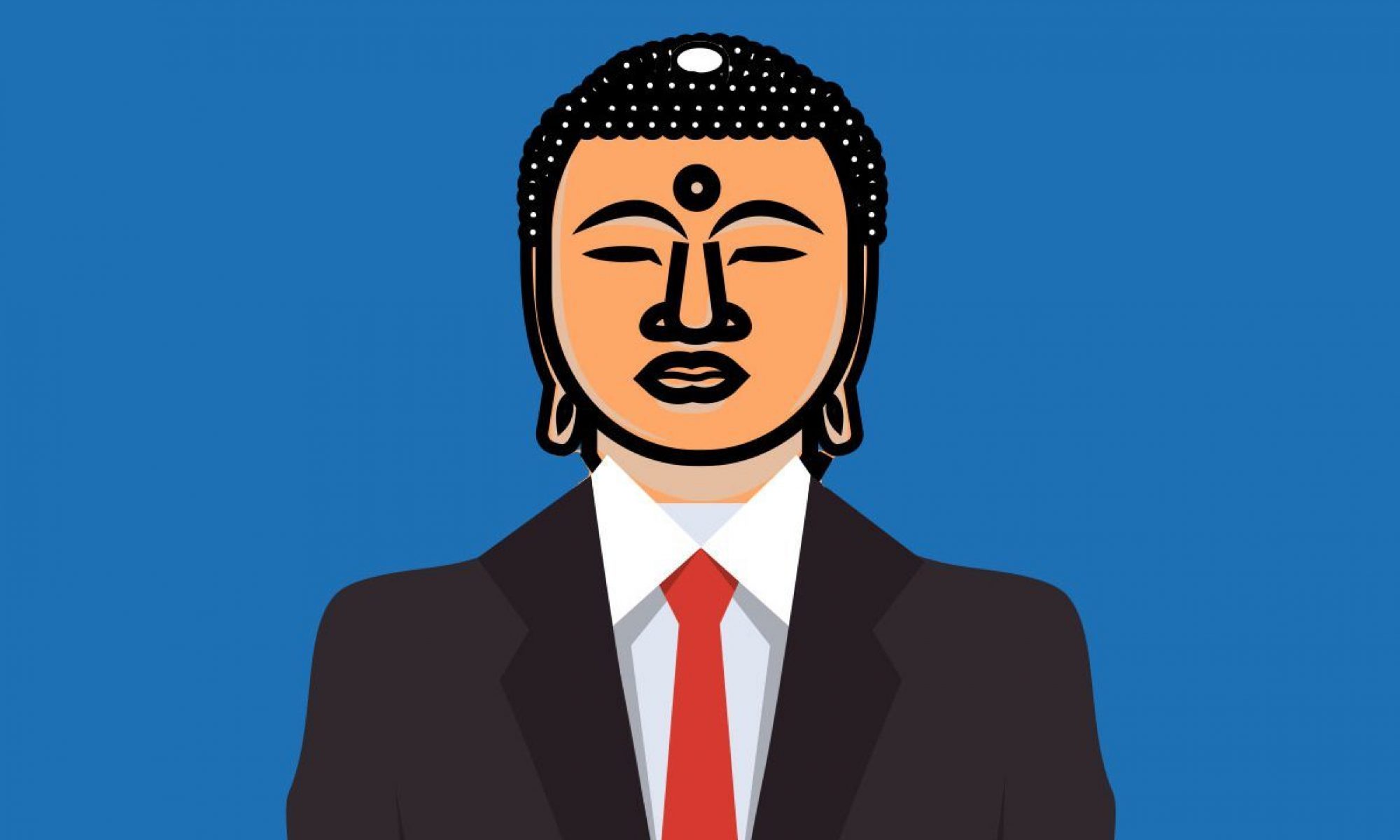
The ego gets a bad rap. One of the articles of faith in progressive spirituality, the background of our wellness and self-help culture, is that the ego is the main villain in the drama of our lives. It’s encapsulated in a book you’ve probably seen at airport bookstores, Ryan Holiday’s best-seller, The Ego is the Enemy. When we remark of someone that he or she “has no ego,” it’s taken as one of the greatest compliments.

But we often forget what the word actually means: it’s Latin for “I.” It may be that our culture is so fixated on transcending the ego that we forget to get to know it well in the first place. As the modern Buddhist saying goes, you have to be somebody before you can be nobody.

The inverse of the quote from the Daodejing above is that overestimating your self means thinking that you are good. But the mirror image of this is underestimating yourself and thinking you are evil, and overestimating your enemy and thinking he is good. Developmental psychologist Robert Kegan likes to say that we lean in one of two directions: arrogant or insecure.

Draw a circle on a piece of paper. This first circle is your self. The space outside the first circle is other people and the world. Now draw a slightly smaller circle inside of the first one, and a slightly larger circle outside of it. The small circle is leaning insecure; the ego is too small. The large circle is leaning arrogant; the ego is too big. The smaller the margin between your ego and your self, the more in touch with reality you are. As with many things in life, our guide here is Goldilocks.

When we say that someone has “no ego,” what we are really saying is that they have a healthy one. We really mean that we can’t see their ego because it is so seamlessly integrated with the world around them; their sense of self tracks the actual border between themselves and others. You know where they stand because they know where they stand. I have a colleague who I love to describe as “a place where the universe opens.” Something about people like that attracts us because they seem more awake and aware and in touch with reality–because they are. We are not so much attracted to them as through them. There’s a queer satisfaction from just being in their presence, an intuitive sense of fit that stands out from the default background of brokenness through which most of us usually stumble. They glide through life like a fish through water, free from self-consciousness yet mindful of their effect on those around them. They see something we don’t because their sight is not as refracted through the warped prisms of ego, and they want us to see it too. They draw us into their space because they have properly and precisely drawn the border between themselves and the world around them.

It’s curious that we talk about people having a big ego or no ego, but rarely that they have a small one. Small egos are just as dangerous than big ones because they cast big shadows. If you don’t own up to your self, your shadow is going to own you, and your shadow is going to be precisely proportional to the space between your shrunken ego and your self. If you try to make yourself smaller than you are, cramming your energy into a confined space, you’re eventually going to explode. If Goldilocks sits in the baby chair, it’s going to break. In some ways, big egos are easier to handle since they are more overt–assholes are easy to spot. But the small egos are subtler and harder to detect because they pretend that they don’t shit. If you don’t admit you have an asshole, you’re going to be an asshole; to others, if you have a big ego, or to yourself, if you have a small ego.

In reality, of course, we are all in different degrees of brokenness, trying to triangulate between our egos and the world to find the sweet spot of our authentic self. You have an asshole. You have an ego. The more you come to terms with that, the fewer internal and external enemies you’ll have. The goal is not to be rid of flaws, but to order your broken bits into a unique mosaic to let the light beyond you shine through you and help others order their own.

As Kegan also put it, either you feast on your shadow, or you starve on your ego. The thicker the walls of the ego, the more fuel there is for transformation. It is not by accident that, as the saying goes, the greatest saints are often the greatest sinners.


New to the Dao Du Jour? Check out “Day 0.”

Dao Du Jour, Day 68: Everything is Actually Dancing

Chapter 68

“The best athlete wants his opponent at his best.

The best general

enters the mind of his enemy.

The best businessman serves the communal good.

The best leader

follows the will of the people.

All of them embody the virtue of non-competition.

Not that they don’t love to complete,

but they do it in the spirit of play.

In this they are like children

and in harmony with the Tao.

~ Stephen Mitchell (trans.), Tao Te Ching: A New English Version (New York: Harper Perennial), 2006.


For some people, competition carries a pejorative connotation, but the word literally means “to strive together.” Usually we understand it in zero-sum terms: there are winners and losers in athletics, war, business, and politics.

But to be an enlightened player in these arenas—to truly play—means to play the game without attachment to the outcome. To win is to play well, to play well is respect and challenge and dance with your opponent.

In dance, there is a “lead” and a “follow.” But anyone who has danced knows that these roles are a gross simplification of actual dancing. The lead can only lead well if he follows his partner, if he is receptive and responsive to the subtle shifts in her body, and the follow can only follow well if she if she guides offers the flexibility to be led. The dance only works, in short, if the lead and the follow are playing lead and follow, not identified with leading and following. “Lead” and “follow” are no more real than you and me. They are words that point to the strange energy that is us and moves us and moves between us all that we call the Dao.


New to the Dao Du Jour? Check out “Day 0.”

Dao Du Jour, Day 66: Dao-Engineering

Chapter 66

“All streams flow to the sea

because it is lower than they are.

Humility gives it its power.

If you want to govern the people,

you must place yourself below them.

If you want to lead the people,

you must learn how to follow them.”

~ Stephen Mitchell (trans.), Tao Te Ching: A New English Version (New York: Harper Perennial), 2006.


Geoengineering used to be one of the more fringy, sci-fi solutions to climate change, but it is gradually nudging its way into the Overton window and being looked at as a (potentially necessary) part of the solution. At one level, it presents as the endgame of human hubris, of the very way of thinking that got us into this mess in the first place: the modern project of controlling nature sanctioned by Francis Bacon, who deemed knowledge the power to bend nature to “relieve the human estate,” and Rene Descartes, who said we must become the “masters and conquerors of nature.” Taking the controls of “spaceship earth” seems like the logical extension of this ethos.

But at another level, geoengineering may be, bizarrely, congruent with the Dao. Counterculture icon Stewart Brand famously said, “We are as gods. We may as well get good at it.” His point, I think, is that we always have been. Nature issued beings able to consciously manipulate their environment; it is only in the modern age that the effects of that natural power have become planetary in scope and perilous in nature. To demonize human technology, as environmentalists often do, is to not only write off humanity and succumb to fatalism, but to reject the Dao. We, too, are a part of nature—including our ability to alter nature.

The problem is not engineering. People rarely make mention that the automobile, public emissions enemy #1, solved a serious public health problem in urban areas: horse manure. Every technology produces shit, just as every living organism does; and subsequent technologies clean it up and, in turn, produce a new kind of shit. Electric vehicles clean up the shit of carbon emissions. That is the dialectic of progress.

The problem is engineering that does not “place itself below” and “learn how to follow” people and planet. Engineering whose design is guided by the needs of the people who live there and the ecological contours of the place is the solution. Even Bacon recognized that to command nature, you must obey her.

And whether we want to call it geoengineering or not, intelligently and morally designed technology is our only hope. We must overhaul the parking lot we have paved over paradise so that it harmonizes with paradise. Through biomimetic technologies and design philosophies such as William McDonough’s “cradle to cradle” approach, in which “waste equals food” and human production processes are seamlessly integrated into natural systems, we can build sustainable infrastructure.

The first part of history was the Great Escape from nature. The second part of history will be the Great Return to nature. And in a way, coming to our sense, coming back down to earth—which will require great humility on our part, acknowledgement that we are, in the end, human, of the earth—is what we have been doing for the entire life of our species. We began in the trees, and only the discovery of fire allowed us to come down, sleep on the ground, build settlements, and dwell on the earth. Only the reinvention of fire, to use Amory Lovins’ term, will allow us to stay here. If we can get good enough at being gods, we have a chance at becoming fully human—and keeping the sea literally lower than we are.


New to the Dao Du Jour? Check out “Day 0.”

Dao Du Jour, Day 65: The Known Unknown

Chapter 65

“The ancient masters didn’t try to educate people,

but kindly taught them to not-know.

When they think that they know the answers,

People are difficult to guide.

When they know that they don’t know,

People can find their own way.”

~ Stephen Mitchell (trans.), Tao Te Ching: A New English Version (New York: Harper Perennial), 2006.


One of the most common complaints from the Professional Managerial Class is that they are too busy. They are overscheduled, overcommitted, stretched too thin. They have difficulty saying no to things. That’s what they’ve been trained to do by our education system. They got the first half of Lao-Tzu’s adage—“to gain knowledge, add something everyday”—but not the second half—“to gain wisdom, subtract something everyday.” In the age of Twitter, even the Daodejing becomes TLDR.

The ideology of the meritocracy and the animating spirit of the knowledge economy is governed by the logic of addition: more data, more information, more connections, more growth, more degrees, more certifications—more more. To paraphrase E.F. Schumacher, perhaps a Daoist economics—a wisdom economy—would follow a logic of subtraction. It would be based on a basic faith in the innate wisdom of each person. The education in such a society would be wisdom-centric, not fact- or even skill-centric: toward helping young people cultivate the intellectual and moral virtues needed to know what they don’t know. To have an economy as if people mattered, we need an education system designed as if wisdom matters.

With that foundation, the acquisition of knowledge and the gathering of information would take care of themselves. The process would be focused, selective, and efficient. As it stands, our economic and educational systems generally hold an inverted view of the hierarchy of knowledge. The natural hierarchy is wisdom/knowledge/information. But in the information age, ruled by what Yuval Noah Harari calls the “religion of Dataism”, the Fact has been uprooted from its natural environment, decoupled from its original context, and served up to the gods of the algorithm for reassignment and the individual for consumption. Meaning is thus deregulated, and action in a meaningless world is hard. Without a coherent understanding of the world (knowledge) and the ability to act and live well (wisdom), information is pointless.


New to the Dao Du Jour? Check out “Day 0.”

Dao Du Jour, Day 64: Step Zero

Chapter 64

“The journey of a thousand miles

starts from beneath your feet.

Rushing into action, you fail.

Trying to grasp things, you lose them.”

~ Stephen Mitchell (trans.), Tao Te Ching: A New English Version (New York: Harper Perennial), 2006.


This first line—one of the most quoted in the text—is often translated differently: not “from beneath your feet,” but “with a single step.” I cannot speak to which translation is more accurate, but I sense the way in which the latter gloss is appropriated, particularly in the start-up culture in which Lao-Tzu is, paradoxically, a patron saint, turns the meaning of the phrase on its head. It centers the goal, rather than the ground. It is too easily grafted onto “move fast and break things.”

While the courage to take the first step is crucial, what matters more is that it’s a step in the right direction. The second line supports this idea. The first step is folly if the final one is in the wrong place. The most important step is not the one you take with your feet, but with your mind. The most important step is not step one, but step zero.

Step zero is being rooted in the ground. Being rooted in the ground means knowing that it’s the precisely the same place you’ll be at the end of any journey, that the grass there is always going to be as green as the grass here. Only then can you walk freely and see your goal clearly, for what it is: a future ground. Only then can you see each place in double/exposure, as both ground and goal, to be able to make the gestalt shift between figure and ground with ease.

If you don’t take step zero, all your movement will be furious haste, and you will never really arrive at where you’re going.


New to the Dao Du Jour? Check out “Day 0.”

Dao Du Jour: Day 63

Chapter 63

“Confront the difficult

while it is still easy;

accomplish the great task

by a series of small acts.

The Master never reaches for the great;

Thus she achieves greatness.

When she runs into difficulty,

She stops and gives herself to it.”

~ Stephen Mitchell (trans.), Tao Te Ching: A New English Version (New York: Harper Perennial), 2006.


One of our greatest evolutionary advantages is our ability to pretend. Our ability to tell stories helped us create religions and cultures that bound us together, helped us work well together, and not only ensured not just our survival, but enabled us to build complex civilizations.

But this unique cognitive tool is a double-edged sword. The stories a people tell themselves can delude them, or lead them to oppress the “bad guys” in their story. The stories a person tells himself can lead him to deny and repress ugly realities, to Disney-fi things—to pretend.

When we come upon an obstacle, we often deny it is there, distort its nature, or decide to just hit the gas and ram through it. We do not stop and acknowledge it, but keep moving. When we spot a plot hole in our working story, we try to quickly weave over it and restore the psychic fabric it threatens to undo.

But over time, the jagged obstacles over which our narrative is overlaid will begin to tug at and tear it, and we’ll have to go back to make repairs, which increases the complexity of the weave, which leads to tangles, which leads to knots. And our refusal to stop and deal with the obstacles on their own terms creates new obstacles.

The obstacles are not the exception, but the norm and, beyond that, the occasion for a good story. As Marcus Aurelius put it, “the obstacle is the way.”

Somewhere in the middle distance of your vision, there is an obstacle blistering the vista of your ideal future. It’s probably already inducing tension somewhere in your body, a little pinch on the periphery of your awareness.

Stop, drop your story, and roll toward it.


New to the Dao Du Jour? Check out “Day 0.”