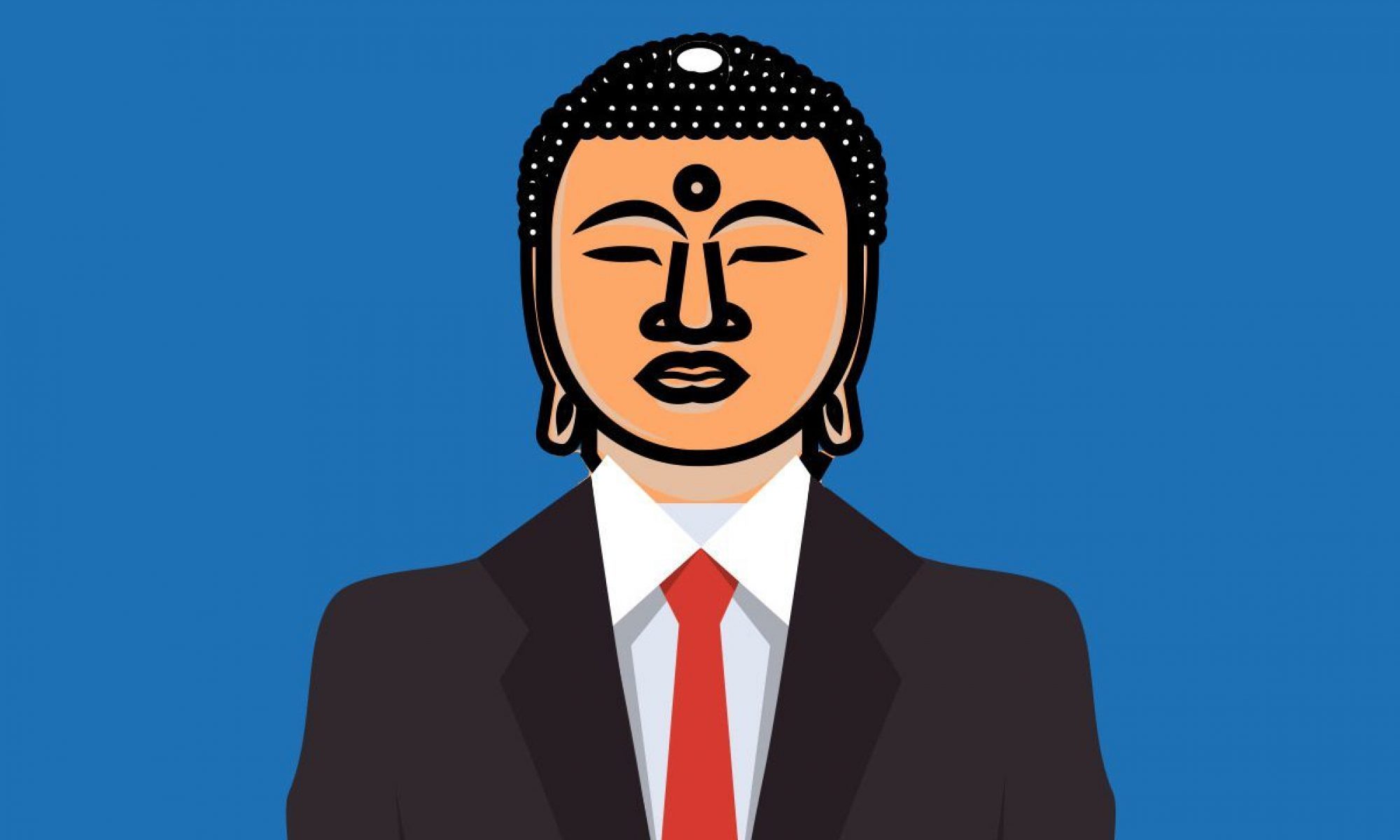
Dao du Jour II, Day 6: Mackenzie Prime

Chapter 6: What Is Complete

“The valley spirit never dies.

Call it the mystery, the woman.

The mystery,

the Door of the Woman,

is the root of earth and heaven.

Forever this endures, forever.

And all its uses are easy.”

~ Tao Te Ching: A Book about the Way and the Power of the Way, trans. Ursula K. Leguin (Shambhala, Boulder: 2019)


“The French novelist André Malreaux professed that the 21st century may or may not be religious. It will, however, be more feminine than the 20th century.” ~ Régis Debray

Western culture is oriented around Sky gods—Yahweh, Zeus, Marduk—and it is no accident that in our modern religion of technology and capitalism, what Neil Postman called “technopoly,” the pantheon of deities—Musk, Bezos, and Kurzweil—are Heaven-bent. Onward and upward to Space, Mars, the Cloud. Planet Starbucks awaits.

The transhumanist fantasies of Silicon Valley have a great deal to do with the denial of death and the typically masculine fear of it. The Great Men of the past were content to seek the immortality of their names in the historical record; those of the present are chasing the real deal.

The spirit of the Daodejing, however, offers up the matrix of a mythology for our time. If history has been dominated by the Escapism of the masculine ideal up through the 20th century, perhaps we are in the middle of a tectonic cultural shift; cultural moments like the #MeToo movement are the tip of an iceberg, a wisp of the emerging zeitgeist of Return. Fukuyama’s prophecy of the “end of history” was not so much wrong and incomplete. If History 1.0 is about differentiating humanity from the biosphere, History 2.0 is about integrating with it. History 1.0 was driven by a zero-sum logic of scarcity, conquest, and competition, of speeding and scaling, of transcending natural limits. History 2.0 will be driven by a logic of abundance, symbiosis, and cooperation, of slowing and rooting, of embracing natural limits. What we call “sustainability” is just a corporatized form of “forever.”

In the Ministry of the Future, novelist Kim Stanley Robinson envisions a new “structure of feeling,” a quasi-religion one character half-jokingly calls “Matriotism: “Gaia citizenship, or what have you. Earth citizen, commons member, world citizen. One Planet. Mother Earth. All these terms used by people who are coming to think of themselves as part of a planetary civilization. Main sense of patriotism now directed to the planet itself.”

This sounds naïve and silly until you realize that what we call “patriotism” is relatively new. The conservative instinct is to regard patriotism as “natural” and be skeptical of its meaningful extension beyond the bounds of the nation-state. The problem with this way of thinking is that the nation-state is a modern construct, not the state of nature. Patriotism is precisely the expansion of an individual’s horizon of care, loyalty, and belonging beyond their immediate kin and local territory to large groups of strangers and large amounts of land. If such an expansion was possible before, why not another? As more and more people are born into a worldwide web and a chaotic climate, it will become more and more natural for them to think in planetary terms.

Contrary to the dystopian bent of so much cli-fi, Robinson’s rollicking fable ends well. After all the geoengineering and carbon pricing and international coordination is done and the Keeling Curve is going down, the heroine, the Prime Ministress of the Future, does a flyover of the planet in an air ship, including a new port city built in the arctic to stabilize the polar ice cap. In a wickedly funny dig at the richest man in the world, Robinson names the city “Mackenzie Prime.”


New to the Dao Du Jour? Check out “Day 0.”

Dao Du Jour II, Day 5: The Great Bellows

Chapter 5: Useful Emptiness

“Heaven and earth aren’t humane.

To them the ten thousand things

are straw dogs.

….

Heaven and earth

Act as a bellows:

Empty yet structured,

it moves, inexhaustibly giving.”

~ Tao Te Ching: A Book about the Way and the Power of the Way, trans. Ursula K. Leguin (Shambhala, Boulder: 2019)


According to legend, shortly before his death St. Thomas Aquinas, architect of the most systematic intellectual edifice of Catholic tradition, the 3,000 page Summa Theologica, was struck by a mystical experience on the proverbial road to Damascus and proclaimed, “All I have written is so much straw.” A great cathedral leveled by a bolt from the blue.

The paradox of mysticism is that it offers a kind of final consolation—a self-authenticating certainty that, amazingly, all really will be and already is well—yet after the rapture recedes, the world seems empty and pointless. Another way of putting this is that mysticism entails a kind of positive nihilism—from the “standpoint” of ecstasis, the revelation that the world has no meaning is a great relief, the search for “meaning” is shown to be fruitless because the world is its own magic. But when the music stops, the silence can feel unbearable, and the questions creep in: “Was it all in my head? Am I crazy? What’s the point, really?” And so on. A new dualism tries to worm its way into the mind—between mystical and mundane, transcendent and immanent, ecstatic and quotidian experience.

“Straw dogs” here refers to disposable objects, to impermanence. Impermanence only seems like a cruel and unfair feature of the universe from the standpoint of a permanent self—puffed up, holding its breath, trying to stop the flow of air, which is just a more concrete word for spirit. Only he who loses his breath will gain it. And losing your breath—emptying yourself—is the only way to receive the gift from the great bellows.

The emptiness of the great bellows is not the cold vacuum of space, not the eternal silence of infinite spaces that fill poor Pascal with dream, but a great cauldron of possibility that bodies the world forth. Would that Job had read the Daodejing. It would have given him a more satisfying answer by showing him the confusion of his question. Perhaps we are to understand his “reward” at the end as a sign that this insight is more valuable than any “straw dogs,” material possessions.


New to the Dao Du Jour? Check out “Day 0.”

Dao Du Jour II, Day 4: Generation A

Chapter 4: Sourceless

“The way is empty,

used, but not used up.

Deep, yes! ancestral

to the ten thousand things.

….

Quiet, yes, and likely to endure.

Whose child? born

before the gods.”

~ Tao Te Ching: A Book about the Way and the Power of the Way, trans. Ursula K. Leguin (Shambhala, Boulder: 2019)


Reread the passage, but this time substitute “the earth” for “the way.”

We are accustomed to imagining the earth as Gaia, the Great Mother of all life. We are less prone to picture it as a child, but in the scope of cosmic time, the earth is a newborn.

One of the articles of faith of the environmental movement is that humanity is destroying mother earth. The inconvenient truth for such apocalyptic environmentalists, however, is that the earth will be just fine. The earth is not a living thing, not a “super-organism,” and ironically, it is human hubris to think that our actions could cripple or kill it. Decimate animal species, disrupt the climate, and erode the conditions for our own survival? Yes. Destroy the world? No, that’s gods’ territory. But even in the great myths, the gods’ destruction of the world was only ever the destruction of the human world. The cosmos quietly endures, and the earth may be a young child of the universe, but it was around billions of years before us and our gods. Gods are the children of men.

Stewart Brand is correct to conclude that we are as gods, and may as well get good at it. But getting good at playing god means raising our gods well. If it is not a matter of being gods or humans, but of what sort of gods we wish to be, then we have to figure out how to stop being childish gods.

There is no greater mark of modernity than the abstraction of the ancestral. Our ancestors are foreign and strange to us, sealed off and separated by oceans, language, and revolutions political, cultural, and technological, as though they were from another planet. The “ancestor worship” of today’s indigenous holdouts present to us as superstition, perhaps more respectable than YouTube conspiracism but cut from the same spiritual cloth.

But just as the ancestral ethos was the backbone of hunter-gatherer society—i.e., the vast majority of our species’ life—ancestor worship may be the key to surviving our technological adolescence and saving our civilization.

Every ancestor was once a child, and every child is an ancestor in waiting. The presentism of our culture, the short-term mindset of the quarter in our economics and the election in our politics, the on-demand character of our consumer culture, even the retirement planning that governs our careers—these are all powerful temporal headwinds that make it hard for us to see the fullness of time. Children are raised to be achievers in the short game of the economy, not ancestors in the long game of civilization.

There is no shortage of critiques of how today’s “intensive parenting” involves a neurotic over-involvement with children that turns them into little cult objects. But maybe it stems from an unconscious recognition of the great task before us—not to get our children into Harvard, but to raise what philosopher Roman Krznaric calls “good ancestors.” Our words for culture and cult derive from the Latin cultus, which means worship. As David Foster Wallace reminds us, there is no such thing as not worshipping. We worship what we pay attention to. Every family is a kind of cult. The only question is what sort of cult it wishes to be.

The advantage our ancestors had was that life didn’t change all that much from one generation to the next, so by paying attention to the present, you were paying attention to the past and the future. Our problem is that, starting 10,000 years ago with the agricultural revolution, increasingly with the industrial revolution 300 years ago, and dizzyingly with the informational revolution 30 years ago, there’s been too much change too fast for each generation to make sense. The generation gaps grow as time speeds up, and each generation feels abandoned by the one before it, self-absorbed trying to make sense of its own strange seam of time, and lacking the spiritual, mental, and moral resources to hand things off to the next one. As Joseph Campbell put it, in modernity you can’t have a unifying mythology because before anything new can constellate it gets throw off. And as Zak Stein explains, when the conditions for intergenerational transmission of knowledge—in a word, education—break down, civilization cannot continue.

But the future has begun to encroach on our presentism. As the Boomers begin boarding the ships for the Gray Isles, the last three generations—X, Y, and Z—find themselves abandoned together on this little island of time at the end of history. It’s like a temporal Pale Blue Dot. How we respond is up to us: shrugging in nihilism or shouldering the burden of glorious purpose. The more we pretend we are not ancestors, the less likely we are to have descendants, and if we do, the less likely they are to worship us.


New to the Dao Du Jour? Check out “Day 0.”

Dao Du Jour II, Day 3: Hushing

Chapter 3: Hushing

“So the wise soul governing people would empty their minds…keep people unknowing, unwanting, keep the ones who do know from doing anything.”

~ Tao Te Ching: A Book about the Way and the Power of the Way, trans. Ursula K. Leguin (Shambhala, Boulder: 2019)


Here we see Lao-Tzu seem to embody the very patriarchal ethos he defines himself in opposition to: Confucian conservative command and control. Hardly the hippie libertarian trickster of latter day New Age culture encouraging you to embrace your funk.

But that presumes that the one governing thinks they are in the know, and that is precisely what is denied here. Much like Plato proposed in the Republic that the ones who should rule are the ones who don’t want to rule, Lao-Tzu is saying that the ones who think they know how to rule are the ones who must be kept from power. When you read the Yeats quote today, “The best lack all conviction, while the worst are full of passionate intensity,” it’s natural to think of the mainstreaming of conspiracy theories today and the demagogues who fan its flames. Ironically, the attack on the “administrative deep state”—that is, the people who actually know what they’re doing—comes only ostensibly from the ignorant and uneducated. For they know a great many things that we don’t.

They know that Obama is a Muslim born in Kenya; they know that “Benghazi” [sic]; they know that COVID 19 was leaked from a lab in China; they know that Bill Gates arranged for microchips to be embedded in your skin through the vaccine; they know that the 2020 election was stolen. They know all of these things with passionate intensity, for knowing, in this sense, simply is passionate intensity. What started as the Tea Party, a noisy band of low libertarian, garden-variety anti-government barkers, and metastasized into the Trump Party (there can be no doubt that that is exactly what the GOP now is) actually started a long time ago: as the “Know Nothing Party” of the 1950s: nativist, isolationist, anti-intellectual, rooted in yeoman gnosis. It is what George Packer, in his essential essay in this month’s Atlantic, calls “Real America.”

Those of us in “Smart America” think we know better. But believe it or not—I suspect you may not because you are likely a Smart American—“I believe in Science” and “Science says” are a stone’s throw from “’Cuz Hillary’s emails.” Taylor Dotson has cleverly labeled this kind of politics—the brandishing of facts, fact-checks, and figures, of evidence, empiricism, and expertise, of “studies,” “research,” and so on to demonstrate that your position is clearly, obviously, self-evidently correct—“Fact-ism”:

Who hasn’t given in to the urge to reflexively drop a Snopes link, or to reference a scientific article whose abstract we only skimmed, in order to avoid thinking carefully about why a great-aunt or former college acquaintance doesn’t trust Anthony Fauci?

The basic logical problems with Factism are that it misconstrues the relationship between science and policy and the nature of science itself. Fauci’s knowledge about epidemiology is in a different galaxy than yours or mine. His knowledge about ethics is probably in the same ballpark, or even the same room. Science not only doesn’t give us certainty—especially probabilistic sciences like epidemiology and climatology—but even if it did, that wouldn’t tell us what we ought to do. Moreover, that “reflexively” reflects—you guessed it—passionate intensity.

But the knowledge of Real America is not what they think they know—the conspiracy stuff. It’s what they know we need: belonging. Belonging is what Real America thinks has been stolen from it, what the neoliberalism of Free America destroyed, what the meritocratic knowledge workers of Smart America don’t realize they need, and what Just America call “inclusion” and wants to engineer through social policy.

Dotson calls it connection:

If the underlying problem with scientism and conspiracism is the way each promises certainty, thereby fostering division, then we ought to look toward a politics that is preoccupied less with knowing and more with fostering connection.

Packer calls it patriotism:

“This feeling can’t be wished out of existence. And because people still live their lives in an actual place, and the nation is the largest place with which they can identify—world citizenship being too abstract to be meaningful—patriotic feeling has to be tapped if you want to achieve anything big. If your goal is to slow climate change, or reverse inequality, or stop racism, or rebuild democracy, you will need the national solidarity that comes from patriotism.”

Belonging, patriotism, connection—call it what you want. It’s the unspoken category of Donald Rumsfeld’s epistemology: the “unknown known.” If people have it, they’ll “want” and “know” less; they’ll just go about their lives.

Whether you deploy a Scientific worldview or a Biblical worldview, you think you know more than you do. Information without knowledge is empty—meaningless—but knowledge without wisdom is blind—dangerous. Being informed matters, being knowledgeable matters more, but being wise matters most.


New to the Dao Du Jour? Check out “Day 0.”

Dao du Jour II, Day 2

Chapter 2:  Soul Food

“Everybody on earth knowing

that beauty is beautiful makes ugliness.

Everybody knowing that goodness is good

makes wickedness.”

~ Tao Te Ching: A Book about the Way and the Power of the Way, trans. Ursula K. Leguin (Shambhala, Boulder: 2019)


To Western ears, this view is disappointing, perhaps even cause for despair. Western culture is based on winning—good triumphs over evil, God prevails over the Devil, humanity conquers nature, freedom overcomes tyranny, capitalism outcompetes communism. It’s an asymmetrical universe. Daoism seems to see a 50/50 universe—a draw.

But this would be mistaken. The most important word in today’s passage is “knowing.” It’s not that life isn’t beautiful and good. It’s when we, as individuals, communities, and nations, fall out of the experience of beauty and goodness and try to capture them with concepts. When we step out of the flow of experience and try to explain and defend it, we begin to turn it into something it’s not—into its opposite.

The holy trinity of the Greek philosophical tradition is “the Good, the True, and the Beautiful.” The danger Daoism cautions us against is collapsing the three into the True, and claiming to have knowledge of it, whether revealed in Scripture or discovered by Science. When “everyone on earth”—or just a critical mass of people—“knows” what is “right,” watch out. They’re usually in the grip of a theology or a theory. And those who disagree are by default cast as “ugly” and “wicked.”

Everyone on earth knowing that beauty is ugliness makes true beauty.

Everyone on earth knowing that goodness is wicked makes true goodness.


New to the Dao Du Jour? Check out “Day 0.”

Dao du Jour II, Day 1: Taoing

Chapter 1: Taoing

“So the unwanting soul sees what’s hidden,

and the ever-wanting soul sees only what it wants.

Two things, one origin, but different in name,

Whose identity is mystery.

Mystery of all mysteries!

The door to the hidden.”

~ Tao Te Ching: A Book about the Way and the Power of the Way, trans. Ursula K. Leguin (Shambhala, Boulder: 2019)


There is a basic danger surrounding the confrontation with mystery. The danger is thinking that it is actually hidden from us. That someone, or some group, or some institution, or some place is closer to it than we are. That it is a super special secret. That it is exotic, arcane, esoteric. That it sits behind a locked door, and that we lack the key or combination.

But just as the gates of hell are locked from the inside, so with the door to the hidden.

This chapter also tells us that “heaven and earth begin in the unnamed; the named is the mother of the ten thousand things.” Thick layers of cultural accretion warp our vision of heaven: we picture it as a different dimension of existence, a realm of angelic and somehow purely spiritual beings, which of course makes no sense because pictures involve images, and images entail space, and space entails bodies. But in the seminal texts of Western culture from the Greeks and the Hebrews, heaven literally just means the sky.

When we sever heaven and earth, the other world and this world, death and life, we sever ourselves from our source. The soul then becomes “ever-wanting”: wanting to escape the gravity of the earth—of limits and weight and bodies and pain and death—for the frictionless flotation of heaven. This takes both religious and secular forms: believers seeking deliverance from the vale of tears, billionaire tech moguls escaping to space. Earth is a kind of evil from which we want to escape. The unwanting soul already has what it wants.

But of course, the wanting and unwanting soul—in Christian language, the soul in a state of sin and grace—are one and the same. Letting that paradox be is, paradoxically, the way toward wanting well.


Dao Du Jour, Day 81: Limits of the Logos

Chapter 81:

“True words aren’t eloquent.

Eloquent words aren’t true.

Wise men don’t need to prove their point;

men who need to prove their point aren’t wise.”

~ Stephen Mitchell (trans.), Tao Te Ching: A New English Version (New York: Harper Perennial), 2006.


On trial before the Athenians, his life hanging in the balance, Socrates begins his apology (defense) by speaking about speech. He urges the judge and jury, his fellow citizens, to judge what he says on the substance, not the style of what he says; the what, not the how. “I’m not going to lawyer you,” he is basically telling them. He distinguishes himself from the Sophists, a group of men the Athenian elite paid handsomely to school their sons in the art of rhetoric to groom them for leadership in politics. Forget the pathos, Socrates urges them; focus on the ethos–my character–and, most importantly, the logos–the content–of my speech.

Socrates was on trial for corrupting the youth and impiety–not believing in the gods of the city. In the speech, he effectively turn the charges on his accusers, unmasking their hypocrisy and showing that they are more guilty of the charges than he is because they claim to know what they don’t know.

The real apology for Socrates is not defending himself against the charges, but acknowledging the limits of the logos–of human knowledge about the gods and the good.

In his Confessions, St. Augustine laments how he abused his God-given powers of speech to climb the social ladder in a confused pursuit of love and belonging. The schools, he complained, trained him in the art of speaking well; the religious sect he joined, a gnostic group called the Manichees, prided themselves on their eloquence and “loquaciousness”; and his position in the elite echelons of the empire was ensured due to his eloquence in public speaking, especially empty encomiums for the emperor. For Augustine, though, the proper use of speech was to praise God; hence his autobiography is studded with Biblical quotations–almost ad nauseam. The implication is that his own attempt to give an account of his life, the word of Man, will always fall short of the true account, the Word of God.

The real confession for Augustine is not owning up to his sins, but acknowledging his nature–as a sinner, yes, but as limited in speech. No matter how clever we become, we are always as babes babbling about ultimate reality.

We are to God, or the Dao, as children are to adults. The more we apologize and confess–the less we pretend–the more playful and fruitful our speech will be.


I hope you’ve enjoyed the first series of the Dao Du Jour. In the next installment, I’ll be using Ursula Le Guin’s translation of the Daodejing.


New to the Dao Du Jour? Check out “Day 0.”

Dao Du Jour, Day 80: Somewheres and Nowheres

Chapter 80:

“If a country is governed wisely,

it’s people will be content.

….

Since they dearly love their homes,

they aren’t interested in travel.

….

And even though the next country so close

that people can hear its roosters crowing and its dogs barking,

they are content to die of old age

without ever having gone to see it.”

~ Stephen Mitchell (trans.), Tao Te Ching: A New English Version (New York: Harper Perennial), 2006.


One of the many ways we are all trying to get back to “normal” as the pandemic recedes is the resumption of travel. After a year in lockdown, many of us find ourselves disagreeing with Dorothy’s mantra in the Wizard of Oz that “there’s no place like home.” Our is the opposite: “there’s no place like anywhere else.” Home doesn’t quite feel like home if we can’t leave it.

Though regular travel, or at least an annual summer vacation, is normal for most Americans and baked into our experience of home, it is a thoroughly modern phenomenon. Before the rapid urbanization and industrialization of the 19th century, most people rarely traveled, and in the Middle Ages, apart from pilgrimage, travel was difficult, dangerous and rare. Beyond travel, the special restlessness of the American soul, an echo of manifest destiny and the fascination with the frontier, shows up in our increasing mobility.

The sociologist Dalton Conley cuts Americans into “Somewheres” and “Nowheres,” a distinction I distill into “people in place” and “people in space.”

Somewheres are people who live in rural and exurban areas, the people who don’t–and whose children don’t–leave for college and the big city, who are neither outwardly nor upwardly mobile, who invest in and grow the local stock of social capital and thicken the social fabric of a place. Somewheres live closer to the ground, led by the weight of necessity.

Nowheres are people who, before they could walk, were being trained to be “shot into space”: like a quantum particle, they exist in a cloud of possibilities, riding the wave function toward the spaces of the best grades, the most elite colleges, the most prestigious internships, the most lucrative and sought after jobs, the Professional Managerial Class, and perhaps the gated community and country club. Nowheres take it for granted that they and their peers will leave their home towns, and that their teens, 20s, and perhaps their 30s are means toward these nebulous ends. Jeff Bezos, whose company is everywhere and nowhere, who fancies himself a real-life Captain Picard shepherding us toward a planetary, space-faring civilization, and who has made it known that he “wants people in space,” is the epitome of the ideal. Nowheres live closer to the Cloud, afloat on the promise of possibilities.

One way of understanding the Trump era–in which the pandemic is both climax and denouement–is the recognition that this division in American life is neither psychologically desirable nor economically sustainable. You don’t have to want the Benedict Option to recognize that there is something wanting, hollow, and unsatisfying about this way of thinking about community life. Ironically, it is on their tour through the universities that students will learn what evolutionary biology, anthropology, and social psychology now tell us: that we are deeply social creatures who evolved to survive and thrive in small groups of extended kin over a relatively limited range of territory; that the view of human nature as a sovereign individual embedded in classical liberalism, the operating system of modernity, is a useful fiction. Of course common sense would tell you the same, but common sense becomes less common when society is programed for destination Nowhere. People raised in such a culture aren’t like to get the memo, and will come to see family, community, and a commitment to the local as a stepping stone, at best, and a hindrance to their self-actualization, at worst. Space beckons.

But in reality, space doesn’t exist. There are only places. We have engineered the social topography of our society in such a way that only a small number of places are regarded as culturally and economically desirable to live, and relegated the rest to “fly over country.” The information economy depends on the cloud, the cloud depends on servers, servers depend on electricity, and electricity, for now at least, depends on oil and gas and infrastructure. Space is not the absence of places, but made possible by places. The primal scream of Trumpism is the return of the repressed of place erupting into space.

The best views from space, ironically, were of the Earth. Whether it was Carl Sagan’s “pale blue dot” or the “blue marble” photo, our early space travels revealed to us how beautiful and precious our terrestrial home really is. As a friend of mine once said, the purpose of vacation is to help you realize how good you have it. Lao-tzu isn’t so much telling you not to travel as encouraging you to be content with where you are; and realize that you travel every time you leave your front door.


New to the Dao Du Jour? Check out “Day 0.”

Dao Du Jour, Day 79: Successful Failure

“Failure is an opportunity.

If you blame someone else,

there is no end to the blame.”

~ Stephen Mitchell (trans.), Tao Te Ching: A New English Version (New York: Harper Perennial), 2006.


When Marx described the concept of “ideology,” he used a powerful metaphor: a “camera obscura,” in which the image of an object is turned upside down. Ideology presents up as down, black as white, wrong as right. Consider the most engrained metaphor of our modern mythology: “pulling yourself up by your own bootstraps.” Orwell said that “to see what is in front of one’s nose is a constant struggle” because people are always trying to draw your attention away from the plain truth. A quick look down at your shoes dispels the myth: the action is impossible to perform.

At around the same time that corporate America and its pacing car, Silicon Valley, began embracing meditation in the workplace as a way to goose productivity, thought leaders began to extol the virtues of failure: “Fail early, fail often.”

As is often the case with the conventional wisdom in American self-help and business culture, it is hard to separate the latest corporate cant from the kernel of wisdom it contains. Ideologies only work if they make contact with the truth, however tenuous. It’s easy to run the standard leftist critique of the new gospel of failure: it’s a form of mass gaslighting that makes people fucked over the by the system–that is, most people–think that it’s their fault–they didn’t work hard enough–not a function of the system being rigged against them; serial failure is a privilege for the few predicated on a secure cushion of success provided by family, social capital, education, etc.; it legitimizes the legion disruptions that Big Tech has wrought on our brains, our economy, our politics, and our culture over the last two decades; it is, in short, kind of what capitalism does.

All of that is (partly) true. But we mustn’t let the satisfaction such analysis yields lull us into smug complacency. That would be a failure of imagination and introspection. For the very same mantra used to needle workers into blaming themselves for failure can be turned around to puncture the “bootstrapping” bubble. Failure is an opportunity to examine your vision of success.

Note that Lao-Tzu does not instruct you to blame yourself as opposed to someone else. He implies that blame itself is a kind of failure, and not the good kind. The Stoic Epictetus thought the same: “An ignorant person is inclined to blame others for his own misfortune. To blame oneself is proof of progress. But the wise man never has to blame another or himself.” Taking responsibility and correcting mistakes is not the same as assigning blame. If you blame yourself, “there is no end to the blame,” because you will begin to identify as a failure.

If failure is an opportunity, then success is a danger. And the greatest enemy of success. If you identify with being successful, you will set yourself up for failure. You will be clinging to your past achievements and the reputation they afforded, and as time passes reality will begin to diverge from that image. Your success will become a camera obscura distorting your vision of what is in front of your nose. You may fend off failure for awhile this way, but by failing rarely, you will fail big. If you fail early and often, the failures are likely to be small, and you can make the necessary course corrections to realign with reality. You will, in short, learn. You will learn better how to swim, rather than just treading water.

Real success is to be constantly succeeding yourself. Real failure is to be constantly succeeding.


New to the Dao Du Jour? Check out “Day 0.”

Dao Du Jour, Day 78: Natural Poets

Chapter 78:

“The soft overcomes the hard;

the gentle overcomes the rigid.

Everyone knows this is true,

But few can put it into practice.

True words seem paradoxical.”

~ Stephen Mitchell (trans.), Tao Te Ching: A New English Version (New York: Harper Perennial), 2006.


“Every word,” Emerson wrote, “was once a poem.” Everyone knows this is true, but few—poets, that is—but it into practice.

But not just poets. We are too precious about what poetry should look life and who counts as a poet. Children are natural poets; for them, every word is new. The Greek root of the word, poeisis, can be translated as “bringing forth.” When the child cleaves off a piece of the world and attaches a word to it, she brings forth meaning from sound.

Over time, of course, the novelty wears off, poetry settles into prose, and we forget the creative power not just of language, but consciousness itself.

True words seem paradoxical because no words are “true” or “false.” Every word is an interpretation that reveals and conceals the world. But even this conceals a deeper truth—that there is no “true” world beyond our perception and language.

True words seem paradoxical because reality is paradoxical. Once we cease and desist from treating paradox as a problem to be solved, once we concede that existence is not even but fundamentally odd, the world—and the Word—can once again speak to us and through us.


New to the Dao Du Jour? Check out “Day 0.”

Dao Du Jour, Day 77: Chaosmos

Chapter 77

“Those who try to control,

who use force to protect their power,

go against the direction of the Tao.”

~ Stephen Mitchell (trans.), Tao Te Ching: A New English Version (New York: Harper Perennial), 2006.


Contained in this sentence is the essence of a psychology, a politics, an economics, an ecology, and an ethics—a complete cosmology. The Chinese philosopher Yuk Hui has recently advanced what he calls “cosmotechnics,” a holistic way of thinking about technology—holistic in the sense that whenever we think about or talk about or use technology, we are always already assuming and enacting a worldview and a set of values. Technology is always about more than tools.

Hui is offering a contemporary and comparative update of Martin Heidegger’s seminal 1954 essay, “The Question Concerning Technology,” where Heidegger argued that the essence of technology is not, strictly speaking, technological. It is primarily a way of knowing that he characterized as “enframing.” Enframing reduces the mystery of the world to a reservoir of energy and turns nature into a “gigantic gasoline station.” Nature is there to be controlled, a stock of resources to be used, and used up, in service of our human ends—whatever those happen to be.

Heidegger’s concern was that way of knowing was nihilistic in the sense that it is, literally, endless. As C.S. Lewis puts it in the Abolition of Man, most pre-modern civilizations were premised on something like “the Tao”: an absolute morality anchored not in the desires and whims of human culture and psychology, but in the order of things. Humanity’s ends are somehow set, fixed, limited by the basic architecture of reality, and human lives and societies go well when they more or less adhere to them.

But the enframing mindset decouples humanity from nature, “freeing” us to posit whatever ends we happen to have. That means that there is nothing to stop the logic of regarding nature as a stock of expendable resources from being turned back on humanity itself, e.g., “human capital,” “human resources.” The great irony of this, Heidegger points out, is that just at the moment where we think we have become gods and triumphed over nature, we are mired in a deeply dehumanizing way of being. Or as Lewis put it, man’s conquest of nature turns out to be nature’s conquest of man: severed from the Tao, man has nothing but his instincts and impulses—supplied by nature—to guide him. He has abandoned not only his rationality, but his home: the very idea of living in a cosmos.

Daoism embraces a less dualistic view of the humanity/nature relationship than the Western tradition that is perhaps best captured by James Joyce’s formulation “chaosmos.” Hui offers us a potential path toward thinking about, designing, and using technology in a way that is more mindful of, and integrated with, our ecology. Perhaps Daoism can offer a way for both the East and the West—effectively, the Yin and Yang on the geopolitical stage of the 21st century—to build a sustainable future—a human world that doesn’t go against the direction of the Dao?


New to the Dao Du Jour? Check out “Day 0.”

Dao Du Jour, Day 76: Ha-do-ken!

Chapter 76

“Men are born soft and supple;

dead, they are stiff and hard.

Plants are born tender and pliant;

Dead, they are brittle and dry.

Thus whoever is stiff and inflexible

is a disciple of death.

Whoever is soft and yielding is a disciple of life.”

~ Stephen Mitchell (trans.), Tao Te Ching: A New English Version (New York: Harper Perennial), 2006.


When I was learning Tai Chi years ago, the teacher demonstrated a deceptively simple move for us. You turn your left foot out, plant it firmly in the ground, turn your body to the left, drop your center of gravity down and lean over that foot, then slowly push against the ground, extend the right foot forward into a lunge, twist your body to face straight, unfurl your left arm forward, and snap your wrist so that your palm faces forward.

The logic of the moves in Tai Chai, the teacher explained, is to reduce the points of tension in your body and the friction in your movements so that you conduct the energy around and within you with minimal effort. And the most powerful energy reservoir around you is the ground. The strength of your movements comes through you, not from you.

The teacher proceeded to demonstrate said move to us. What we observed was impressive, but what we heard was shocking. It was not so much the speed and elegance with which he executed the move, but what I can only call its focused ferocity. When he finished, we heard not only the snap of his wrist, but the shockwave of air his hand had displaced, as though he had broken a kind of micro sound barrier. Those of you of a certain generation will recognize this for precisely what it was: the “ha-do-ken” fireball move from Street Fighter II.

I can still hear that sound. That sound, he told us, was just the ground. By making your body fluid and transparent to the energy around you, you give voice to what cannot speak for itself.

The same principle applies to the mind—and the mind-body connection. Whoever has a stiff and inflexible mind isn’t really thinking. A stiff mind will lead to a stiff body, and a stiff body will lead to a stiff mind. Odds are there is a place in your body right now that’s clenched. Stop reading, find it, listen to it, and let it lead you into your next move.


New to the Dao Du Jour? Check out “Day 0.”